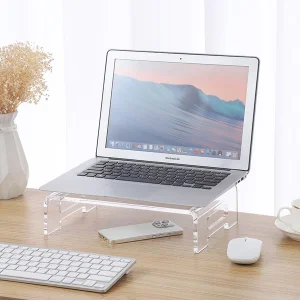
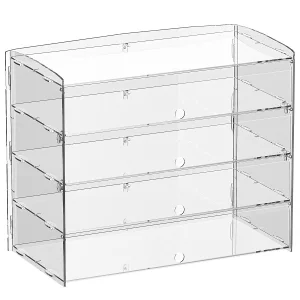
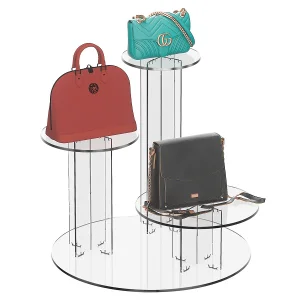
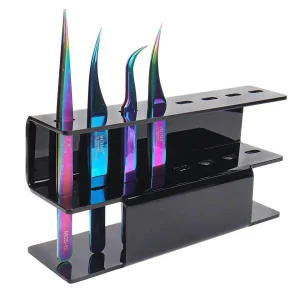
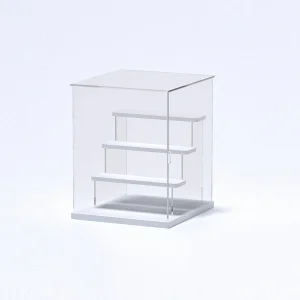
Direct factory-engineered displays, tech enclosures, and spatial elements designed for turnkey distribution and contract retail.
Structural transitions from bulky wooden cabinetry to monolithic, optically transparent polymethyl methacrylate (PMMA) furnishings in urban centers.
Skyrocketing metropolitan commercial leasing expenses in hubs like Tokyo, London, and New York have necessitated a transition toward visual dematerialization. Small acrylic desks and vanity tables eliminate the ocular footprint of traditional timber or metal structures, letting light traverse unhindered through micro-apartments, high-end studio suites, and boutique executive offices.
Industrial adoption depends profoundly on molecular structural integrity. Through virgin Methyl Methacrylate (MMA) cell casting, high-grade small acrylic desks achieve flexural yield strengths upwards of 110 MPa. Unlike extruded cheap alternatives that show molecular orientation lines, cast PMMA allows diamond edge finishing and thermoformed single-sheet structural profiles that support loads up to 150 kg without optical distortion.
In medical clinics, clinical aesthetics facilities, and biotechnology labs, acrylic small desks provide non-porous, cross-linked surfaces resistant to pathogen nesting. Monolithic seamless bonding eliminates crevices where microbes gather, providing clean-room compliance, smooth surface sanitization, and compatibility with modern surface disinfectants.
Engineered integration of compact acrylic workstation surfaces across diverse corporate, retail, and experiential domains.
Five-star boutique hotels utilize custom small acrylic reception stations to create open entryways. Often fabricated with concealed perimeter LED edge-lighting and frosted logos, these desks merge invisible profiles with high scratch-resistant surface films.
In compact hardware engineering laboratories and maker hubs, small acrylic desks serve as anti-static, non-conductive assembly stations. Equipped with integrated laser-routed ports for cable routing and system housing mounts, they provide an organized workspace with complete 360-degree component visibility.
Global cosmetics and jewelry houses deploy waterfall-edge small acrylic tables as standalone focal pedestals. High optical purity places zero color bias on featured diamonds, horology parts, or premium perfumes.
Systematic validation comparing cell-cast acrylic versus standard architectural glass and polymer substitutes.
| Evaluation Parameter | Virgin Cast PMMA (Small Acrylic Desk Grade) | Architectural Tempered Glass | Extruded Polystyrene (PS) Substitute |
|---|---|---|---|
| Light Transmission | 92.5% (Crystal Clarity) | 86.0% - 89.0% (Green Iron Tint) | 82.0% - 85.0% (Hazy Reflection) |
| Impact Resistance | 17x Glass Impact Strength | High brittle failure point, shatter hazard | Low mechanical elasticity, easily fractures |
| Thermal Bending Radius | Continuous waterfall contouring without micro-stress | Complex, high-energy kiln sag requirement | Degrades rapidly, micro-crazing at curve |
| Weight / Density Ratio | 1.19 g/cm³ (Lightweight structural handling) | 2.52 g/cm³ (Heavy, logistics intensive) | 1.05 g/cm³ (Weak flexural strength) |
| Joint Fabrication | Chemical polymerization (Monolithic solvent fusion) | Mechanical brackets or UV resin joints | Cyanoacrylate or hot-melt adhesives |
| Surface Refinishability | 100% Polishable through micro-mesh or diamond discs | Irreversible surface damage if deeply scratched | Cannot be restored once marred |
Every custom small acrylic desk design undergoes Finite Element Analysis (FEA) to confirm load limits, cantilever stability, and eliminate sagging across wide spans.
To stop internal stress-crazing after laser cuts or heat-bending, panels sit in computer-controlled annealing ovens at 80°C for up to 16 hours, stabilizing the acrylic matrix.
Edges are leveled with PCD diamond tools spinning at 18,000 RPM, followed by hydrogen-oxygen flame treating to produce clear, museum-grade borders without rounding.
How our integrated Danyang factory mitigates procurement risks, freight costs, and inventory challenges for overseas partners.
Shipping assembled acrylic furniture overseas can be costly due to dead volume. Our engineering team designs patented Knock-Down (KD) systems with transparent embedded brass fasteners or acrylic screws, cutting container volume by up to 68% while keeping home setup simple.
Scratch-prone glossy finishes require durable packaging. Each product retains its PE protective film, paired with custom CNC pearl cotton corners, triple-wall honeycomb cartons, and ISPM-15 compliant heat-treated crates that pass drop tests (ISTA-3A).
Sourcing our raw polymer through controlled MMA partners allows full tracking from batch to batch. Every small acrylic desk comes with material verification, consistent UV stability, and documented safety compliance for global markets.
Common questions from furniture distributors, interior contract specifiers, and procurement agents.
Specialized acrylic fixtures, storage components, and modular elements for corporate, commercial, and trade applications.