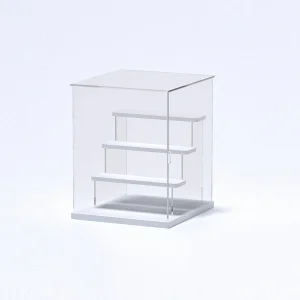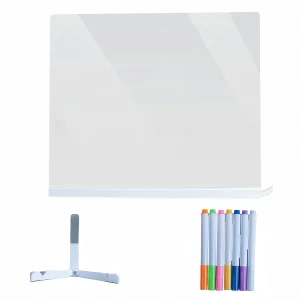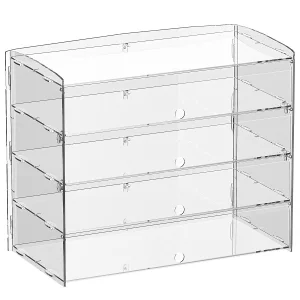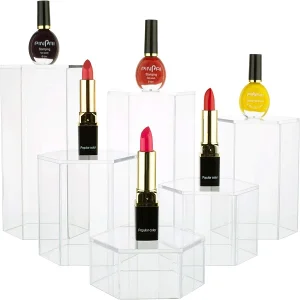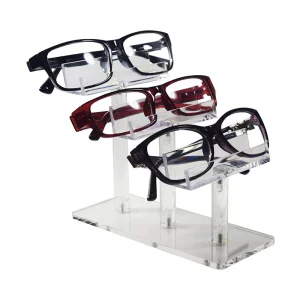
Explore standard commercial baselines manufactured under ISO-verified structural tolerances, including multi-material hybrids, precision retail stands, and custom signage.

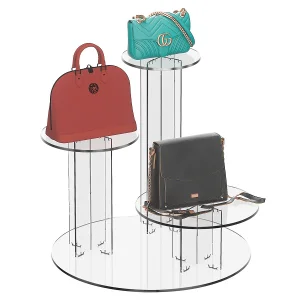
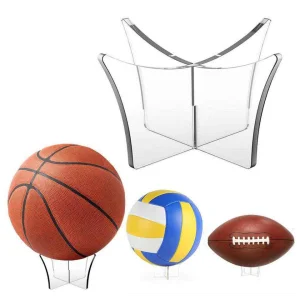

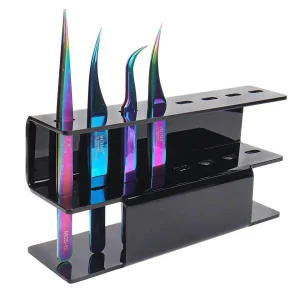
A technical overview analyzing polymeric raw formulation, photometric diffusion behaviors, structural edge fusion, and global B2B procurement trends.
Standard white acrylic display units often suffer from photodegradation, chalking, and yellowing over extended luminescent exposure. High-tier OEM manufacturing utilizes high-molecular-weight PolyMethyl Methacrylate (PMMA) stabilized with Benzotriazole UV absorbers. This prevents polymer degradation under high-intensity 4000K–6500K commercial lighting environments, maintaining an immaculate color consistency across years of retail operation.
Constructing opaque or milk-white display cubes presents distinct visual challenges: adhesive bleed, air voids, and capillary bubbles become starkly visible along edge joints. Industrial-grade OEM engineering uses proprietary capillary solvent welding and two-component reactive methacrylate structural adhesives, polymerized within controlled cleanrooms to achieve seamless 90-degree miters with tensile yield strengths exceeding 45 MPa.
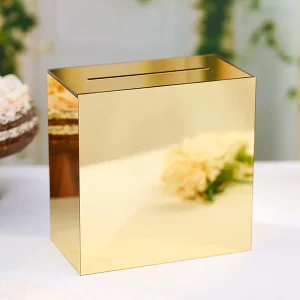
White acrylic display cubes serve dual purposes: concealing interior storage or electrical drivers while simultaneously acting as secondary light diffusers. By fine-tuning concentrations of suspended barium sulfate or titanium dioxide pigments within cast liquid monomer casting cells, OEM fabricators guarantee precise light transmission tiers ranging from 15% (backlit glow) to 0% (total high-gloss piano opaque).
Addressing structural load distribution, static dispersion, and hygienic compliance across targeted commercial use-cases.
Pure white acrylic boxes serve as contrast-maximizing plinths for high-jewelry, bespoke timepieces, and cosmetic flagships. They isolate products against visual clutter, providing clean background refraction that enhances gem brilliance and high-end packaging.
Sterile visual clarity is mandatory for healthcare enclosures. Custom opaque white PMMA structures resist surface yellowing from IPA sanitization agents while insulating delicate analytical optical instrumentation from ambient optical interference.
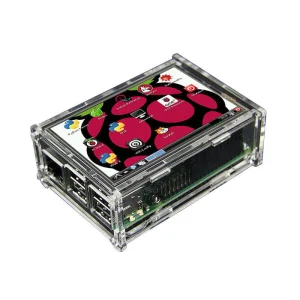
Used as external housings for edge devices, audio consoles, and desktop components. Specialized anti-static (ESD) surface coatings prevent particulate cling, while CNC-machined venting slots maintain internal thermal stability.
Featuring active archival properties, our opaque white containment cubes seal out dust, UV-spectrum light, and environmental variations. Solid white pedestals support massive compression weights while maintaining seamless external profiles.
Selecting the proper raw PMMA stock determines machine tolerance, edge polish luster, and lifetime resilience.
| Performance Characteristic | Cell-Cast White Acrylic (PMMA) | Continuously Extruded White Acrylic | Impact on OEM Display Box Quality |
|---|---|---|---|
| Molecular Weight (Mw) | High (~1,000,000 to 3,000,000 g/mol) | Moderate (~100,000 to 250,000 g/mol) | Cast delivers superior chemical resistance and crack-free solvent welding. |
| Machining & CNC Routing | Sharp chip clearance, zero melting on edges | Prone to softening and gumming under high tool speed | Cast ensures clean 45-degree bevels and smooth chamfered miters. |
| Edge Finishing Clarity | Mirror-finish with diamond or flame buffing | Good finish, but susceptible to stress crazing | High-end cubes require cast sheets to eliminate micro-fracturing along joints. |
| Thickness Tolerance | ±8% (Subject to cell-casting variation) | ±2% (Highly uniform via rolling dies) | Extruded is ideal for modular slot-together parts; Cast for bonded boxes. |
| Color Pigment Uniformity | Deep, rich opacity, zero batch-level drift | Consistent, but thinner color density | Cast prevents back-bleed when internal lighting strips are used. |
Mitigating cross-border supply chain risks through strict environmental certifications, protective packaging, and international compliance documentation.
Every metric ton of white acrylic formulation used complies with EU RoHS Directive 2011/65/EU and REACH (EC No 1907/2006) protocols. Raw ingredients are certified free from lead, mercury, cadmium, and bisphenol compounds, ensuring complete safety for cosmetic counters, boutique display spaces, and food-service displays.
White acrylic surfaces highlight scuffs, scratches, and handling abrasions. To preserve surface finishes during ocean and air transit, all display boxes feature co-extruded static-cling PE film coverings, nested high-density EPE shock-absorbent collars, and export-grade honeycomb master cartons with drop-tested reinforcement corners.
Navigating global customs clearance relies on exact tariff classifications. We assist international procurement teams with cleared paperwork under HTS 3926.90 (Other articles of plastics), complete with Certificates of Origin (Form E, CO, RCEP) to minimize import duty impacts across North America, Europe, and Australasia.
Addressing structural circularity, robotic automation, and advanced tactile finishing across modern fabrication operations.
Next-generation fabrication workflows incorporate depolymerized PMMA (recycled MMA monomers). Chemically cracked cast off-cuts yield clean, optical-grade white sheets that deliver identical 92% light diffusion and deep gloss while reducing greenhouse production footprints by 68%.
Manual gluing methods are transitioning to six-axis robotic dispensing cells. High-pressure volumetric dispensers apply UV-initiated oligomer glues along 45-degree chamfers, curing instantly under 365nm LED arrays to eliminate human error, air entrainment, and dimensional variations.
High-gloss white acrylic surfaces are traditionally prone to collecting oils and fingerprints during customer handling. Modern coatings apply thin oleophobic silane nanocoatings via vapor deposition, maintaining clean surfaces and reducing required showroom maintenance.
Essential technical clarifications regarding material choice, bonding tolerances, tooling timelines, and custom finishes.
Explore additional acrylic display styles, from custom-cut acrylic bases to precision desktop cases and structural organizers.