Explore our custom OEM product series manufactured under ISO 9001:2015 certified production lines, ready for global deployment.
From traditional heavy timber framing to polymethyl methacrylate (PMMA) optical transparency: how minimalist spatial aesthetics revolutionized modern visual presentation.
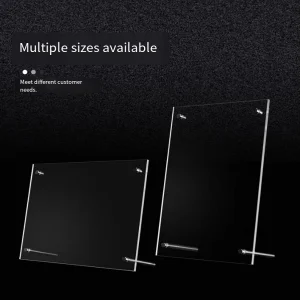
For decades, institutional spaces, luxury retailers, and corporate offices relied on wooden or metal frames that visually interrupted environmental continuity. Modern architectural design demands uninterrupted spatial depth. Floating acrylic frames eliminate perimeter visual weight, allowing images, fine art, and certificates to appear seamlessly suspended against gallery and commercial surfaces.
This "floating" optical illusion creates a three-dimensional depth cue, transforming flat imagery into dynamic architectural elements.
In the floating acrylic picture frame industry, raw monomer formulation dictates longevity. Extruded acrylic sheet offers cost efficiency for fast-moving retail items, but suffers from inherent internal stress, thermal deflection, and cloudy edge dispersion when machined. Professional floating frame procurement mandates 100% virgin methyl methacrylate (MMA) monomer casting.
Cast PMMA panels provide 92.5% to 93% luminous transmittance—superior to standard soda-lime silicate glass—with zero green-edge tinting and uncompromised surface flatness.
Traditional framing traps moisture and admits destructive ultraviolet wavelengths (290–400 nm), causing photochemical yellowing, paper embrittlement, and dye fading. Advanced OEM acrylic engineering integrates proprietary UV absorbers directly into the liquid casting syrup rather than applying a brittle surface spray coating.
This intrinsic barrier filters over 98.5% of hazardous UV radiation, safeguarding archival documents, high-value corporate credentials, and fine-art prints against continuous commercial luminaire exposure.
A true floating frame relies on mechanical offset physics. By utilizing precision-machined 304/316 grade stainless steel or brass standoffs that hold the dual PMMA panels 20 mm to 35 mm away from the wall substrate, ambient light casts a soft natural drop shadow beneath the floating artwork. This dynamic shadow changes naturally with ambient day-to-night lux levels, generating real tactile immersion that glued poster mounts cannot replicate.
How Fortune 500 visual merchandisers, hospital networks, luxury hotel brands, and government facilities mitigate vendor risk when ordering tens of thousands of floating frames.
For oversized floating picture frames (exceeding 24x36 inches or 600x900 mm), uneven wall temperatures or improper cooling cycles induce irreversible planar bowing. Enterprise buyers demand strict deflection tolerances (< 1.5 mm per meter). Achieving this requires optimized molecular weight PMMA resins (≥ 2.5×10⁶ g/mol) paired with prolonged post-cure annealing cycles that release residual molecular shear stress before precision sizing.
High-speed laser cutting produces flame-polished edges, but concentrates localized thermal stress. When cleaning crews spray alcohol or ammonia-based disinfectant wipes on laser-cut floating frames, immediate crazing (micro-fissures) occurs along the perimeter. Enterprise-grade OEM manufacturing enforces CNC diamond milling and dual-pass liquid coolant wheel polishing, yielding an optically transparent 90° beveled edge immune to solvent-induced stress fracturing.
The single greatest operational hazard in transatlantic and transpacific containerized acrylic freight is frictional micro-scuffing and corner shattering. Industrial buyers mandate co-extruded static-free PE masking films (35–50 μm thickness) rather than traditional kraft paper which leaves stubborn gummy adhesive residue over prolonged ocean voyages. Packaging requires custom EPE corner armor and 5-ply honeycomb export master cartons engineered to pass ISTA 3A transit drop testing.
A floating frame is only as reliable as its standoff anchor assembly. Budget suppliers bundle zinc-plated mild steel fasteners that oxidize and pit in coastal or humid environments. OEM B2B specifications dictate corrosion-proof Grade 304 or 316 stainless steel, aviation-grade 6061 anodized aluminum in matte black, satin nickel, champagne gold, or raw knurled brass. Threads must undergo automated thread-gauge GO/NOGO verification to prevent onsite thread stripping during rapid nationwide installations.
Operating out of Danyang, Jiangsu since 2010: how vertically consolidated PMMA extrusion, 5-axis CNC routing, and automated diamond polishing deliver unbeatable quality-to-cost ratios.
Unlike Western fabricators that buy distributed sheets at extreme distributor markups, Danyang Xinquan integrates domestic raw chemical supply with high-throughput machining. By purchasing bulk optical-grade MMA directly from premier chemical refineries and operating in-house cell casting alongside automated slicing lines, material yield increases by 28% while eliminating external logistics markups.
Manual scraping and buffing wheels inevitably introduce edge thickness variances and waviness. Our 30,000 m² Danyang production base utilizes automated multi-spindle diamond edge polishers. Micro-crystalline PCD (polycrystalline diamond) cutters rotate at 18,000 RPM while continuous vacuum hold-downs guide the floating frame panels, achieving RA surface roughness below 0.05 μm with true optical-grade squareness.
Airborne particulates trapped between dual floating acrylic sheets render high-end picture frames unsaleable. All final inspection, anti-static electrostatic ionization de-dusting, and protective film lamination occur inside an environmentally regulated Class 10,000 positive-pressure cleanroom. Every unit reaches overseas distribution centers optically pristine, ready for immediate unboxing.
Objective material properties and physical testing protocols for commercial-grade floating acrylic picture frames.
| Performance Characteristic | Xinquan Cell-Cast PMMA | Standard Extruded Acrylic | Polycarbonate (PC) Sheet | Low-Iron Float Glass |
|---|---|---|---|---|
| Optical Light Transmission | 93.2% (Clear, zero cast) | 91.8% (Minor refraction) | 88.0% (Slight hazing) | 91.5% (High clarity) |
| Impact Resistance (Izod kJ/m²) | 16.0–20.0 (17x glass strength) | 12.0–15.0 | 60.0–80.0 (Ultra-tough) | 1.0 (Extremely fragile) |
| Specific Gravity (Weight g/cm³) | 1.19 (50% lighter than glass) | 1.19 | 1.20 | 2.53 (Heavy structural load) |
| Tensile Strength (ISO 527) | 75–80 MPa | 65–70 MPa | 60–65 MPa | N/A (Brittle fracture) |
| UV Filtering Efficiency (290-400nm) | > 98.5% (Integrated absorber) | < 60% (Without coating) | > 99% (Yellowing over time) | < 25% (Transmits destructive rays) |
| Edge Finish Refraction | Diamond mirror, zero haze | Good, sensitive to crazing | Dark grey/brown cast | Green edge hue (unless costly low-iron) |
| Thermal Heat Deflection Temp (HDT) | 100°C – 105°C | 85°C – 92°C | 130°C – 140°C | > 500°C |
Where floating acrylic picture frames and precision display systems interface with global commerce and public architecture.
High-end cosmetics, luxury timepiece boutiques, and fashion flagships demand agile, interchangeable promotional framing. Floating frames with embedded neodymium magnetic corner fasteners allow store personnel to swap campaign graphic prints in under 15 seconds without dismounting the frame hardware from the wall.
Executive boardrooms, global banking headquarters, and legal chambers employ oversized floating acrylic frames for executive portraits, annual milestones, patent registries, and sustainability charters. Clear polished acrylic coordinates seamlessly with steel, concrete, glass, or natural marble architecture without clashing.
Archival-grade exhibitions require sandwich assemblies featuring anti-reflective (AR) museum acrylic. Minimizing surface glare down to less than 1% specular reflection ensures patrons view authentic brushwork details, while shatterproof shatter-mitigation properties satisfy institutional insurance underwriting standards.
Hospitals and clinics require non-porous, smooth display signage that supports frequent contact with high-grade antimicrobial wiping agents. Sealed-edge floating acrylic boards eliminate dust collection pockets and harbor zero bacteria or mold, satisfying clinical bio-burden reduction mandates.
Boutique hotels, condominium lobbies, and luxury cruise lines utilize custom tinted, frosted, or backlit edge-lit acrylic floating panels. Incorporating low-profile LED perimeter diffusion transforms ordinary signage and art photography into radiant luminescent focal points.
Engineered solutions to the most demanding manufacturing, compliance, and logistical inquiries from global procurement directors.
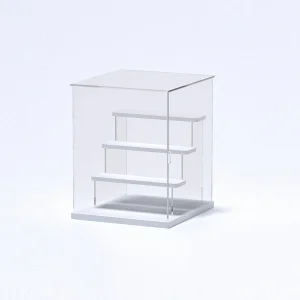
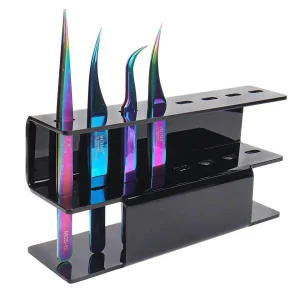
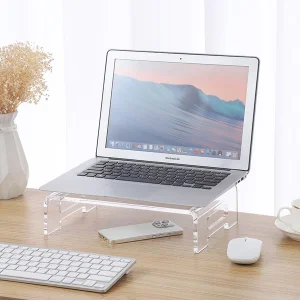
Expanding beyond flat panels: explore our comprehensive OEM thermoforming, precision CNC milling, and multi-tier fixture capabilities.