Explore high-volume, standardized tabletop display frameworks configured for rapid production runs, custom branding inserts, and specialized structural tolerances.
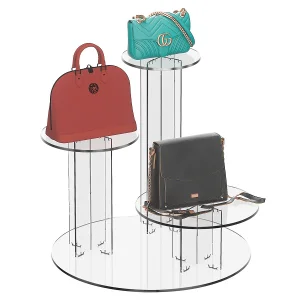


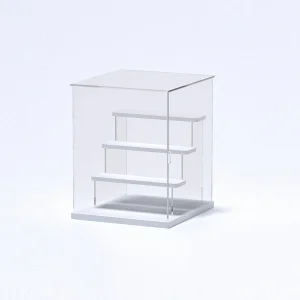
How advanced polymer conversion, closed-loop nesting algorithms, and integrated vertical engineering mitigate cross-border sourcing risks for high-profile retail buyers.
Modern tabletop merchandising requires complex compound bevels, interlocking finger joints, and friction-fit tolerances. Our automated 5-axis routers eliminate step margins down to ±0.05 mm, preventing edge stress-whitening and ensuring sub-millimeter precision across 50,000-unit runs.
Flame polishing often induces internal molecular tensions that cause premature micro-cracking when cleaned with alcohol-based sanitizers. We employ single-crystal monocrystalline diamond polishing heads complemented by convection annealing cycles, guaranteeing optical transparency with zero internal residual stress.
Joint integrity dictates display longevity in high-traffic retail. Rather than utilizing basic volatile solvents that leave micro-voids, Xinquan utilizes proprietary UV-curable acrylic resin adhesives with refractive indices matching virgin PMMA (n=1.491), delivering invisible, monolithic structural seams.
Tabletop displays operate at reading distance where airborne particulates cause visible printing artifacts. Our temperature-regulated cleanroom printing lines deploy piezo-electric variable drop UV flatbed printheads, curing multi-layered color gradients and anti-scratch spot textures with zero ink peeling.
By co-locating near major petrochemical processing clusters in Jiangsu, we source high-purity Methyl Methacrylate (MMA) virgin resin directly. This eliminates raw material spot price volatility, shortens production queues, and maintains strict control over molecular weight distribution.
The convergence of material science, circular economy regulations, and smart retail interactions is fundamentally redefining tabletop acrylic manufacturing.
For decades, commercial tabletop display procurement prioritized aesthetic clarity over chemical resilience. However, evolving point-of-sale paradigms demand active surface functionalization. As enterprise brands deploy omnichannel merchandising strategies, tabletop displays must withstand aggressive quaternary ammonium disinfectants, resist abrasive consumer interactions, and interact dynamically with mobile devices.
1. Surface Nanotechnology & Anti-Crazing Formulations: Conventional PMMA exhibits a pencil hardness rating of 2H to 3H, rendering it vulnerable to surface micro-scratches during frequent cleaning or tactile customer browsing. Our technical roadmap incorporates wet-chemical sol-gel polysiloxane coatings that elevate surface hardness to 5H–6H while maintaining >92.5% light transmittance. Concurrently, our engineering labs have perfected oleophobic fluoropolymer deposition, reducing grease affinity and smudge retention on luxury jewelry stands and interactive touchscreen mounts by 74%.
2. Circular Economy Integration: 100% Chemically Recycled rMMA: Global corporate ESG mandates (such as the EU Corporate Sustainability Due Diligence Directive) require procurement teams to document circular plastic usage. Unlike mechanical recycling, which degrades optical clarity, introduces yellowing, and spikes haze values above 3%, our depolymerization partnerships allow Xinquan to deploy recycled Methyl Methacrylate (rMMA). rMMA undergoes thermal cracking back into monomer form, undergoing multi-stage distillation to yield cast acrylic indistinguishable in tensile strength and optical clarity from virgin petroleum stock.
3. IoT-Integrated & Capacitive Smart Displays: The tabletop display is shifting from a passive holder to an active data capture node. By routing embedded antenna channels directly within the acrylic core during CNC processing, we encapsulate NFC (Near-Field Communication) chips, ultra-thin inductive power coils, and concealed micro-LED modules without exposing wire traces. This enables instantaneous digital product storytelling when an NFC-enabled smartphone touches the tabletop fixture.
| Performance Metric | Standard Commercial Acrylic | Xinquan Optical Cast PMMA | Next-Gen Nano-Coated rMMA |
|---|---|---|---|
| Light Transmission (%) | 89.0% – 90.5% | 92.8% – 93.2% | 92.4% – 92.9% |
| Surface Hardness (Pencil Scale) | 2H – 3H | 3H – 4H | 5H – 6H (Sol-Gel Coated) |
| Disinfectant Resistance (Alcohol / Ammonia) | Immediate Crazing / Haze | Moderate (Short Exposure) | Immune (Anti-Crazing Barrier) |
| Refractive Index (nD20) | 1.488 | 1.491 | 1.491 |
| PCR / Recycled Content (%) | 0% | Optional 30% Blend | 100% Depolymerized rMMA |
| Tensile Strength (ISO 527, MPa) | 65 MPa | 76 MPa | 74 MPa |
Discover how custom acrylic tabletop architectures resolve unique structural, hygienic, and aesthetic challenges across primary commercial sectors.
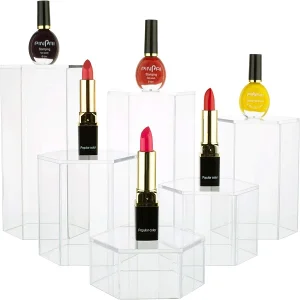
Fragrance bottles and cosmetic emulsions feature alcohol carriers that chemically degrade poorly cured acrylics. Our cosmetic display plinths utilize monolithic cast blocks up to 50mm thick, precision CNC-pocketed to match bottle profiles, and sealed with inert clear-coat barriers to guarantee zero haze upon liquid contact.
Smartphones, smartwatches, and audio equipment demand tabletop stands with integrated security tether raceways, magnetic quick-release fixtures, and concealed wire routing. We fabricate weighted multi-substrate bases marrying laser-etched PMMA with brushed aluminum and anti-slip silicone feet.
From tabletop QR menus to sneeze-guarded bakery risers, food-contact safety is non-negotiable. Our hospitality lines conform to FDA 21 CFR 177.1010 standards, engineered with seamless radius corners that eliminate dirt traps, allowing rapid sanitization in high-turnover dining environments.
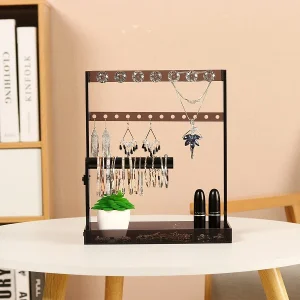
Tabletop jewelry showcases require optical refractive neutrality so diamond fire and metal hues are not distorted. We process ultra-clear, low-iron PMMA sheet stock that replicates museum glass clarity at half the weight, paired with precision micro-chamfered edges that capture ambient boutique lighting.
Financial branches and corporate reception desks rely on modular, magnetic-clamping document blocks for interchangeability. Our precision-milled neodymium magnet enclosures ensure seamless paper changes while maintaining magnetic alignment across thousands of branch deployments.
A structured, stage-gated manufacturing protocol designed to transition conceptual sketches into container-load deliveries without specification drift.
Overseas procurement of custom acrylic displays is frequently plagued by communication breakdowns: underspecified sheet thicknesses resulting in deflection, un-annealed joints cracking during sea transit, or inconsistent Pantone matching under retail LED lighting. At Danyang Xinquan Plastic Products Co., Ltd., we eradicate these bottlenecks via a locked six-stage DFM (Design for Manufacturability) framework.
1. Finite Element Deflection Analysis & DFM Review: Upon receiving customer 3D models (STEP, IGES, SolidWorks) or vector graphics (AI, DXF), our engineering department evaluates moment-of-inertia tolerances. For tabletop book stands, risers, and heavy electronic cradles, we calculate sheet deflection under sustained dead load to verify whether 3mm, 4.5mm, or 6mm gauge PMMA is structurally optimal, preventing permanent creep over extended deployment.
2. Colorimetry & Optical Spectrophotometry: Translucent and edge-tinted acrylic components require rigorous colorimetric governance. Using industrial spectrophotometers calibrated to the CIE L*a*b* color space, we ensure brand-specific PMS tones achieve an optical Delta E (ΔE) < 0.8 across distinct resin batches, guaranteeing uniform visual identity across regional retail stores.
3. Tooling Amortization & Hybrid Extrusion-Cast Strategies: For ultra-high-volume runs exceeding 100,000 units, relying solely on CNC machining creates excessive cycle times and cost bloat. We evaluate opportunities to transition profile sections into custom extrusion dies or injection tooling, amortizing initial NRE (Non-Recurring Engineering) expenses to drive unit costs down by 30% to 45% compared to multi-axis subtractive milling.
4. ISTA-3A Certified Packaging Engineering: Acrylic’s greatest vulnerability during trans-oceanic shipping is surface scuffing and impact-induced shearing of solvent joints. Every tabletop display order is packaged with static-free, co-extruded PE film (or peelable craft masking). Secondary packaging integrates customized, high-density drop-tested EPE (expanded polyethylene) foam molds, reinforced corner posts, and edge-crush-rated 5-ply export master cartons proven to pass ISTA-3A vibration, compression, and 10-point drop testing.
Uncompromising adherence to international health, safety, flammability, and consumer protection protocols across global retail jurisdictions.
All virgin PMMA resins, color masterbatches, and cured UV inks utilized in Xinquan production facilities undergo third-party laboratory verification (SGS/TÜV Rheinland). We ensure heavy metals (Pb, Cd, Hg, Cr VI) and restricted phthalate plasticizers remain well below statutory limits mandated by EU and North American customs authorities.
For tabletop menu displays, buffet risers, pastry cases, and beverage stations, our acrylic compositions comply with US FDA criteria for acrylic and modified acrylic plastics. They exhibit zero migratory monomer leaching or volatile organic emissions during prolonged dry, aqueous, or fatty food contact.
Commercial tabletop displays situated in public assembly spaces, retail malls, and hospitality corridors require verified burn rates. Our standard cast acrylic achieves UL94 HB horizontal burn compliance, with specialized flame-retardant (FR) formulation options available for venues with strict building code mandates.
To insulate international procurement directors from geopolitical shipping bottlenecks, Xinquan coordinates turnkey DDP (Delivered Duty Paid), FOB, or CIF sea-freight solutions. We handle palletized consolidation, ISPM-15 heat-treated crating, export documentation, and bonded regional warehousing support.
In-depth engineering answers to the critical technical queries faced by international purchasing directors and supply chain managers.
Crazing is primarily induced by localized residual tensile stress reacting with solvent vapors or aggressive cleaning chemicals (such as isopropyl alcohol). We prevent crazing via a dual-action manufacturing standard: first, replacing flame polishing with automated diamond fly-cutting and micro-lapping to avoid heat shocks; second, submitting all thermoformed and solvent-welded assemblies to thermal oven annealing cycles (typically holding at 75°C to 80°C for 2 to 4 hours depending on sheet thickness, followed by controlled air cooling) to fully relieve localized polymeric stress.
Cast acrylic (cell-cast) is formed by polymerizing liquid monomer inside glass molds. It boasts a higher molecular weight, superior thermal resistance, crystal-clear edge polishability, and turns a crisp, high-contrast frosted white when laser-engraved—making it ideal for luxury tabletop displays, blocks >10mm thick, and heavy cosmetic risers. Extruded acrylic is manufactured continuously through roller dies; it features tighter thickness tolerances (±5% vs ±15% for cast), a slightly lower softening point, and a lower cost structure, making it optimal for high-volume thin profile items like simple tent-style menu holders, sign sleeves, and budget-sensitive brochure pockets.
Our internal QA protocol defaults to ANSI/ASQ Z1.4 (ISO 2859-1) Level II Normal Sampling, maintaining an Acceptance Quality Limit of Critical: 0, Major: 1.0, and Minor: 2.5. Optical inspections are conducted inside dedicated light booths under 1200-lux daylight LED illumination to detect internal air bubbles, inclusions, haze, thickness deviations, and surface micro-scratches greater than 0.2mm in length. Pre-shipment batch inspection reports with dimensional verification data are shared with client QC teams prior to final release.
We operate integrated fabrication cells that combine PMMA with solid woods (walnut, oak, beech), brushed aluminum, stainless steel standoffs, brass inlays, and injection-molded ABS components. Branding options encompass high-adhesion UV flatbed printing (using primer pre-treatment for smooth acrylic adhesion), precision laser etching, mechanical rotary engraving, silk-screen spot-color printing, and vacuum metallization for gold, silver, and iridescent mirror finishes.
Rapid prototype samples developed from existing CAD files typically dispatch within 4 to 6 business days. Full physical tooling modifications or custom-extruded profiles require 10 to 14 days. Upon golden sample approval and locked specification sheets, mass production schedules average 15 to 22 business days for 5,000 to 20,000 unit orders. Rush production slots can be coordinated to satisfy urgent global product launch timelines or retail campaign deadlines.
Beyond using static-dissipative polyethylene peel film on both faces of each display, we engineer bespoke packaging based on volumetric load and fragile joint points. Units are nested in shock-absorbing EPE or thermoformed PET blister trays, grouped in double-wall corrugated cartons, and strapped onto export-certified fumigated pallets with heavy-duty plastic corner protectors. For oversized, high-mass, or fully assembled fragile fixtures, we build internal wood-framed crates that absorb up to 1,200 kg of lateral container impact.
Explore additional verified manufacturing lines tailored for commercial display enclosures, modular retail risers, and decorative visual merchandising.