Pre-engineered base components ready for rapid dimensional resizing, brand imprinting, and turn-key OEM mass runs.
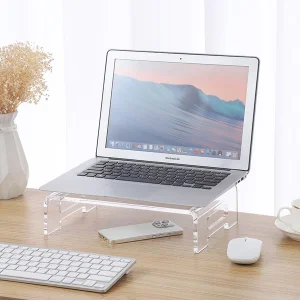

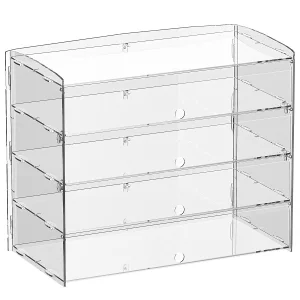
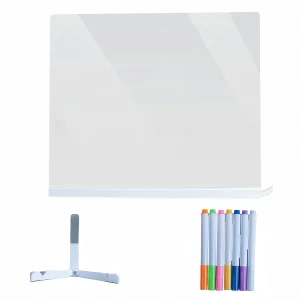
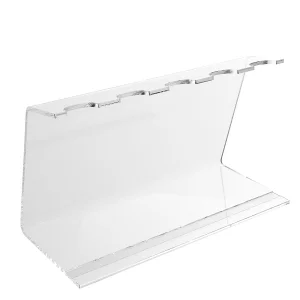
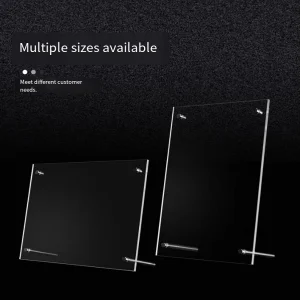
Exploring the industrial synergy between localized PMMA polymer casting, multi-axis automated machining, and cost-efficient scalable tooling.
Operating out of Danyang, Jiangsu, our facility sits in China’s high-density chemical and optics processing corridor. By directly procuring virgin methyl methacrylate (MMA) liquid monomers without intermediary markups, we eliminate batch coloration variances and thermal warping common in reprocessed sheet stock.
Our manufacturing floor deploys high-speed automated laser arrays and CNC cutting stations holding tight tolerances of ±0.1 mm. This robotic precision guarantees that slotted modular assemblies, interlocking signage blocks, and hinge recesses fit seamlessly without on-site manual adjustment.
Acrylic sign displays fail internationally not from craftsmanship errors, but from shipping stress fractures. Every unit retains protective surface PE/Kraft masking, isolated inside custom laser-cut dense pearl cotton (EPE), boxed into 5-ply cartons, and secured with treated wooden pallets.
Understanding shifting technical requirements from eco-conscious virgin recycling to multi-material hybrid illumination.
Global corporate ESG governance has pushed retail architects toward verified recycled acrylic substrates. Contemporary depolymerization allows post-industrial and post-consumer acrylic waste to be cracked back down into monomer form (rMMA) without forfeiting optical clarity. Unlike mechanical recycling which yields yellowing and micro-fissures, chemical depolymerization preserves 91.5%+ light transmission, giving visual merchandising teams sustainable circularity across point-of-sale displays.
Static poster holders are increasingly being replaced by high-efficiency edge-lit acrylic light guide plates (LGP). Using algorithms to calculate proprietary dot-matrix density graduations, laser machines micro-etch light deflection patterns onto 4mm-8mm clear acrylic. When illuminated from the perimeter using 24V LED ribbons, light diffuses with 98% uniformity across the face, eliminating center hotspots and glare across branded retail environments.
Procurement teams often face catalog rejections due to selecting improper acrylic manufacturing grades. The technical table below outlines critical parameters when approving OEM engineering drawings:
| Performance Property | Cell Cast PMMA (GS) | Continuous Extruded PMMA (XT) |
|---|---|---|
| Light Transmission (%) | 92.5% (High clarity, zero haze) | 91.8% (Minor optical distortion at angles) |
| Laser Engraving Characteristics | Turns brilliant frosty matte white | Engraves transparent / gray with rounded rim |
| Chemical Solvent Resistance | High (Allows bubble-free capillary bonding) | Low (Susceptible to crazing / stress fractures) |
| Thickness Tolerances | ±10% to ±15% (Nominal sheet variation) | ±5% (Exceptional gauge uniformity) |
| Primary OEM Application | Luxury display cubes, pedestals, trophy signs | High-run menu cards, brochure stands, poster frames |
From high-volume chain rollouts to luxury showcase fixtures, we translate CAD design intent into reliable acrylic products.
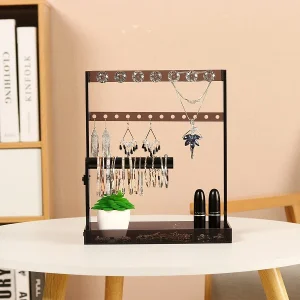
Custom multi-tier cosmetic trays, lockable fragrance showcases, counter-top lipstick organizers, and magnetic POS poster holders engineered for high-touch customer environments.
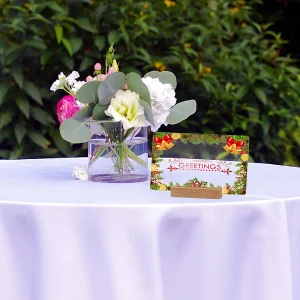
Sanitary acrylic menu tents, tabletop QR code blocks, sneeze barriers, pastry display cabinets, and edge-lit welcome signage engineered with stain-resistant surface coatings.
Wall-mounted architectural standoff directories, dry-erase executive tracking boards, door nameplates, and laser-etched awards incorporating metallic backplates.
Modular freestanding champagne walls, tiered mirror-top cake plinths, customized event entrance arches, and tabletop acrylic seating charts designed for compact flat-pack transit.
A transparent engineering workflow built around Design-for-Manufacturing (DFM) verification and traceable batch inspection.
Our structural engineers analyze your CAD/DXF drawings to evaluate bending radii, notch sensitivity, and joint load distributions. We match application requirements to cast acrylic, extruded PMMA, or high-impact polystyrene (HIPS) to deliver target aesthetics within target unit pricing.
Within 5–7 working days, we fabricate functional golden samples utilizing the exact production-line tooling intended for mass manufacture. Diamond-polished edges, silk-screen pantone fidelity, and adhesive capillary clarity are verified prior to mass extrusion or cutting.
Mass runs pass through inline optical inspections checking for dust inclusions, thickness drift, and bonding bubbles. Pallets are engineered with moisture barriers and custom outer edge-protectors to survive multi-modal sea freight or transcontinental rail handling.
Essential guidance concerning custom tooling, material tolerances, branding methods, and container shipping.
Explore additional specialized acrylic frameworks, protective enclosures, and decorative retail display systems.