Industrial-grade cast PMMA components manufactured with sub-millimeter laser accuracy, diamond micro-milling, and modular mounting hardware ready for worldwide distribution.


From monolithic static plates to responsive, modular architectural systems: how Fortune 500 facilities and global supply chains are reimagining interior workplace identification.
The post-pandemic commercial real estate transformation mandates agile office layout strategies. Fixed room designations are yielding to dynamic conference spaces, hot-desking suites, and phone booths. Acrylic door signage now leverages interchangeable magnetic clear-face sandwiches, sliding vacancy channels, and scratch-resistant matte panels to allow rapid room designation swaps without dismounting wall hardware.
Contemporary interior architects rarely settle for raw monochromatic plastics. Modern corporate identity standards dictate multi-layered substrate bonding. Premium signs unite CNC-routed 6063 aerospace aluminum standoffs, anodized backplates, architectural walnut/oak veneer laminates, and flame-polished optical-grade PMMA faceplates to project institutional stability and refined corporate branding.
Global regulatory bodies require inclusive wayfinding infrastructure. In North America and Europe, commercial facilities face heavy civil penalties for non-compliance with ADA Title III and EN 301-549 guidelines. Contract sign manufacturers must guarantee tactile raised 1/32-inch character bonding, rounded Grade 2 Braille bead insertion, and minimum 70% contrast ratios without visual distortion.
Understanding molecular differences between cell-cast and extruded PMMA prevents premature cracking, solvent crazing, yellowing, and mechanical joint failure across corporate installations.
| Performance Characteristic | Cell Cast PMMA (GS) - Enterprise Grade | Extruded PMMA (XT) - Commercial Grade | Engineering Impact on Office Door Signage |
|---|---|---|---|
| Optical Clarity & Light Transmission | 92.8% - 93% Pure crystal transparency | 91% - 92% Slight internal haze in thick gauges | Cast delivers glass-rivaling aesthetics without the risk of green edge tint or shattering. |
| Edge Machining & Diamond Polishing | Zero melting during routing; high luster diamond polish | Lower melting point; requires cooling agents to avoid gums | Cast ensures crisp, mirror-finish beveled borders that do not chip or cloud over time. |
| Laser Engraving Contrast | Yields crisp, milky-white frosty typographic contrast | Vaporizes clear with low contrast; requires paint-fill | Cast is superior for laser-etched room numbers and corporate logos requiring high legibility. |
| Chemical & Alcohol Resistance | High molecular weight resists aggressive cleaning solvents | Susceptible to micro-crazing from isopropyl alcohol wipes | Critical for healthcare and corporate offices subjected to routine daily chemical sanitation. |
| Thermal Expansion Coefficient | 0.07 mm / (m · °C) - High thermal dimensional stability | 0.08 mm / (m · °C) - Higher expansion delta | Prevents buckling or standoff loosening on perimeter perimeter glass walls facing sun exposure. |
Engineered to resolve building envelope requirements, acoustic wall constraints, and multi-tenant rebranding across institutional portfolios.
For Grade-A commercial developments, architectural uniformity is non-negotiable. Our OEM programs manufacture coordinated sign suites spanning elevator lobby directories, executive suite identifiers, boardroom status boards, and restroom ADA markers. Utilizing standardized CNC back-mounting plates with security set-screws, signs remain vandal-resistant while enabling rapid updates during organizational restructuring.
Hospitality and clinical environments demand hospital-grade hygiene resilience. Our proprietary non-porous, cross-linked PMMA sheets resist yellowing and micro-fissures caused by quaternary ammonium disinfectants, chlorine compounds, and hydrogen peroxide vapor. Sub-surface reverse UV printing shields graphics from direct abrasion, maintaining sterile, seamless front surfaces.
Universities, civic centers, and research parks encounter aggressive wear, frequent room assignments, and stringent budget scrutiny. We engineer high-impact PMMA modular door signs featuring tamper-resistant hex-pin fasteners, impact-resistant modified acrylic blends, and swappable standardized paper-insert bays protected behind UV-blocking non-glare lenses.
Cross-border procurement demands rigorous compliance with destination market building codes, toxicological standards, and environmental certifications.
Full conformance with US DOJ accessibility regulations: 5/8" to 2" uppercase sans-serif tactile typography, 1/32" elevation, California Title 24 spacing, and domed Grade 2 Braille.
Resins and curing inks pass stringent toxicological testing. Completely devoid of heavy metals, phthalates, halogenated compounds, or carcinogenic plasticizers for cleanroom deployment.
Tested for self-extinguishing behavior, critical radiant heat flux, and non-toxic smoke evolution profiles mandated for interior architectural partitions and escape egress paths.
Every overseas shipment undergoes rigorous packaging validation: drop impacts, compression loading, and continuous random vibration tests to eliminate scratch or breakage losses.
Anticipating the next decade of workplace infrastructure: our R&D team pioneers smart sensor integration, low-power digital interfaces, and closed-loop PMMA recycling.
The modern office door sign is no longer a passive visual artifact. We are pioneering ultra-thin, CNC-milled subterranean pockets within the acrylic backplate to conceal high-frequency NFC tags and Bluetooth Low Energy (BLE) micro-beacons. This enables contactless room reservations via corporate smartphone apps and automated audit logs for dynamic room occupancy sensors.
Traditional glossy acrylic reflects overhead LED troffers and natural window glare, severely compromising legibility and ADA visual contrast requirements. Our next-generation lines incorporate in-mold optical nano-texturing and liquid chemical hard-coats (6H Pencil Hardness), delivering high-transmission, ultra-low specular reflection surfaces that eliminate finger smudging and resist abrasive scratches.
Corporate ESG directives demand verifiably sustainable architectural fit-outs. We have deployed closed-loop manufacturing channels utilizing 100% recycled methyl methacrylate (rMMA). Through advanced chemical depolymerization, post-industrial acrylic scrap is transformed back into pure virgin monomer, yielding optical clarity, mechanical tensile strength, and UV longevity equal to pristine fossil-derived PMMA.
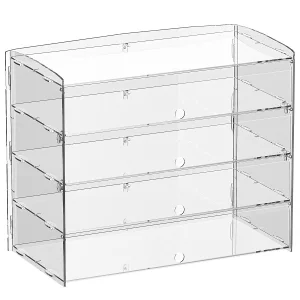
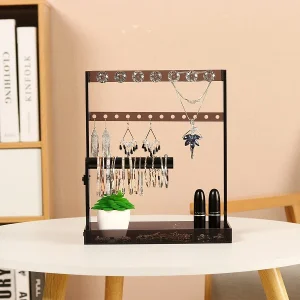
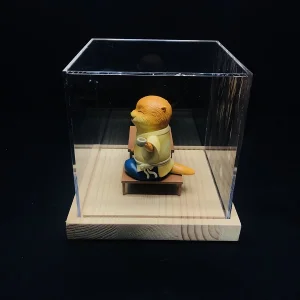
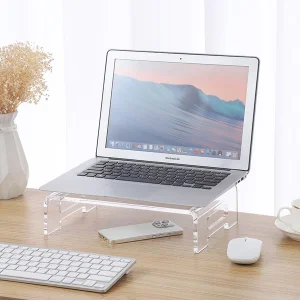
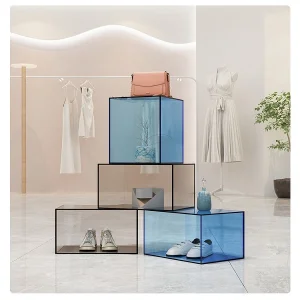
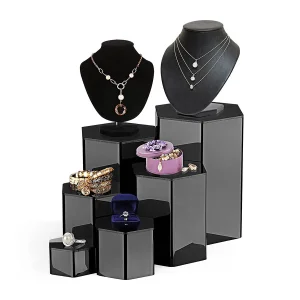
Explore our extended OEM manufacturing portfolio—precision engineered for visual merchandising, institutional interiors, corporate recognition, and luxury environments.
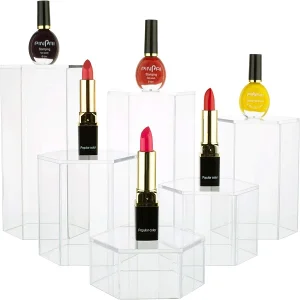

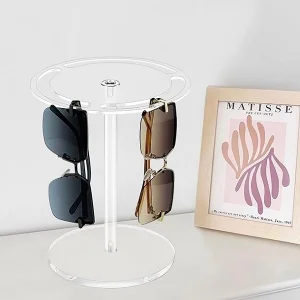
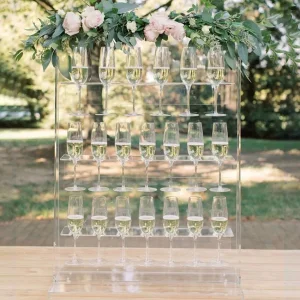
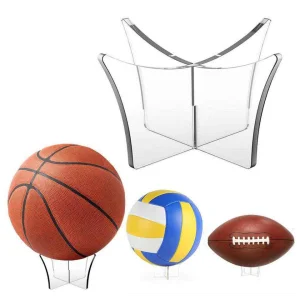
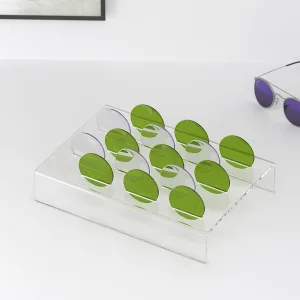
Expert answers addressing design-for-manufacturing (DFM), mounting methods on glass, prototyping timelines, batch testing, and global export packaging.
We supply precision dual-plate glass mounting assemblies. A decorative front sign plate is paired with an identical acrylic or brushed aluminum "back-up" plate on the reverse glass interior. Utilizing optically clear 3M VHB die-cut adhesive rings or perimeter strips, the dual plates sandwich the glass partition, completely concealing all mounting adhesives from both viewpoints while maintaining a clean, floating aesthetic.
Our Danyang manufacturing facility operates high-precision CO2 laser cutters and multi-axis CNC routers calibrated to a strict mechanical tolerance of ±0.05 mm to ±0.1 mm. Standoff mounting through-holes are countersunk or drilled with precision concentricity to ensure seamless alignment with 1/2" (12.7 mm) to 1" (25.4 mm) stainless steel or anodized aluminum architectural hardware.
Yes. We implement two specialized ADA manufacturing technologies: CNC micro-drilled Raster Braille bead insertion (utilizing acrylic or metal spherical beads pressed permanently into precise holes) and raised UV-cured tactile relief printing. Both methods comply fully with US ADA Title III guidelines, California Title 24, and international ISO 21542 standards for tactile elevation, letter height, stroke weight, and dome profile.
We formulate our sheet extrusion and cast processes exclusively with 100% virgin methyl methacrylate (MMA) resins infused with medical-grade Hindered Amine Light Stabilizers (HALS) and UV-absorbing benzotriazole chemistries. Our panels carry an accelerated weathering rating guaranteeing ≤1.5 delta-E color shift and zero visible yellowing or optical hazing over a 10-year exterior-exposure baseline.
Our engineering division directly imports vector graphics and parametric solid models in DWG, DXF, STEP, IGES, AI (Adobe Illustrator), and vector PDF formats. Our pre-press engineering validation verifies draft angles, material thickness allowances, laser kerf compensation, and structural standoff load distributions, providing pre-production 3D renders within 24 business hours.
Custom engineering prototypes and architectural finish samples are manufactured and dispatched via DHL/FedEx Express in 3 to 5 business days upon digital artwork approval. Bulk OEM production schedules typically require 15 to 22 business days for 20ft/40ft full container loads (FCL), backed by rigid factory batch inspection protocols and coordinated sea/air logistics handling.
Collaborate directly with our certified technical engineers. Receive complete DFM assessments, material sample swatches, structural blueprints, and wholesale tiered quotes within 24 hours.
