
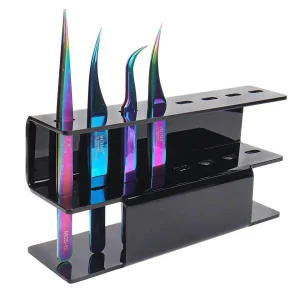
Wholesale Acrylic tool stand xinquan for barber stores, repair stores Manufacturers, Factories
Verify SpecificationsExplore our precision-engineered, direct-from-factory PMMA product range manufactured to tight DIN/ISO tolerances for international B2B logistics.
Wholesale Acrylic tool stand xinquan for barber stores, repair stores Manufacturers, Factories
Verify Specifications
Wholesale Acrylic display riser xinquan Manufacturer, Service
Verify Specifications
Discount Versatile Acrylic Pegboards xinquan for Any Setting, Including Home Use Factories, Service
Verify Specifications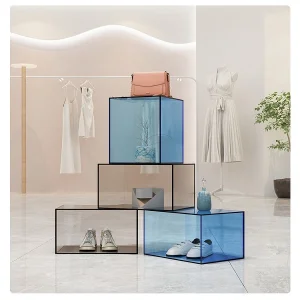
OEM Acrylic Organiser Xinquan for Shoes Bags Showcase Manufacturers, Service
Verify Specifications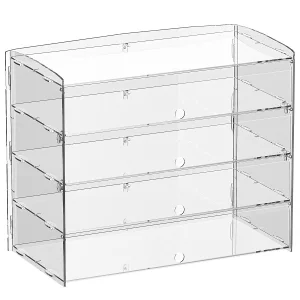
Custom Multi-layer Transparent Acrylic Assembly Transparent Display Box Manufacturer, Suppliers
Verify Specifications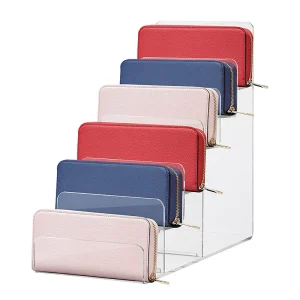
Discount Acrylic display rack xinquan for clothing stores, shoes, hats, purses. Supplier, Factory
Verify Specifications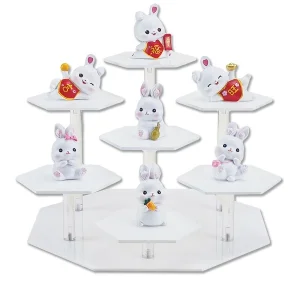
Custom Acrylic Lego Jewelry Cosmetics Exquisite Desktop Exhibition Booth Manufacturers, Suppliers
Verify Specifications
Discount Xinquan Wall-Mounted A4 Clear Acrylic Poster Stand Suppliers, Service
Verify SpecificationsIn modern corporate environments, the acrylic letter tray has transformed from a standard paper organizer into an essential element of executive workspace aesthetics, operational productivity, and sustainable architecture.
Global office consumption trends reflect a definitive migration away from opaque, static plastics and stamped wire toward crystal-grade Polymethyl Methacrylate (PMMA). Corporate headquarters across North America, the European Union, and the Asia-Pacific region prioritize visual weight reduction in open-plan spaces, where high-transmittance letter trays preserve natural sightlines and reduce visual clutter.
Industrial procurement teams routinely evaluate cell-cast vs. extruded PMMA. High-end architectural trays demand virgin MMA cell-cast acrylic, delivering superior molecular weight, complete resistance to surface crazing during laser processing, and 92.5% light transmission that outperforms standard float glass while remaining 50% lighter.
Unlike disposable polystyrene trays prone to deflection under paper loads exceeding 500 sheets, professional OEM acrylic trays are engineered with cross-sectional wall thicknesses from 4.0 mm to 8.0 mm. Specialized solvent welding and solvent-free UV curing eliminate interface boundaries, creating monolithic desktop fixtures capable of withstanding industrial workplace demands.
The fabrication of commercial letter trays has advanced from manual assembly to automated CNC pathways, proprietary diamond micro-milling, and anti-static surface treatments.
Traditional stacked trays relied on brittle injection pins that frequently broke during transit or realignment. Contemporary OEM engineering integrates neodymium rare-earth magnets recessed inside CNC-counterbored cavities. Trays self-align effortlessly, allowing dynamic modular scaling from single tiers up to multi-tier enterprise systems without unsightly brackets.
Traditional flame polishing often generates localized internal thermal stresses, leading to edge micro-fractures under exposure to alcohol-based office disinfectants. Modern tier-1 factories utilize automated multi-axis PCD (Polycrystalline Diamond) edge-finishing machinery, delivering flawless, optically clear 45° chamfers with Ra values under 0.05 μm.
Global Fortune 500 ESG compliance requires measurable recycled content. Progressive fabrication facilities now introduce circular polymethyl methacrylate programs (rPMMA), depolymerizing clean acrylic scraps into renewed MMA monomer without compromising the glass-like transparency essential for luxury workspace architecture.
Deploying acrylic letter trays across specialized environments demands custom adaptations for regulatory standards, environmental cleanrooms, and high-traffic workflows.
In high-security bank back-offices and corporate law firms, document isolation and confidentiality protocols require strict tiered sorting. Monolithic clear acrylic letter trays maintain document visibility for rapid auditing while non-slip silicone feet protect expensive hardwood executive desks from friction abrasions during daily retrieval.
Medical administrative centers enforce non-porous surface standards to minimize microbial colonization. Customized cast acrylic trays with chemically bonded, radiused internal corners eliminate particulate traps. Formulations resistant to hospital-grade quaternary ammonium cleaners ensure longevity without hazing or solvent crazing.
Five-star hospitality groups use desktop fixtures as extensions of their interior design palette. Custom acrylic trays feature embedded tinted interlayers, brushed bronze metallic accents, or satin-frosted finishes. These designs organize VIP itineraries, key card distribution, and billing folios with tailored elegance.
Government agencies in North America and Europe require trays matching international document formats, handling both US Letter (8.5 × 11 in) and ISO 216 A4 (210 × 297 mm) with generous margins. Reinforced wall thicknesses prevent tray sagging during archival document sorting.
An empirical evaluation for global procurement directors comparing life-cycle costs, structural integrity, and aesthetic characteristics across commercial materials.
| Evaluation Parameter | Cell-Cast PMMA (OEM Industrial) | Extruded Polystyrene (PS) | Formed Tempered Glass | Powder-Coated Steel Wire |
|---|---|---|---|---|
| Light Transmission | 92.5% (Crystal Pure) | 84% - 87% (Slight Yellowing) | 88% - 90% (Greenish Cast) | 0% (Opaque Barrier) |
| Impact Resistance | 17x higher than glass | Extremely brittle on drop | Shatters upon high-load shock | High resistance (dents easily) |
| Chemical Disinfection | High (with cast annealing) | Poor (crazes with alcohols) | Excellent | Rust risks at seam welds |
| Tolerances & Customization | ±0.1 mm CNC & Laser | Requires fixed tooling ($$$) | High tooling barrier | ±1.5 mm Welded variance |
| Weight / Desk Loading | Moderate (Optimal balance) | Very light (Slips easily) | Heavy (Scratch hazard) | Moderate (Can mark desks) |
How modern factories integrate smart manufacturing, IoT tracing, and advanced polymer chemistry into workplace storage systems.
Eliminating post-cutting internal stresses through computer-controlled thermal annealing cycles (holding material at 80°C for multiple hours, followed by slow cooling). This process prevents hairline stress cracking when exposed to isopropyl alcohol sprays and everyday workplace sanitizers.
Direct atmospheric plasma grafting of transparent hydrophilic nanocoatings onto PMMA sheet surfaces. This functional layer reduces surface resistivity from 1014 ohms/sq to below 109 ohms/sq, permanently repelling atmospheric dust and eliminating the static buildup common to cleanroom environments.
Integrating ultra-thin, passive RFID inventory tags and pressure-sensitive load foils within multi-layer laminated acrylic bases. This allows enterprise legal, medical, and accounting facilities to automatically log document batch weights and trigger automated digital archive alerts.
Precision-fabricated point-of-sale fixtures, illuminated signage, and modular protective acrylic cases ready for overseas volume shipments.

OEM Acrylic Sunglasses Holder Xinquan for Retail Display Factory, Service
Verify Specifications
OEM Acrylic guide sign xinquan for messages, route guidance, AD Manufacturer, Factory
Verify Specifications
Custom Acrylic Display Box Xinquan Suitable for Toy Display Manufacturer, Suppliers
Verify Specifications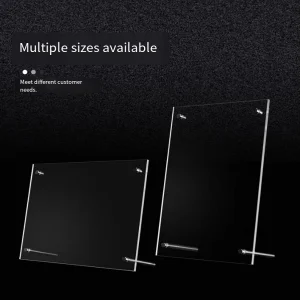
OEM Acrylic Photo Frame Xinquan for Poster Advertisement Table Card Manufacturer, Factories
Verify Specifications
Discount Customizable acrylic wishing wells xinquan for weddings birthdays events Suppliers, Factories
Verify Specifications
Wholesale Black Two-Tier Display Box With Customisable Logo Manufacturers, Service
Verify Specifications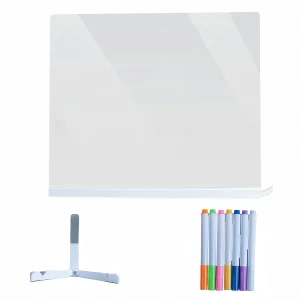
Wholesale Xinquan Clear Acrylic Dry Erase Board with Light Up Stand for Desk Factory, Factories
Verify Specifications
Wholesale Crystal Transparent Hexagonal Acrylic Cosmetic Display Stand Suppliers, Factories
Verify SpecificationsTechnical insights on manufacturing tolerances, bulk logistics, material selection, and custom tooling.