Engineered for outdoor structural resilience, optical grade light transmission, and rigorous architectural wayfinding performance.
An authoritative assessment of polymethyl methacrylate (PMMA) implementation across residential development, boutique hospitality, and commercial hubs.
Contemporary exterior designs are aggressively transitioning from traditional cast bronze, brass, and carved stone towards clean-edge cast PMMA. Acrylic signages offer unparalleled architectural adaptability, lightweight installation geometries, and modern minimalistic appeal required by modern real estate developers.
In urban expansion centers across North America, Western Europe, and the GCC region, large-scale multi-family housing complexes necessitate standardized, serialized room, door, and house indicators. Acrylic provides the cost-performance ratio essential for batch property rollouts without sacrificing aesthetic durability.
Modern virgin cast acrylic retains an optical clarity index of ~92% and offers natural UV-stabilization against photodegradation. Unlike lower-grade polystyrene or unstabilized polycarbonates, OEM exterior-grade acrylic eliminates yellowing, chalking, and stress-cracking in severe marine or desert atmospheres.
Why leading global architectural signage brands, hardware distributors, and hospitality contractors centralize manufacturing in specialized industrial zones like Danyang, Jiangsu.
Proximity to localized monomer casting facilities and specialized extrusion lines ensures zero material-grade bottlenecks. Chinese factories maintain immediate access to custom tinted sheets, anti-glare matte layers, and high-impact PMMA variations.
High-speed multi-axis CNC routers and automated CO2 laser systems achieve rapid serialized custom production. Variable numbering, typography cuts, and custom standoff counterbores are produced continuously with minimal machine downtime.
Factory-integrated diamond edge polishers, multi-head flame polishing stations, and cleanroom UV-curable industrial flatbed printing yield pristine, weather-sealed signage components that eliminate edge haze and surface imperfections.
Sign face integrity is secured via scratch-resistant co-extruded films, precision custom EPE foam inserts, moisture-sealed vacuum layers, and heavy-duty corner-reinforced corrugated cartons drop-tested to ISTA-3A standards.
Tailoring PMMA architectural house number signs to specific municipal codes, ambient environments, and aesthetic traditions globally.
Floating dual-layer designs featuring a matte black or brushed metallic composite backplate paired with a 5mm clear cast acrylic front plate. Stainless steel standoffs provide structural elevation, delivering a high-contrast three-dimensional shadow line that enhances curbside visibility.
Integrated low-voltage edge-lit LED configurations utilizing frosted optical cast PMMA. Engineered laser micro-dot light guide patterns diffuse illumination evenly across numeral boundaries without hot spots, ensuring legible nighttime navigation for private bungalows and guest suites.
Modular unit numbering systems compliant with international ADA (Americans with Disabilities Act) tactile and Grade 2 Braille requirements. High-precision photopolymer or raster bead insertion directly into UV-printed cast acrylic creates sleek, legally compliant architectural signs.
How material advancements, IoT convergence, and carbon-reduction initiatives are reshaping architectural PMMA manufacturing.
Corporate procurement mandates are driving adoption of depolymerized recycled PMMA (rPMMA). Advanced chemical recycling allows 100% monomer recovery, yielding recycled sheets with clarity, tensile strength, and UV resilience identical to virgin material while reducing the product's carbon footprint by up to 70%.
Architectural signs are becoming active communication nodes. By integrating ultra-thin NFC chips or passive RFID tags between layered acrylic panels, modern house plates now provide touchless visitor logging, smart courier dispatch identification, and automated home access validation.
Post-extrusion nano-coatings applied via atmospheric plasma chemical deposition create self-cleaning surfaces. Rainwater runs off cleanly, carrying away urban pollutants, exhaust particulate, and mineral deposits, dramatically lowering maintenance costs for multi-unit projects.
Technical parameters essential for sourcing managers when writing RFQs, approving pre-production master samples, and performing container-level quality control.
| Evaluation Parameter | Commercial Grade (Low Cost) | Standard OEM Specification | Xinquan Architectural Spec (Recommended) |
|---|---|---|---|
| Raw Material Origin | Recycled or blended scrap PMMA | 100% Extruded PMMA Virgin Sheet | Cell-Cast High Molecular Virgin MMA (Mitsubishi/Lucite) |
| Light Transmission & Haze | <88% Transmission, >3% Haze | 90-91% Transmission, <2% Haze | ≥92.5% Optical Clarity, <1% Haze Index |
| UV Degradation Standard | Noticeable yellowing within 18 mos | Delta E < 3.0 after 3,000 hrs Xenon Arc | Delta E < 1.5 after 5,000 hrs ISO 4892-2 Weathering |
| Dimensional Tolerance | ±0.5 mm to ±1.0 mm | ±0.2 mm (Standard Routing) | ±0.05 mm (High-Precision Multi-Axis CNC) |
| Mounting Hardware Integrity | Hollow plated zinc alloy / 201 steel | Solid 304 Stainless Steel Standoffs | Marine Grade Solid 316 Stainless Steel + EPDM Washers |
| Graphic Inlay / Lettering | Monomeric calendered vinyl decal | Direct flatbed UV ink (Single cure) | Sub-surface dual-pass UV with high-adhesion primer seal |
Clear, technical answers to direct procurement queries regarding materials, hardware, and mass-scale production timelines.
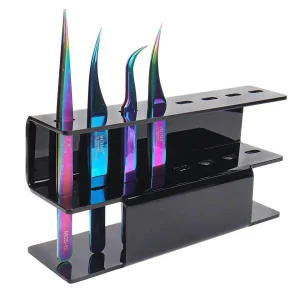
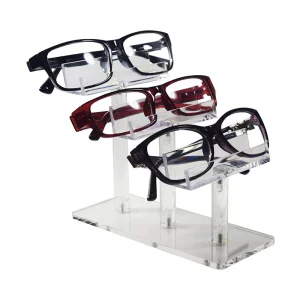
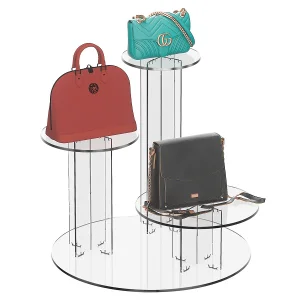
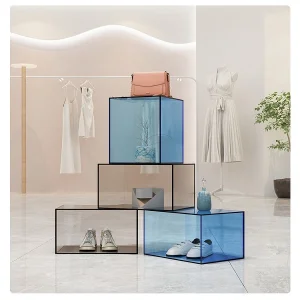
Explore our expanded fabrication line, from custom architectural signage and retail display towers to modular event infrastructure.