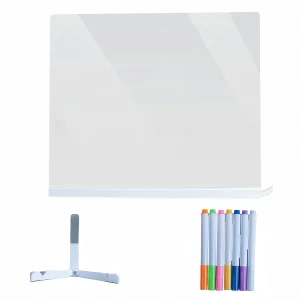
Explore high-precision acrylic components manufactured directly from optical-grade monomer, calibrated for structural integrity, distortion-free planar clarity, and modular retail or gallery integration.




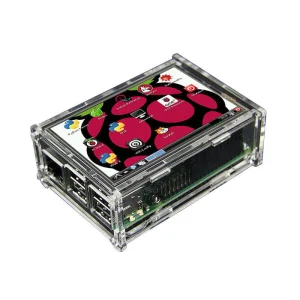
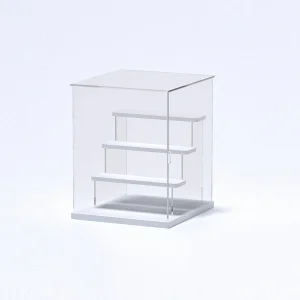
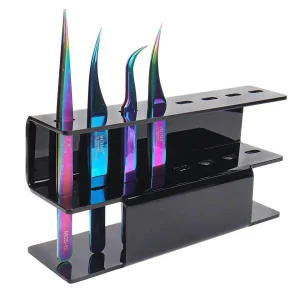

The transition from traditional wooden and metallic picture framing to frameless, floating polymethyl methacrylate (PMMA) systems reflects an evolution in architectural minimalism, structural safety, and archival conservation standards.
Traditional display environments have historically grappled with the vulnerabilities of soda-lime silicate glass: excessive deadweight, brittle fracture hazards, and the greenish tint caused by ferric iron oxides. Modern commercial interior architecture demands uninterrupted visual flow. Museum-grade cast virgin acrylic provides 92% to 93.4% pure visible spectrum transmittance, eliminating chromatic aberration and rendering large-scale gallery walls visually weightless.
Global procurement teams for corporate headquarters, hospitality chains, and retail franchises require scalable OEM production cycles. Extruded PMMA panels offer cost efficiency for high-volume, standardized modular units, while cell-cast acrylic panels serve luxury installations that require diamond-milled beveled edges, countersunk magnet cavities, and optical polishing without residual mechanical stress birefringence.
Archival-grade acrylic gallery walls serve a dual functional mandate: aesthetic presentation and proactive preservation. By compounding hindered amine light stabilizers (HALS) and organic UV absorber additives during liquid methyl methacrylate (MMA) polymerization, contemporary OEM panels eliminate photochemical degradation, yellowing, and pigment bleaching caused by UVA/UVB exposure between 290nm and 400nm.
Advanced multi-axis CNC routing, vacuum sputtering coatings, and magnetic clamping mechanisms are transforming the acrylic frame category into an integrated architectural system.
Eliminating edge screws and surface drill penetrations, modern OEM gallery frames utilize embedded N52 rare-earth neodymium magnets sealed with ultrasonic micro-welds inside blind CNC pockets. This allows effortless media exchange while maintaining a seamless, zero-hardware perimeter silhouette.
Using vacuum magnetron sputtering, titanium and silicon dielectric nano-layers are deposited on PMMA substrates. This lowers surface specular reflectance from standard 8% down to under 1.2%, completely eliminating distracting glare in high-lumen commercial lobbies and retail downlighting.
Standard PMMA exhibits a pencil surface hardness of 2H to 3H. High-traffic commercial environments demand polysiloxane thermal cured or UV-curable hardcoats, raising abrasion resistance to 6H–8H and providing anti-graffiti oleophobic barriers resistant to alcohol and cleaning chemicals.
Sustainability mandates across European and North American markets are driving adoption of depolymerized recycled methyl methacrylate (rMMA). Chemical recycling returns post-industrial and end-of-life acrylic to pure liquid MMA, achieving identical optical and thermal specifications with a 70% lower cradle-to-gate carbon footprint.
How global architectural consultants, procurement directors, and brand designers specify tailor-made acrylic framing systems across distinct commercial, clinical, and residential settings.
Global apparel and cosmetics flagships deploy modular acrylic gallery systems along perimeter wall tracks. High-gloss diamond-polished beveled edges capture ambient spotlighting, creating a floating refraction aura that accentuates seasonal product campaigns, merchandising graphic updates, and point-of-sale branding panels.
Boardrooms, executive corridors, and reception lobbies integrate uniform multi-panel gallery arrays to present corporate milestones, patents, and fine photography. Precision CNC drilling ensures standardized pitch distances, enabling wall mounting with anodized aluminum or brushed brass standoffs aligned within sub-millimeter tolerances.
Modern hospital networks mandate non-porous, shatter-proof framing systems to satisfy strict infection control guidelines (JCAHO). Monolithic acrylic frames with hermetically bonded perimeter edges prevent moisture ingress, harbor zero bio-contaminants, and endure rigorous daily wipe-downs with hospital-grade quaternary disinfectants.
Boutique hotels and luxury penthouses deploy oversized sandwich float frames with museum-style linen inserts or deep acrylic shadowbox profiles. The crystal-clear substrate creates an illusion of artwork floating 30mm off the wall plane, casting soft natural drop shadows across textured architectural wall surfaces.
A comprehensive engineering comparison of acrylic substrate grades, machining parameters, and mounting hardware options available for custom OEM production runs.
| Performance Characteristic | Cell-Cast PMMA (Optical) | Extruded PMMA (Standard) | Polycarbonate (PC Alloy) |
|---|---|---|---|
| Refractive Index (nD) | 1.491 Near Crown Glass | 1.490 | 1.586 (Higher Dispersion) |
| Light Transmittance (380–780nm) | 92.8% – 93.4% | 91.5% – 92.0% | 88.0% – 89.5% |
| Edge Finishing Capability | Diamond & Flame Polishing; Zero Stress Haze | Diamond Polishing only (Solvent sensitive) | Mechanical buffing only; Hazy edge profile |
| Laser Cutting Character | Vaporizes cleanly, brilliant flame-polished edge | Prone to melt lip formation & internal stress | Discolors brown/black; Not laser cuttable |
| Tensile Strength (ISO 527) | 76 – 80 MPa | 70 – 72 MPa | 60 – 65 MPa |
| UV Degradation Resistance (QUV 2000 hrs) | ΔE < 0.8 (With HALS Masterbatch) | ΔE < 1.5 | ΔE > 3.0 (Requires Co-extruded Cap) |
| Standard Thickness Tolerances | ± (0.4mm + 0.1 × thickness) | ± 0.05mm to ± 0.1mm (High Planarity) | ± 0.15mm |
How ongoing capital investments in automated robotics, micro-optics, and intelligent smart-film technology are positioning our production infrastructure for future display standards.
By laser engraving proprietary light guide patterns (LGP) directly across the internal rear surface of cast acrylic frame borders, high-CRI LED arrays mounted within slim aluminum edge profiles emit uniform edge-to-edge illumination without hotspots or glare points, transforming static gallery walls into illuminated fine art showcases.
Integrating robotic multi-axis laser cells running at 10.6 μm wavelength enables seamless joint fusion without chemical adhesives or volatile organic compounds (VOCs). Class 10,000 cleanroom assembly prevents airborne particulates from settling between bonded double-panel float assemblies.
Developing hybrid PMMA laminated films incorporating polymer dispersed liquid crystal (PDLC) films allows gallery frames to dynamically shift from ultra-transparent display mode to an opaque, privacy-shielded presentation surface through low-voltage building management automation.
Our turnkey manufacturing framework is designed to eliminate sourcing friction, guarantee color-fast clarity, and safeguard cargo through comprehensive export validation.
Every blueprint submitted undergoes deep Design-For-Manufacturability checks. Engineers analyze sheet thickness deflection under deadweight, fastener shear loads, and thermal expansion coefficients (ΔT allowances) to guarantee long-term planar stability without bowing.
Industrial diamond micro-cutters spinning at 24,000 RPM shave acrylic edges at feed rates programmed down to microns. This cold-machining process prevents thermal stress fractures, producing water-clear, scratch-free prismatic edges directly from the machine bed.
Panels pass optical coordinate measurement machines (CMM) to verify hole pitch tolerances within ±0.1mm. High-intensity backlighting inspects for inclusions, air bubbles, surface striations, or polarization strain patterns before packaging approval.
Overseas sea and air freight risks are engineered out. Panels remain encased in co-extruded polyethylene scratch-resistant masking films, individually nestled within custom high-density pearl cotton (EPE) foam shells, reinforced by 5-ply honeycomb export cartons or IPPC-stamped fumigated plywood crates.
In-depth responses covering material properties, minimum tolerances, mounting hardware integrity, and container consolidation logistics.
Expand your retail display programs and interior gallery architecture with our integrated custom OEM manufacturing capabilities.