Direct-from-factory modular fabrications, optical acrylic displays, and heavy-gauge architectural furnishings engineered for multi-sector enterprises.
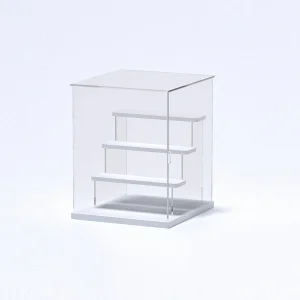
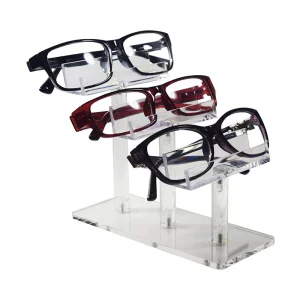

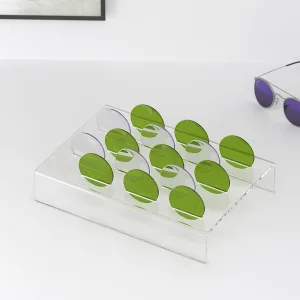
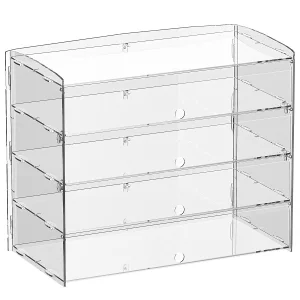

The commercial furniture sector is experiencing a paradigm shift. Modern corporate workplaces, luxury hospitality environments, and high-end residential projects are discarding bulky composite wood and opaque metal substrates in favor of ultra-refined, light-transmitting acrylic (PMMA) tables.
Architects exploit the spatial lightness of slim acrylic tables. With 92% light transmittance exceeding typical soda-lime glass and zero green edge tint, slender PMMA consoles, side tables, and conference extensions visually expand interiors while delivering structural utility.
Historically, "slim" acrylic suffered from deflection under heavy static loads. Modern autoclave post-curing and cross-linked casting ensure 15mm–25mm slim slabs support dynamic loads exceeding 120 kg without bowing or molecular micro-fractures.
By bypassing third-party trading intermediaries, bulk B2B procurement programs capture 30% to 45% unit discount advantages via vertically integrated manufacturers equipped with heavy CNC sheet production lines in Jiangsu, China.
Operational requirements across North America, Europe, Oceania, and the Middle East dictate strict production parameters. We eliminate structural variances through digitized engineering controls.
Boutique hotels, flagship stores (e.g., Apple, Nike, IKEA projects), and Michelin-tier dining venues require bespoke water-clear consoles, slim cocktail risers, and anti-fingerprint coated end tables that withstand daily commercial solvent sanitization without surface crazing.
Direct-to-consumer lifestyle brands require flat-pack or drop-tested nesting configurations. Our slim profile series optimizes container cubic volume, cutting international ocean freight charges by up to 38% compared to pre-assembled furniture blocks.
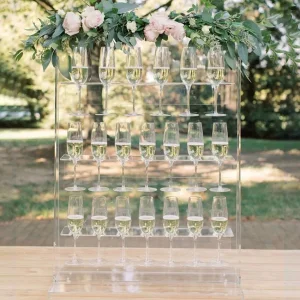
Exhibition organizers and high-end wedding companies depend on lightweight, high-tensile slim tables and coordinating champagne structures. Integrated UV resistance preserves optical water-clarity under direct sunlight exposure without amber discoloration.
Selecting the appropriate PMMA grade is essential for contract longevity, edge clarity, and load ratings.
| Evaluation Parameter | Virgin Cell-Cast PMMA (High Grade) | Extruded PMMA Sheet | General Polystyrene (PS) Alternative |
|---|---|---|---|
| Optical Light Transmittance | 92.8% – 93.4% (Absolute Glass Clear) | 91.0% – 92.0% | 87.0% – 89.0% (Slight Haze) |
| Tensile Strength (ISO 527) | 75 – 82 MPa | 65 – 70 MPa | 40 – 50 MPa |
| Deflection Temp Under Load (0.45 MPa) | 102°C – 108°C | 95°C – 100°C | 75°C – 82°C |
| Solvent & Alcohol Resistance | High (Post-annealed against micro-crazing) | Moderate (Prone to chemical fogging) | Poor (High stress-cracking risk) |
| Edge Finishing Capacity | Diamond & Buff Polish Mirror Finish | Good, Higher Heat Sensitivity | Melts under high-speed tooling |
| Recommended Structural Role | Slim Dining Tables, Desks, Load Consoles | Sign Holders, Menu Stands, Thin Partitions | Low-budget Disposable Promo Displays |
From single schematic concepts to multinational rollouts across hundreds of commercial sites, our in-house facility guarantees zero outsourcing risks.
Every blueprint is evaluated through FEA (Finite Element Analysis) modeling to simulate static weight distribution, joint stress concentration, and transit vibration prior to tooling allocation.
Equipped with computerized high-tonnage multi-axis CNC routers and heavy-bed CO₂ industrial lasers, we achieve repeatable ±0.1 mm precision across thousands of identical units.
Our proprietary capillary cementation and UV-curing methods yield crystal joints completely free of air inclusions, silver streaks, or visual cloudiness, delivering monolithic clarity.
Each unit features scratch-resistant masking films, encased within non-abrasive high-density EPE foam cradles and housed in ISPM-15 compliant export plywood crates.
Cross-border enterprise procurement demands full regulatory traceability. Our fabrication programs strictly follow regional environmental, safety, and fire protocols.
Our raw PMMA resins are certified 100% free of hazardous plasticizers, phthalates, lead, and BPA. Fully compliant with California Proposition 65 and European Union REACH chemical thresholds for sensitive indoor settings.
Acrylic tables and commercial displays meet UL94 HB horizontal burning ratings and DIN 4102-1 B2 standards, enabling verified installation across airports, corporate lobbies, educational institutes, and municipal libraries.
Beyond FOB and CIF arrangements, we facilitate end-to-end DDP (Delivered Duty Paid) shipments directly to customer distribution hubs or third-party logistics centers across North America, Europe, and Australasia.
Our ongoing R&D investments center on circular economy initiatives, nano-surface engineering, and active IoT integrations.
Targeting strict ESG enterprise mandates, our next-generation product roadmap incorporates chemically depolymerized methyl methacrylate (rMMA), maintaining 92% optical clarity while slashing lifecycle carbon emissions by 70%.
Standard PMMA registers a 2H–3H pencil hardness. Our cleanroom thermal-cure spray line applies an invisible nano-silica shield elevating surface scratch hardness to 5H–6H, dramatically extending service life within high-traffic retail environments.
We are integrating invisible, edge-lit conductive micro-layers and concealed inductive charging coils within slim acrylic table slabs, converting transparent surfaces into discrete power interfaces for tech offices and modern hospitality lounges.
Critical purchasing clarifications covering volume minimums, load thresholds, structural joints, and cross-border delivery schedules.
We avoid cheap extruded sheet. Our tables are fabricated using high-molecular-weight virgin cast PMMA. For spans exceeding 1000mm with thickness below 20mm, our engineering department performs FEA calculations to introduce structural radiused return folds, gussets, or internal edge-annealed stiffeners, securing safe load ratings exceeding 100 kg.
For bespoke architectural projects or prototyping, our sample MOQ is 1 unit with a standard 5 to 7 working day turnaround. For full commercial batch production runs, our MOQ generally begins at 20 to 50 pieces, enabling maximum cost amortization and volume tier discounting.
Yes. Our engineering division natively processes DXF, DWG, STEP, IGES, AI, and vector PDF files. We provide complimentary DFM (Design for Manufacturability) analysis, recommending edge radiuses, chamfers, or joint revisions to optimize strength and prevent stress points.
We employ reaction-based acrylic polymerizing solvents and multi-wavelength ultraviolet adhesives that chemically fuse the PMMA molecules across the seam. Unlike hot glue or cyanoacrylates, these bonded joints are as structurally durable as the raw sheet, remaining transparent without yellowing or failure under cyclic thermal expansion.
Every production run undergoes a rigorous four-point quality inspection: 1) Spectrophotometer optical clarity audit; 2) Caliper dimensional verification (holding ±0.1mm tolerances); 3) High-stress static weight deflection hold; and 4) ISTA-1A drop testing for fully packaged export cartons and wooden crates.
Pre-production sample verification concludes in 5 to 7 days. Standard container-level fabrication (20GP / 40HQ) typically ships within 15 to 25 business days depending on geometric complexity, surface polishing requirements, and customized packaging specifications.
Full-scale manufacturing integration covering pegboards, wedding accessories, archival cases, and retail display components.