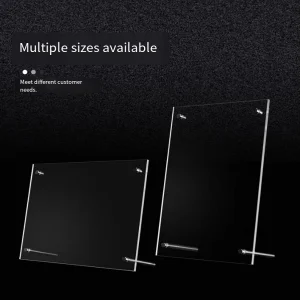
Direct factory production models manufactured with optical cast PMMA sheets, diamond edge processing, and ultra-durable solvent-welded construction.



Understanding why global zoos, institutional breeders, and pet lifestyle brands are migrating from annealed glass to high-molecular cast acrylic (PMMA).
Glass enclosures experience rapid heat loss (thermal conductivity ~0.8 W/m·K), causing high HVAC operational costs in commercial reptile houses. Large acrylic terrariums exhibit thermal conductivity of only 0.19 W/m·K, cutting heating power consumption by up to 38% while stabilizing critical temperature gradients.
Large vivariums over 120 gallons face tremendous hydrostatic and substrate shear stresses. Cast virgin acrylic offers 17 times the impact resistance of float glass at half the bulk density (1.19 g/cm³), radically slashing overseas container freight breakage rates from an industry average of 6.2% down to under 0.15%.
Through automated 5-axis CNC routing and multi-cavity precision thermoforming, our factory achieves true economies of scale. High-yield nesting algorithms reduce raw material scrap to under 4.8%, allowing distributors to capture wholesale factory discounts on large enclosures without sacrificing edge clarity.
Engineered for harsh, high-humidity, and UV-saturated environments across biological research, public venues, and commercial retail.
Public exposure requires fail-safe shatterproof enclosures. Our 10mm to 25mm thick cast PMMA terrarium viewing panels resist aggressive physical impacts from large monitor lizards, crocodilians, and constrictors while offering zero chromatic aberration across ultra-wide viewing angles.
Scientific vivarium settings demand chemical inertness. Our molecularly bonded terrariums withstand constant misting, synthetic digestive enzymes, ammonia accumulation, and high humidity (>90% RH) without crazing, joint yellowing, or bacterial harboring in seal gaps.
Pre-assembled stackable modular terrarium banks maximize in-store floor efficiency. Featuring integrated cable grommets, concealed thermostat probe channels, and lockable sliding acrylic doors, these systems upgrade consumer store aesthetics and boost live animal sale conversion.
Direct from Danyang Xinquan: rigorous chemical safety, certified non-toxicity, and dependable regional delivery support for global brand partners.
Reptiles, amphibians, and invertebrates are acutely sensitive to chemical off-gassing. Unlike cheap extruded polystyrene or heavily plasticized PVC that release volatile phthalates under ceramic heat emitters (CHE) and high-output UVB lamps, Xinquan utilizes pure virgin PMMA synthesized to ISO 7823-1. Our terrariums are certified free of bisphenols, lead, and hazardous halogenated fire retardants.
We provide overseas buyers with turnkey supply chain security. For full container load (FCL) orders, our facilities feature automated shrink-wrapping, foam edge buffer pads, and fumigated solid timber crating engineered to survive intermodal shipping across maritime, rail, and road freight routes.
| Material / Engineering Parameter | Xinquan Cast PMMA Terrarium | Standard Float Glass Enclosure | PVC Foam Board Terrarium |
|---|---|---|---|
| Optical Clarity / Transmission | 92.8% (Crystal clear edge) | 84 - 88% (Green iron tint) | 0% (Opaque walls only) |
| Thermal Conductivity (W/m·K) | 0.19 (Superior insulation) | 0.80 (High thermal dissipation) | 0.07 (Prone to heat sagging) |
| Impact Strength (kJ/m²) | 16 - 20 (Virtually unbreakable) | 1.0 - 1.5 (High shatter risk) | 12 - 15 (Soft, chew-prone) |
| Moisture Absorption (24h immersion) | 0.2% (No structural warping) | 0% (Impervious) | 1.5 - 3.0% (Risk of core mold) |
| Joint Bonding Mechanism | Solvent Polymer Fusion (Molecular) | Elastic Silicone (Degrades/chewed) | Screws / Weak Plastic Weld |
How Xinquan is bridging polymer science with IoT smart terrarium automation for the pet care industry of tomorrow.
Historically, acrylic scratch vulnerability was a concern with sharp claws. Our latest automated vacuum deposition line applies a 4H-pencil hardness silica-based nanocomposite coating that increases scratch resistance by 400% without impairing light transmission or UV spectrum passage.
Say goodbye to dangling heating pad wires. We are engineering micro-embedded transparent conductive ITO circuits directly within bottom acrylic panels, providing uniform, thermostat-controlled subsurface heat distribution without hot spots or fire hazards.
Aligning with European corporate ESG goals, our facility is integrating depolymerization cracking technology that accepts clean factory end-cuts to regenerate rMMA monomers with identical mechanical and optical qualities, reducing manufacturing carbon footprints by 62%.
Authoritative guidance addressing the engineering, ordering, and logistics queries of global acrylic enclosure importers.
From micro-electronics housings to large-scale event architectures and laboratory display setups.