Explore our foundational clear acrylic manufacturing programs engineered with strict optical clarity, structural bonding, and calibrated CNC tolerances.
Analyzing procurement dynamics, volume cost structures, and technical quality indicators across North American, European, and Asia-Pacific retail and commercial markets.
In modern commercial architecture and interior procurement, the clear acrylic vanity chair—commonly designated within hospitality and architectural circles as the ghost chair, lucite dressing seat, or optical PMMA task chair—has shifted from an avant-garde aesthetic experiment to a core catalog fixture for luxury boutique hotels, beauty counters, upscale salon networks, and residential staging chains. Sourcing managers navigating tier-one and tier-two contract furniture manufacturers face the continuous imperative to secure competitive bulk terms without compromising structural load margins, optical refraction consistency, or long-term polymer stability.
Procuring wholesale or discount clear acrylic seating on an industrial scale demands deep comprehension of monomer synthesis, sheet thickness variance, molecular weight distribution, and stress-cracking thresholds. B2B corporate buyers often confront the false economy of cut-rate injection-molded polystyrene (PS) or recycled polymethyl methacrylate (rPMMA) disguised as virgin cast acrylic. While substandard resin variants mimic optical clarity on day one, they rapidly degrade under commercial ultraviolet exposure and alcohol-based cleaning agents, causing stress crazing, structural fatigue, and hazardous joint failure.
Global boutique brands specify clear PMMA seating to cultivate airy spatial volume in limited-square-footage guestrooms, premium powder suites, and bridal dressing suites. Optical clarity ensures zero visual blockage.
Volume Contracts • High DurabilityGlobal department store concessions and luxury fragrance parlors rely on optical-grade acrylic vanity stools. The crystal luster reflects clean studio lighting without altering color fidelity for cosmetic application.
Zero Chromatic AberrationRental suppliers require lightweight, stackable, and high-tensile vanity seating that withstands heavy logistics turnaround. Cast acrylic chairs undergo thermal annealing to prevent micro-fractures during transport.
Reinforced Structural IntegrityEngineering parameters, molecular crystallization, thermal annealing, and joint chemical bonding standards behind factory-grade vanity chairs.
The manufacturing process of an authentic commercial-grade acrylic vanity chair hinges entirely on the raw monomer synthesis. At Danyang Xinquan Plastic Products Co., Ltd., we utilize cell-cast polymethyl methacrylate manufactured from 100% virgin methyl methacrylate (MMA) liquid monomer. Cell casting between double-tempered float glass plates achieves superior molecular weight uniformity compared to continuous extruded sheets. This molecular configuration yields high tensile flexural strength, an essential parameter when engineering load-bearing cantilevered vanity chairs or backless ghost stools.
A primary point of divergence between a professional contract manufacturer and speculative discount brokers lies in the treatment of internal stress. When 15mm to 30mm thick acrylic sheets are thermoformed or hot-bent along radii to form ergonomic seating curves, intense localized tension accumulates at the bend vertices. Without precision thermal post-curing (annealing in computerized temperature-regulated ovens at 80°C for 4 to 8 hours), the seat structure remains vulnerable to sudden catastrophic brittle fracture under sustained static loads.
| Performance Characteristic | Cell-Cast Virgin Acrylic (PMMA) | Extruded Acrylic Sheet | Polycarbonate (PC / Lexan) | Molded Polystyrene (PS) |
|---|---|---|---|---|
| Optical Light Transmission | 92.8% (Crystal clarity, diamond polish) | 91.5% (Fair edge finish, minor ripple) | 88.0% (Slight greyish/blueish tint) | 84.0% (Dull gloss, hazing tendency) |
| Static Weight Capacity | 350 lbs – 450 lbs (Tested via BIFMA) | 200 lbs – 250 lbs (Prone to bending) | 400 lbs+ (High impact flex) | <160 lbs (Brittle failure risk) |
| UV Photostability & Yellowing | Delta E < 1.0 over 10 Years (Class A) | Delta E 2.5 – 4.0 over 5 Years | Requires UV co-extruded stabilizer | Severe yellowing within 18 months |
| Chemical Solvent Resistance | High resistance to neutral surfactants | Moderate (Prone to solvent stress) | Low resistance to ketones & bases | Extremely low (Rapid surface attack) |
| Edge Refraction & Polish | Diamond & flame-polished crystal mirror | Matted finish, visible cut striations | Gummy edge when routed, darkens | Unsuitable for diamond edge polish |
| Lifecycle Value for B2B Importers | Premium lifespan, commercial warranty | Secondary retail, residential light duty | Industrial safety applications | Low-cost disposable commodity |
Unlike ordinary cyanoacrylate gluing which creates brittle, cloudy seams, our solvent and UV capillary bonding techniques merge PMMA panels on a molecular level, guaranteeing seamless load transmission without visible bubbles.
Solvent Capillary • UV PolymerizationEvery cut facet undergoes multi-pass computerized PCD diamond fly-cutting followed by hand-buffing. This prevents microscopic edge fissures that frequently initiate fracture under continuous sitting weight.
Mirror Reflection • Zero NotchingSeats and contoured lumbar backrests are sculpted through precision CNC male-and-female ceramic-coated molds within convection heating vaults, ensuring comfortable posture without localized material thinning.
Uniform Caliper • Precision ContourOvercoming logistical bottlenecks, tariff classifications, sea-freight volumetric optimization, and palletized crash-testing for overseas buyers.
Traditional rigid acrylic chairs present high dimensional shipping costs. Our industrial design team engineers specialized stainless-steel internal thread inserts and interlocking dovetails, slashing freight volume by up to 65% per 40ft HQ container.
Optimized CBM • Lower Landed CostClear acrylic is inherently vulnerable to micro-abrasions in maritime transit. We employ double-layered co-extruded PE film (80 μm) coupled with customized high-density EPE foam cradles and drop-tested honeycomb outer cartons rated to ISTA 3A protocols.
ISTA 3A Drop-Tested • Zero AbrasionBy eliminating trading intermediaries, Xinquan Acrylic empowers wholesale distributors, hotel procurement contractors, and Amazon FBA furniture brands to achieve scalable cost reductions of 22%–38% relative to regional domestic wholesalers.
Direct OEM/ODM • Tier-1 PricingAddressing the fundamental limits of acrylic seating through next-generation surface engineering and chemical depolymerization.
Historically, the primary consumer objection to acrylic vanity chairs has centered on scratch susceptibility (PMMA pencil hardness typically registers between 2H and 3H on the Mohs/Wolff-Wilborn scale). In high-turnover hospitality environments, metal zippers, sequined dresses, and handbag buckles can leave superficial micro-scuffs over extended periods.
To spearhead product longevity, our R&D pipeline integrates cleanroom hardcoat polysiloxane coatings (UV-curable inorganic-organic hybrid silica networks). This chemical surface modification elevates seat surface hardness to 5H–6H without compromising light transmission or flexural responsiveness. Simultaneously, anti-static nano-additives suppress dust accumulation caused by triboelectric charging—a widespread challenge for retail showrooms displaying transparent furniture.
Unlike thermoset plastics, PMMA can be thermal-depolymerized back into pure methyl methacrylate monomer with recovery rates exceeding 95%. We assist enterprise partners in meeting stringent EU CSRD ESG directives through closed-loop recycling programs.
Circular Economy • Low Carbon FootprintMeeting commercial flammability mandates (such as California TB 117-2013 and British Standard BS 5852) requires advanced non-halogenated organophosphorus additives. We synthesize flame-retardant PMMA that preserves crystal transparency while passing Class 1 interior safety tests.
BS 5852 • CA TB 117 CertifiedEvery custom vanity chair model is subjected to rigorous computational stress modeling prior to mold fabrication. We simulate dynamic user impact, backrest torsional deflection, and cantilever flexure to optimize cross-sectional wall thickness and save raw resin weight.
FEA Structural OptimizationComprehensive inspection routines verified under ISO 9001 and ANSI/BIFMA performance criteria from raw sheet intake to outbound container seal.
Our vanity chair prototypes endure 100,000 cycles of dynamic seat loading at 225 lbs, followed by 300 lb proof loading and horizontal backrest proof testing to guarantee zero joint delamination or fatigue failure in commercial venues.
100,000 Cyclic Load PassesUsing calibrated hazemeters, every production run of acrylic panels is tested for haze percentage (under 1.0%), yellowing index (YI < 0.5), and bubble inclusion tolerances (zero visible occlusions exceeding 0.3mm within structural areas).
ASTM D1003 & D1925 ComplianceClear acrylic formulated by Xinquan contains zero toxic plasticizers, lead phthalates, or bisphenol-A (BPA). Certified compliant with EU Regulation (EC) No 1907/2006 (REACH) and California Proposition 65 chemical migration criteria.
Zero BPA • Non-Toxic CertifiedExpand your acrylic purchasing program with customized store display cases, POS pedestals, and precision electronic housings from the same trusted manufacturing source.
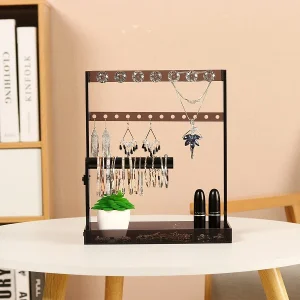
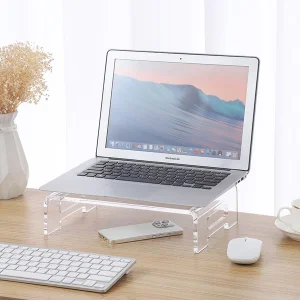
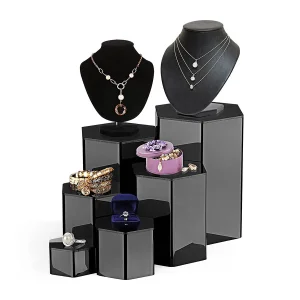
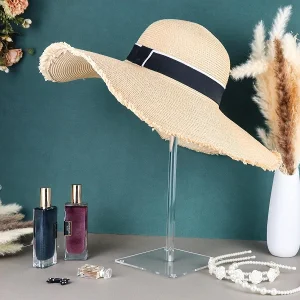
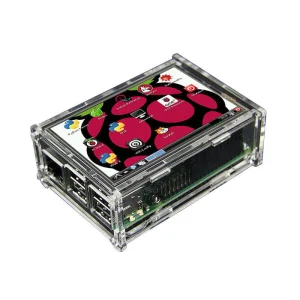
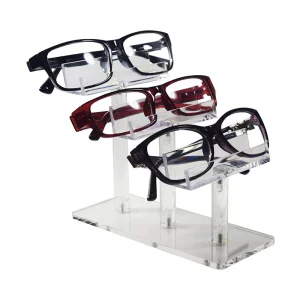
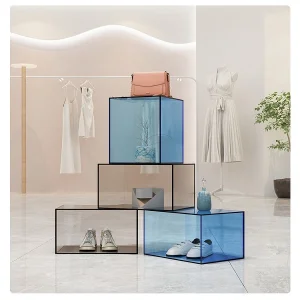
Authoritative answers addressing engineering tolerances, custom branding, logistics tariffs, chemical cleaning, and bulk order MOQs.
Our pricing efficiency stems from vertically integrated manufacturing at our 30,000 m² production facility in Danyang, Jiangsu. By procuring virgin methyl methacrylate (MMA) bulk monomer directly, operating automated multiaxis CNC routing tables in-house, and utilizing standardized modular thermoforming tooling, we eliminate third-party processing markups. Furthermore, optimized flat-pack structural engineering reduces shipping crate cubic volume by up to 65%, dramatically lowering landed container costs for overseas distributors.
For solid cantilevered or monolithic bent-back vanity chairs, we mandate a minimum sheet gauge of 15mm to 20mm cast PMMA. For designs with reinforced triangular gussets or metal/acrylic hybrid leg assemblies, 12mm to 15mm seat pans deliver sufficient static load safety up to 350 lbs (158 kg) in accordance with ANSI/BIFMA X5.1 commercial seating standards. We provide certified Finite Element Analysis (FEA) reports upon request.
Clear PMMA should never be cleaned with alcohol, ammonia-based formulas (such as conventional glass cleaners), acetone, or aromatic solvents, as these agents cause immediate chemical micro-crazing and hazing. We recommend mild neutral dish detergent solutions, specialized anti-static polymer polishes (e.g., Novus 1 or Brillianize), or our optional polysiloxane hardcoated chair surfaces, which provide enhanced resistance to incidental cosmetic alcohol splashes.
Prototyping from approved 3D CAD/SolidWorks files generally requires 5 to 7 business days, including laser cutting, precision thermoforming, and diamond edge polishing. Full 20ft or 40ft container mass production typically completes within 18 to 25 business days, subject to custom color tinting, velvet or boucle cushion integration, and client-specified retail drop-ship packaging requirements.
Each chair component remains sealed in 80-micron heavy-duty anti-scratch PE film throughout processing and packaging. Units are encased in form-fitting 35kg/m³ high-density expanded polyethylene (EPE) foam shells, packed in 5-ply double-wall corrugated cartons, and strapped onto fumigated export wooden pallets with reinforced corner protectors. Full crating is deployed for LCL shipments to eliminate external impact damage.
Yes. We regularly produce bespoke hybrid seating combining 100% cast acrylic chair bodies with brushed brass, chrome, or matte black electroplated stainless steel hardware. We also supply custom-fitted, removable vanity cushions crafted from commercial faux leather, water-repellent velvet, or high-resilience memory foam engineered to meet CA TB 117 fire retardant requirements.
For standard catalog chairs and established tooling profiles, our MOQ starts at 50 units. For fully bespoke geometric shapes requiring custom CNC-machined steel or ceramic-coated thermoforming molds, our MOQ is typically 100 to 200 units. Flexible trial batches can be accommodated for boutique commercial hotel specifications or brand pilot rollouts.
Connect directly with senior DFM engineers at Danyang Xinquan Plastic Products Co., Ltd. for instant drawing reviews, material gauge calculations, bulk pricing tiers, and customized freight optimization.
