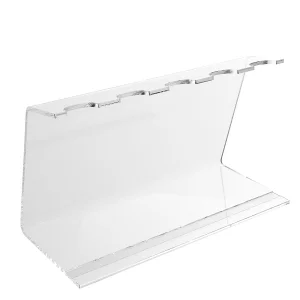
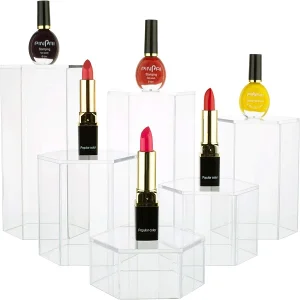
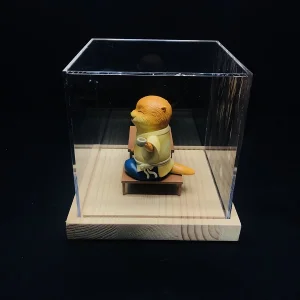
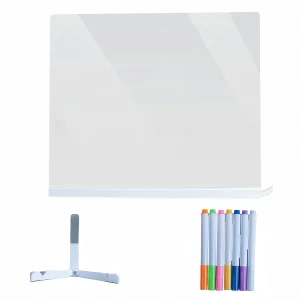
Explore initial core series engineered with diamond edge polishing, museum-grade light transmission (92.8%), and high-load structural resilience for global retail, weddings, and commercial spaces.
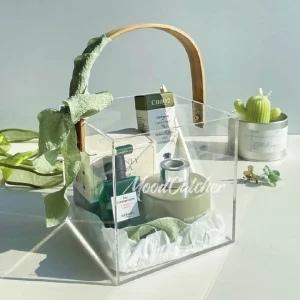
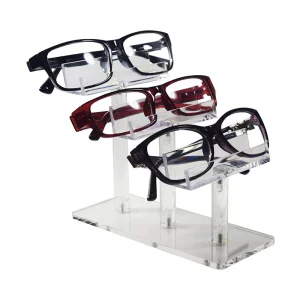
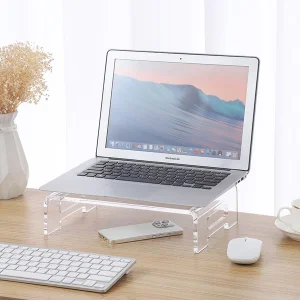

Examining how high-grade polymethyl methacrylate (PMMA) shifted from boutique mid-century experiments to indispensable, volume-manufactured elements in high-traffic commercial environments.
Modern interior design across luxury hospitality, corporate headquarters, and high-density residential developments relies heavily on visual weight reduction. Clear acrylic dining tables, waterfall consoles, ghost chairs, and transparent podiums eliminate visual obstruction, allowing daylight and floor patterns to permeate seamlessly while maximizing small-to-midsize footprints.
Traditional annealed glass presents fatal fracture hazards, excess dead weight (acrylic is 50% lighter), and low impact resistance. Cast acrylic panels deliver up to 17 times the shatter resistance of architectural glass, withstand heavy localized dynamic loading, and avoid catastrophic crystalline shattering, fulfilling strict international public safety regulations.
Historical misgivings regarding polymer discoloration have been dismantled through advanced triazine-based UV absorber stabilization during cell casting. Premium virgin methyl methacrylate (MMA) resins now boast certified 15-to-30-year resistance to ambering, photochemical degradation, and micro-crazing under continuous indoor fluorescent or outdoor direct solar radiation.
In B2B contract furnishing, "discount" historically implied repurposed regrind polymers or unannealed extruded polystyrene. However, leading China-based manufacturers like Danyang Xinquan Plastic Products Co., Ltd. (Xinquan Acrylic) have systematically restructured the cost curve. By pairing direct raw monomer polymerization pipelines with high-yield automated nesting algorithms and multi-spindle CNC machining, production scrap is curtailed from the industry average of 22% down to under 4.8%. This enables authentic factory-direct wholesale pricing on 100% virgin Lucite/PMMA monolithic furnishings without compromising structural density, optical clarity, or load safety factors.
Global procurement teams across commercial hospitality, luxury retail flagships, and architectural development cannot afford field failures. Selecting the correct thermoplastic polymer configuration ensures load endurance, joint transparency, and lifetime aesthetic value.
| Performance Characteristic | Cell Cast Acrylic (PMMA) | Continuous Extruded Acrylic | Polycarbonate (PC / Lexan) | Architectural Annealed Glass |
|---|---|---|---|---|
| Optical Light Transmission | 92.5% - 93.2% (Crystal Clear) | 91.5% - 92.0% (Clear) | 87.0% - 89.0% (Slight Tint) | 86.0% - 90.0% (Green Edge) |
| Surface Hardness (Rockwell M) | M95 - M100 (Scratch Resilient) | M85 - M90 (Moderate) | M70 - M75 (Easily Scratched) | Mohs 5.5 - 6.0 (High Hardness) |
| Bending & Tensile Strength | 75 - 82 MPa (High Load Capacity) | 65 - 72 MPa (Moderate Span) | 68 - 75 MPa (Flexible) | 40 - 50 MPa (Brittle Rupture) |
| Joint Bonding Integrity | Molecular Polymerization (Invisible) | Capillary Solvent (Micro-crazing risk) | Mechanical Fasteners / Opaque Glue | Silicone Seams / UV Glue Bevels |
| Diamond Polishing Result | Museum-Grade Specular Refraction | Good (Prone to thermal chatter) | Poor (Gummy edge friction) | Requires Ceramic Wheel Grind |
| Recommended B2B Applications | Luxury Waterfall Desks, Load Tables, Chairs | Sign Holders, Menu Stands, Thin Inserts | Security Partitions, Riot Shields | Window Glazing, Architectural Facades |
For load-bearing acrylic furniture (such as acrylic console tables, benches, and tiered shelving units), simple capillary solvent joints (methylene chloride) create brittle interfacial boundary zones prone to stress cracking over time. Xinquan utilizes multi-component UV-reactive and reactive PMMA syrup polymerization. The bonding agent crosslinks into the parent substrate, producing monolithic structural joints that match the parent acrylic sheet in tensile yield strength (up to 75 MPa) with zero visible air bubbles or haze.
Cutting, CNC milling, routing, and heat-draping inevitably inject internal residual stresses within clear acrylic profiles. If neglected, environmental exposure to ethanol, household cleaners, or temperature swings induces localized micro-crazing. Xinquan enforces computer-controlled forced-air convection annealing ovens: parts undergo controlled ramp-up to 80°C (176°F), a 4-to-12 hour thermal dwell relative to wall thickness, and gradual cooling at 5°C per hour to ensure complete molecular stabilization.
Achieving competitive discount structures without eroding structural tolerance or optical quality is the product of vertically integrated manufacturing clusters in Danyang, Jiangsu.
Direct supply contracts with tier-one methyl methacrylate (MMA) refiners stabilize resin input costs, immunizing global procurement contracts from volatile international spot market spikes.
Automated nesting routines on high-speed industrial router tables and sealed 500W CO₂ lasers maintain tolerances within ±0.1mm, eliminating kerf error and maximizing yield on monolithic cast slabs.
Single-pass polycrystalline diamond fly-cutting spindles traverse acrylic edge contours at 9,000 RPM, producing a glass-grade specular transmission finish while eradicating hand-buffing inconsistencies.
Custom multi-layer anti-static PE masking, moisture-barrier wrapping, high-density polyethylene edge armor, and fumigated solid timber export crating guarantee drop-test compliance for transoceanic freight.
Clear acrylic furniture functions not merely as decorative art, but as high-performance architectural equipment engineered for demanding operational criteria.
Boutique hotel lobbies, penthouse suites, and executive lounges specify monolithic thick-gauge acrylic coffee tables (25mm–50mm thickness) and custom Lucite luggage benches. Transparent furnishings preserve expansive floor-to-ceiling vistas, reflect custom ambient architectural lighting, and resist spills from wines and acidic beverages without surface staining.
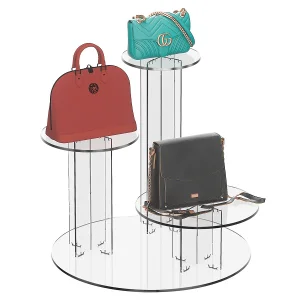
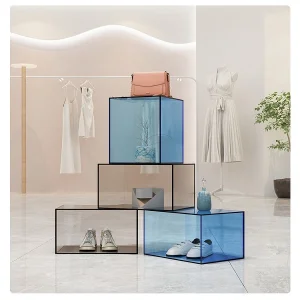
International luxury fashion houses, footwear brands, and haute horlogerie boutiques rely on custom acrylic pedestals, nesting display tables, and modular showcase vitrines. The optical purity of clear PMMA focuses 100% of the customer's visual attention directly onto the merchandise, while integrated low-voltage LED channel integration illuminates collections without thermal build-up.
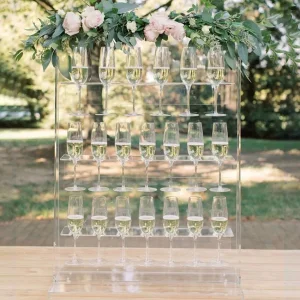
Event planning conglomerates and luxury wedding venue operators invest in modular clear champagne walls, transparent Chiavari/Ghost dining chairs, and demountable acrylic ceremonial arches. Acrylic pieces deliver high scratch-buffing recoverability, withstand continuous transport loading cycles, and can be wiped pristine between weekend gala engagements.
A frequent failure mode in substandard acrylic furniture sourcing is sagging spans on clear desks and consoles. Xinquan's engineering department establishes definitive thickness-to-span ratios to ensure maximum aesthetic appeal with zero perceptible deflection.
For unsupported horizontal desk spans exceeding 1,200mm bearing uniform dead loads up to 60 kg, material thickness must not drop below 20mm–25mm. When continuous spans extend to 1,800mm, thickness escalates to 30mm–40mm, or incorporates a concealed vertical acrylic rib beam running beneath the front apron to keep long-term flexural creep below 1.5mm.
PMMA possesses a thermal expansion coefficient of approximately 0.07mm/m/°C. When engineering large-scale acrylic contract furniture, restaurant booth dividers, or architectural screens interfaced with metal substructures (brass, steel, or aluminum), oversized through-holes and elastomeric EPDM compression washers are implemented to avoid mechanical binding and thermal stress cracking.
Unlike coated veneer or laminated surfaces, solid acrylic possesses homogeneous density throughout its depth. Minor surface scuffs and hairline scratches caused by daily commercial traffic are 100% field-restorable. Simple micro-abrasive compounding (Novus Polish system or 3M finesse-it) restores total factory mirror specular clarity on-site without requiring piece replacement.
Direct technical guidance formulated by our Chief Materials Engineer for commercial project managers, hospitality buyers, and international retail brands.
Our pricing advantage is achieved through structural supply chain optimization rather than material downgrades. As an integrated manufacturer in Danyang, Jiangsu, we purchase virgin MMA monomer in bulk, operate our own cell-casting lines, and use AI-assisted 5-axis CNC nesting software. By slashing material kerf scrap, utilizing in-line diamond fly-cutting, and shipping directly from the factory floor, we eliminate third-party trading markups and pass 25%–40% wholesale cost reductions directly to overseas clients.
For decorative accessory items (such as small side pedestals or riser trays), 8mm–12mm sheet suffices. However, for structural furniture—dining chairs, barstools, work desks, and coffee tables—we specify a minimum thickness of 15mm–20mm for heat-bent waterfall structures, and 25mm–50mm for expansive architectural tables to prevent long-term viscoelastic creep and ensure static weight capacities exceeding 250 kg (550 lbs).
Yes. Our engineering division reviews CAD (.DWG, .DXF), SolidWorks (.SLDPRT, .STEP), Adobe Illustrator (.AI), and vector PDF files under a strict Design for Manufacturing (DFM) protocol. We assess stress concentration radii, thermal bend limitations, and mechanical fastening interfaces, providing physical pre-production samples within 5 to 7 business days prior to initiating mass production.
No. We fabricate our furniture exclusively using 100% virgin methyl methacrylate (MMA) enriched with specialized hindered-amine light stabilizers (HALS) and UV blockers. Our formulations are certified against ASTM G154 accelerated weathering standards, ensuring no yellowing, loss of clarity, or embrittlement for a minimum of 10 years in direct outdoor applications and 25+ years in indoor architectural settings.
Unlike budget suppliers who utilize rudimentary cyanoacrylates or simple solvent capillary wicking (which introduce micro-bubbles and white haze), Xinquan uses proprietary reactive two-component PMMA monomer syrup cured under calibrated ultraviolet light. The joint chemically dissolves and interpenetrates the adjoining faces, resulting in an optically transparent, void-free monolithic weld that polishes to the identical refractive index as the parent sheet.
Standard lead times for bulk custom furniture orders (100 to 1,000 units) span 15 to 25 working days post-sample approval. We coordinate full container loads (20GP, 40HQ) and LCL freight directly via Shanghai or Ningbo ports, offering turnkey CIF, FOB, and DDP (Delivered Duty Paid) delivery services straight to overseas distribution hubs or hospitality construction sites.
Every piece is enveloped in a peelable heavy-gauge anti-scratch co-extruded PE protective film. We then construct custom-molded high-density polyethylene (EPE) foam cushioning cradles conforming to the item's perimeter. The cushioned unit is packed in reinforced five-ply honeycomb corrugated master cartons, strapped, and secured inside export-grade fumigated plywood skeleton crates with moisture-absorbent desiccant packs.
Yes. For massive retail distribution or e-commerce furniture brands seeking to optimize freight cube efficiency, our design studio engineers knockdown (KD) configurations. We incorporate precision-drilled embedded stainless steel threaded inserts, discreet acrylic joining blocks, or keyhole cam-lock fasteners, allowing end-users to assemble sturdy acrylic desks, carts, and chairs in minutes without adhesive chemicals.
Beyond crystal-clear transparent finishes, we provide frosted satin acid-etched textures, high-gloss piano black or translucent neon color tints, mirrored backings, and scratch-resistant hard coats (siloxane coating boosting surface pencil hardness to 3H–4H). Branding options include precision laser vector engraving, CNC deep relief carving, multi-color silk screening, and high-resolution direct-to-substrate UV digital printing.
Never clean acrylic with solvent-based products, ammonia glass sprays (such as Windex), or abrasive scouring pads, as these will cloud the surface and cause environmental stress cracking. Acrylic should only be dusted with a clean micro-fiber cloth and washed with warm water combined with a mild, non-abrasive liquid dish detergent. Specialized anti-static polishes can be applied quarterly to repel ambient dust.
Explore our specialized secondary collection spanning retail cosmetic display racks, multi-tiered dinnerware stands, illuminated dry-erase boards, and precision-bonded collectible display cases.