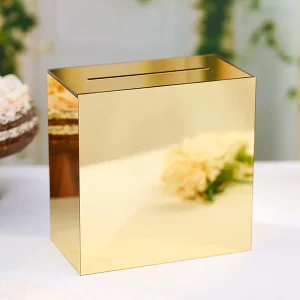
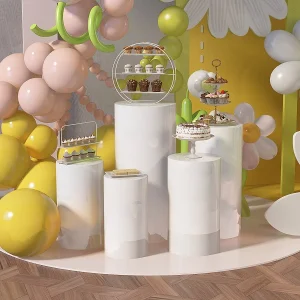
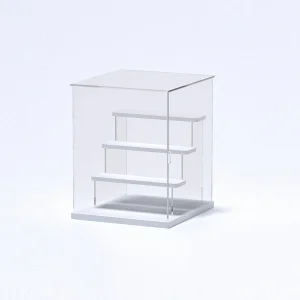
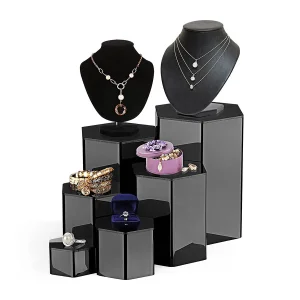
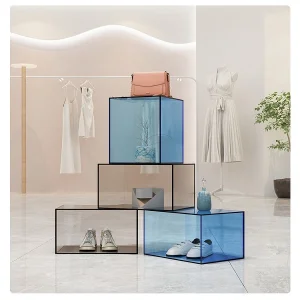
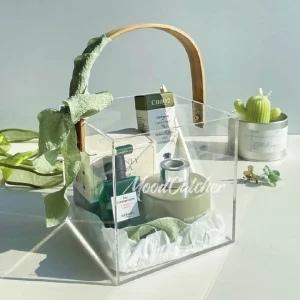
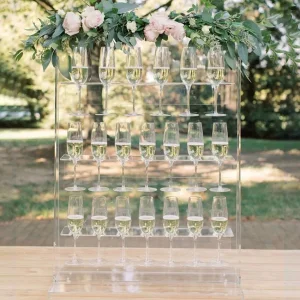
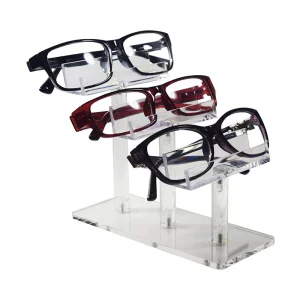
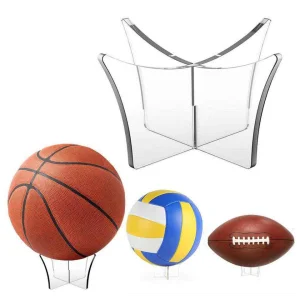
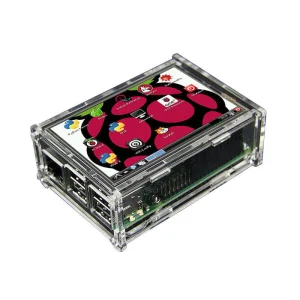
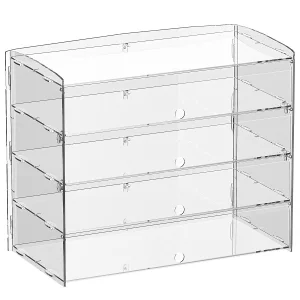
Explore commercial grade structural PMMA event pedestals, wishing wells, and modular display equipment engineered directly by our OEM manufacturing team.
The transition from artisanal acrylic crafting to advanced thermoforming and mono-block injection molding has redefined commercial ghost chairs and architectural PMMA furniture.
Modern clear acrylic chair manufacturers utilize specialized ultra-high molecular weight virgin PMMA. By adopting vacuum-assisted thermoforming alongside high-tonnage precision injection molds, factories eliminate seam weaknesses, stress whitening, and internal bubbles, ensuring commercial-grade tensile strength.
Commercial buyers historically struggled with photochemical degradation. Today’s premier factories integrate proprietary benzotriazole ultraviolet stabilizers directly into the monomer blend prior to polymerization, ensuring over 10 years of outdoor hospitality use without yellowing or structural embrittlement.
Global sea freight optimization has driven factory innovations in high-load knock-down (KD) clear acrylic seating. By utilizing precision laser-machined interlocking connectors and recessed stainless steel fasteners, logistics volume is reduced by up to 65% per container without sacrificing structural rigidity.
Enterprise procurement teams across hospitality, luxury event rentals, and high-end workspace design demand verified load capacities, anti-scratch durability, and direct factory pricing.
Event staging and rental companies prioritize rapid stackability, impact-resistant corners, and scratch-resistant silane coatings. Commercial buyers seek volume wholesale pricing with tailored velvet-lined transit covers and custom palletization designs that survive 200+ setup and teardown cycles annually.
Architects and interior designers specify bespoke acrylic armchairs, barstools, and transparent vanity chairs for boutique hotels and luxury resorts. Procurement hinges on flawless crystal diamond edge polishing, distortion-free light refraction, and fire retardancy ratings compliant with European and US standards.
For home decor chains, retail furniture brands, and e-commerce aggregators, predictable factory capacity is crucial. Requirements include comprehensive drop-test certified retail packaging (ISTA 3A), private-label laser etching, custom barcoding, and stable margin viability through direct OEM tier pricing.
| Evaluation Parameter | Commercial Grade Acrylic (PMMA) | Polycarbonate (PC) Chair | Recycled / Low-Cost Plastic |
|---|---|---|---|
| Optical Clarity | 92% – 93% (Crystal Clear) | 86% – 89% (Slight Gray Hue) | < 75% (Cloudy / Hazy) |
| Scratch Resistance | High (Can be buffed/polished) | Moderate (Prone to micro-abrasions) | Very Low (Permanent marring) |
| Load Deflection | Rigid, minimal flex under load | High flex, structural resilience | Deforms permanently under load |
| Aesthetic Longevity | 10+ Years (UV Non-Yellowing) | 3-5 Years (Subject to UV yellowing) | < 1-2 Years (Quick embrittlement) |
How an enterprise manufacturing facility guarantees consistency from raw monomer synthesis to finished architectural furniture.
Thermal stress during cutting and thermoforming causes micro-crazing over time. Our facility incorporates temperature-controlled annealing ovens operating on a continuous 24-hour cycle. By gradually ramping heat up to 80°C and slowly lowering it, internal polymer stresses are completely neutralized.
Where structural joinery is required instead of single-sheet thermoforming, we utilize two-component reactive acrylic polymerization adhesives. Unlike common solvent glues that create brittle joints, chemical polymerization chemically fuses the panels into a single, cohesive optical block with joint strength exceeding 90% of base PMMA.
To eliminate manual variations, five-axis CNC edge-routing systems paired with natural diamond cutters plane down acrylic edges to nanometer-scale smoothness. This automated line guarantees completely optical clarity, mirror-finish facets, and eliminates sharpness across hand rests and chair contours.
Direct export logistics engineered for enterprise buyers across North America, Europe, Oceania, and the Middle East.
Every commercial acrylic chair model is subjected to rigorous dynamic and static load evaluations. Our products pass 300 lbs backrest pull tests, 250 lbs drop tests from 6 inches, and 100,000-cycle seating durability tests to satisfy North American contract furniture mandates.
We mandate virgin monomer purity with complete chain-of-custody documentation. Every batch is certified free of hazardous phthalates, bisphenol A (BPA), and toxic heavy metals, guaranteeing seamless customs clearance and environmental compliance in the EU and North American jurisdictions.
Acrylic surfaces are vulnerable to particulate abrasions during oceanic transit. We protect all polished faces with 0.08mm co-extruded PE protective cling film, encapsulate items in high-density EPE shock foam, and secure cargo inside fumigated plywood crates or double-wall honeycomb export cartons.
Anticipating the demands of the next decade through material science, closed-loop recycling, and smart manufacturing.
Our R&D department is pioneering chemical depolymerization programs that convert clean production scrap and end-of-life acrylic furniture back into high-purity recycled Methyl Methacrylate (r-MMA) monomer. This enables the fabrication of 100% recycled clear chairs that retain the exact optical transmittance of virgin acrylic.
Traditional acrylic has a surface pencil hardness of roughly 2H to 3H. We are piloting automated sol-gel dip-coating and UV-curing chambers that deposit an inorganic silica hybrid nanocoating across complex chair geometries, raising surface scratch resistance to 4H-5H for high-abrasion banquet operations.
By leveraging FEA (Finite Element Analysis) algorithms, upcoming designs feature varied thickness cross-sections. This concentrates PMMA density where leg-to-seat shear stresses peak, while thinning non-structural curves—yielding chairs that are 20% lighter, significantly cheaper to freight, yet structurally superior.
Comprehensive answers addressing common engineering, logistics, and bulk order questions for commercial purchasers.
While polycarbonate (PC) has higher impact elasticity, PMMA acrylic delivers substantially higher optical clarity (93% vs 87%), higher UV resistance without yellowing, and superior surface scratch resistance. Critically, light scratches on acrylic can be buffed and restored to like-new condition, whereas scratched polycarbonate remains permanently damaged.
For standard catalog clear chairs (such as ghost chairs, Chiavari models, and contemporary dining designs), factory MOQ typically begins at 50 to 100 units. For fully custom designs requiring dedicated thermoforming tooling or injection molds, minimum runs start at 200 to 500 units depending on geometry and thickness specifications.
Chairs should be cleaned using warm water with mild, non-abrasive liquid detergent or specialized anti-static PMMA cleaners, applied with ultra-soft microfiber cloths. Never clean acrylic with window sprays containing ammonia or alcohol-based solvents, as these induce chemical stress-cracking (crazing) on the polished finish.
Yes. OEM customization covers direct subsurface UV color printing, high-precision laser stippling, and mechanical debossing directly into the backrest. Logos can also be embedded within the acrylic core during sheet casting for a permanent, abrasion-proof branded finish.
Explore additional factory-direct acrylic solutions engineered for weddings, consumer tech enclosures, point-of-sale retail, and interior display architectures.