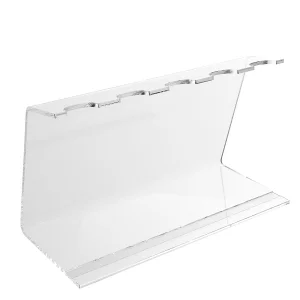
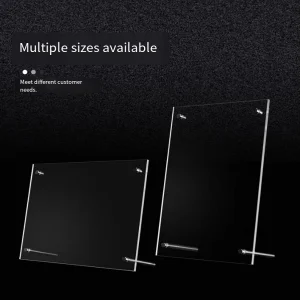
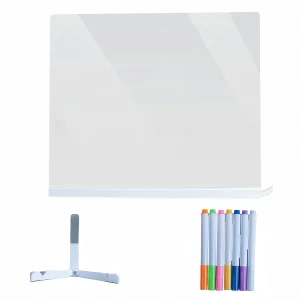
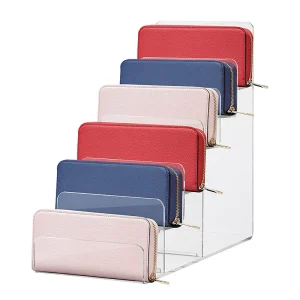
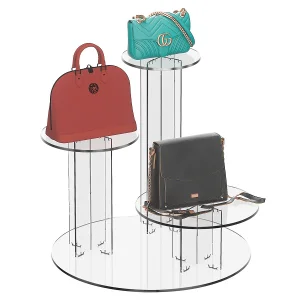
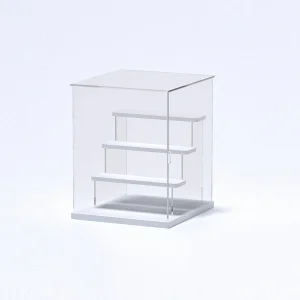
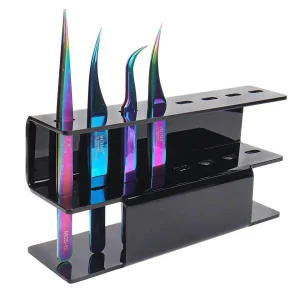
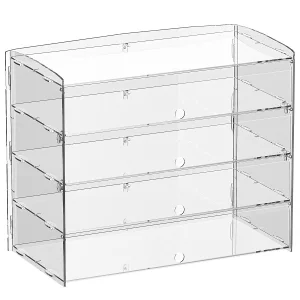
Explore initial baseline configurations and multi-purpose acrylic assemblies engineered directly by Danyang Xinquan Plastic Products Co., Ltd. for worldwide distribution and turnkey OEM deployment.
A rigorous industrial perspective addressing corporate procurement managers, interior architects, and cross-border commercial distributors seeking competitive discount pricing without compromising structural or optical excellence.
For decades, commercial ergonomic furniture has remained tethered to traditional wood veneers, melamine particleboard (MDF), and heavy tempered float glass. While cost-effective, these materials present inherent limitations: MDF is prone to moisture swelling, off-gassing (formaldehyde emissions), and aesthetic opacity that absorbs natural daylight, creating visual weight in modern high-density workplaces.
Tempered glass, conversely, provides transparency but introduces extreme deadweight, thermal conductivity (cold to touch), brittle catastrophic failure points along unprotected edges, and refractive distortion. The advent of high-molecular-weight virgin polymethyl methacrylate (PMMA) casting has fundamentally rewritten furniture engineering paradigms.
By leveraging virgin methyl methacrylate (MMA) casting techniques, modern manufacturers can fabricate seamless monolithic standing desk platforms. These surfaces boast an optical transmittance of over 92%—superior to conventional glass—while delivering ten times the impact resilience at half the mass.
In global industrial trade, "discount" must never be conflated with sub-standard or regrind polymers. Procurement executives understand that low-cost acrylic desks obtained through intermediaries frequently suffer from post-curing internal stresses, yellowing under environmental UV, micro-fracturing along screw threads, and deflection across extended desktop spans.
Genuine commercial discount pricing is unlocked solely through vertical supply integration: direct access to monomer synthesis, automated continuous casting, in-house high-speed CO2 laser profiling, robotic multi-axis CNC milling, and localized diamond edge polishing within one manufacturing corridor.
By eliminating middle-tier trading markups and consolidating tool-making, thermal drape forming, and cleanroom solvent bonding under our 30,000 m² factory in Danyang, Jiangsu, buyers acquire bespoke, architect-grade acrylic sit-stand desk units at an unmatched baseline cost structure.
A granular comparative roadmap guiding engineering specifications, structural deflection coefficients, and machining protocols for heavy-duty commercial desk systems.
True architectural desktops mandate Grade-A 100% virgin Lucite/Mitsubishi MMA monomer. Cell-cast production between float glass plates yields higher molecular weight PMMA with supreme resistance to thermal deformation, environmental crazing, and chemical exposure from office cleaning agents.
Standing desk slabs require careful flexural modulus evaluation (3,100–3,300 MPa). Our structural configurations specify 20mm, 25mm, or 30mm thickness profiles calibrated with longitudinal ribbing or integrated carbon-steel underslung brackets to eliminate center sag beneath multi-monitor arms.
We deploy hard-coat nanosilica organosilicate polysiloxane dip and flow coatings, boosting baseline acrylic pencil hardness from 2H-3H up to 5H-6H. This provides vital abrasion resistance against laptop enclosures, ceramic mugs, and stylus dragging without impairing light transmittance.
| Performance Characteristic | Cell-Cast PMMA Slab (Xinquan Spec) | Extruded PMMA Sheet | Standard Low-Iron Float Glass | High-Pressure Laminate (HPL / MDF) |
|---|---|---|---|---|
| Optical Clarity / Luminous Transmittance | 92.5% – 93.2% (True Crystal Clarity) | 90.0% – 91.5% | 88.0% – 90.5% (Residual Green Tint) | 0.0% (Completely Opaque) |
| Impact Resistance (Charpy Unnotched) | 18 - 22 kJ/m² (Shatter-Resistant) | 12 - 15 kJ/m² | 1.5 - 2.0 kJ/m² (Brittle Catastrophic Break) | 8 - 12 kJ/m² |
| Density / Self-Weight (g/cm³) | 1.19 g/cm³ (Lightweight Structure) | 1.18 g/cm³ | 2.50 g/cm³ (High Motor Strain) | 0.75 - 0.95 g/cm³ |
| Edge Finishing Capabilities | Diamond Wheel Milling & Flame Polish | Mechanical Wheel Polishing Only | Arris / Wet Diamond Ground | PVC / ABS Edge Banding Strip |
| Machining & Cable Routing Inset | 5-Axis High Precision CNC Router | Laser / CNC (Prone to Stress Cracks) | Diamond Waterjet Only (Pre-temper) | Carbide Router Bit |
| Long-Term UV & Environmental Stability | Delta E < 1.5 over 10 Years (Non-Yellowing) | Delta E > 3.0 over 3 Years | Permanent Chemical Inertness | Surface Discoloration & Delamination |
From tech campuses in California to luxury retail headquarters across London and Frankfurt, explore how tailored acrylic standing desks unlock unprecedented aesthetic and spatial utility.
Silicon Valley and European tech hubs utilize transparent floating acrylic desks to reinforce ultra-modern minimalist branding. Integrated cable trays concealed within frosted channels ensure a clutter-free, suspended aesthetic.
High-end fashion ateliers and jewelry showcases require adjustable height reception and styling desks that reflect ambient light rather than casting heavy shadows, maintaining pristine sightlines across the sales floor.
Unlike laminated composite boards that harbor microbial growth within porous core fibers, seamless non-porous PMMA desks resist intensive isopropyl sanitation cycles and meet Class 100 cleanroom particulate standards.
Design teams benefit from the sheer neutrality of optically pure clear or frosted acrylic desks. Translucent backlighting allows the desktop itself to function as an illuminated drafting table for blueprints and textile reviews.
Situated within the thriving manufacturing belt of Jiangsu Province, Danyang Xinquan Plastic Products Co., Ltd. sits at the heart of the world’s most comprehensive polymer ecosystem. This geographic clustering affords immense logistical and material efficiencies that Western fabricators and fragmented suppliers simply cannot replicate.
Our raw monomer feedstock, industrial tooling suppliers, precision servo-motor manufacturers, and packaging converters operate within a 40-kilometer radius. This tight spatial alignment delivers key advantages:
By breaking free of multi-tiered brokerage layers, our B2B procurement partners realize immediate landed cost reductions between 35% and 55% compared to localized European or North American acrylic fabrication facilities:
Market evaluation of the commercial office furniture sector indicating a persistent migration toward translucent, modular, and non-toxic materials across mature international regions.
Enterprise procurement in the United States and Canada is shaped by strict WELL Building and LEED standards. Clear cast acrylic desk tops contain no off-gassing adhesives or formaldehydes common in glued fiberboards, earning top IAQ (Indoor Air Quality) scores while achieving ANSI/BIFMA load specifications.
With aggressive EU Green Deal guidelines and RoHS/REACH compliance frameworks, European specifiers favor pure PMMA because it represents a 100% recyclable thermoplastic polymer. Desks can be thermally depolymerized back into pure MMA monomer at end-of-life, creating zero landfill impact.
Emerging super-regional corporate headquarters across Tokyo, Singapore, Dubai, and Riyadh demand visual prestige. Custom color-tinted, mirror-backed, and illuminated edge acrylic desks serve as signature visual assets in open executive floorplans and futuristic meeting pods.
Stringent multi-phase inspection protocols safeguarding wholesale importers against micro-fractures, stress cracking, deflection, and transit vibration damage.
Every cut, routed hole, and beveled edge undergoes crossed-polarizer optical evaluation. This detects and eliminates hidden internal birefringence stresses induced by aggressive machining speeds prior to chemical post-curing.
Our desktop slabs are verified through cyclic top-load weight trials up to 150 kg, testing concentrated point load, proof load retention, and edge horizontal impact forces to satisfy strict contract furniture safety thresholds.
Oversized acrylic panels receive protective co-extruded masking film, custom 45-density EPE foam corner boots, and vacuum-sealed desiccants inside reinforced, ISPM-15 compliant multi-layer timber crates to survive ocean crossings.
Comprehensive technical answers directly from our factory engineering team, addressing weight capacities, scratch remediation, MOQ parameters, and custom fabrication workflows.
For standard spans up to 1400mm without crossbeam under-framing, we recommend a minimum slab thickness of 20mm to 25mm to avoid deflection under load. For expansive executive desks (1600mm–1800mm) supporting multiple monitor arms, 30mm cell-cast acrylic or an engineered perimeter bevel bonded to a subsurface steel mounting matrix ensures absolute rigidity while maintaining floating aesthetics.
Unlike wood veneers or printed laminates where a scratch cuts through the decorative top foil into an unrepairable dark MDF core, virgin acrylic is a homogeneous, solid polymer. Minor surface scuffs can be polished out with fine abrasive pastes (Novus 2/3) or soft micro-finishing pads. Furthermore, we apply an optional 5H-grade nanosilica hard-coat treatment that increases resistance to everyday keys, writing instruments, and metallic objects.
We avoid crude self-tapping screws that induce high hoop stresses and micro-cracking in acrylic. Instead, our CNC machines mill precision blind pocket recesses on the desk underside, into which brass threaded inserts are mechanically locked using specialized solvent polymerization adhesives. This permits robust machine screw torque when affixing motorized telescoping frames, providing vibration-free height adjustments.
Because we maintain high-inventory raw cell-cast slabs directly on our manufacturing floor, standard clear and frosted prototypes are typically completed within 5 to 7 business days. For volume OEM production programs, our standard baseline MOQ is 20 to 50 desk slabs per design variant, with full container load (FCL) turnaround averaging 18 to 25 production days.
Yes. We regularly mill flush-mount recessed power grommets, under-desk routed conduits, waterfall drape edges, radiused safety corners, and subsurface wireless induction docks. Embedded inductive charging components transmit power directly through our 20mm acrylic panels without demanding disruptive surface cutouts.
Large cast acrylic desk components are susceptible to flex and transit abrasions if improperly packed. We protect every single panel with heavy anti-static polyethylene film, lock them into edge-protecting EPE molded shells, and encase batches within bespoke structural OSB plywood crates with integrated shock pallets, eliminating flex and friction through sea routes.
In addition to customized standing desk platforms, our integrated Danyang workshops produce a broad range of optical-grade event fixtures, organizers, and retail display racks tailored to custom drawings.