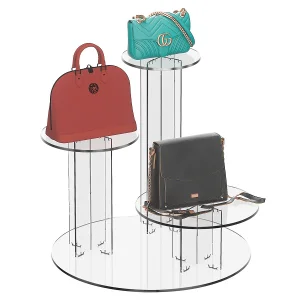
Explore factory-engineered acrylic components designed with crystal optical clarity, high-yield CNC edges, and stress-free solvent welding.
The market for acrylic cosmetic organizers and makeup display trays has shifted from fragmented commodity plastic homeware into an engineered sector driven by visual merchandising precision, brand equity optimization, and automated B2B retail procurement.
Global purchasers distinguish strictly between monomer-cast acrylic (cell cast) and continuous extruded acrylic. While extruded sheet yields lower thickness variation, cell-cast acrylic provides unmatched structural density, chemical resistance to cosmetic oils, and crystal-clear diamond polishing without micro-crazing.
By bypassing third-party trading intermediaries, direct factory contracts reduce landed unit costs by 28% to 42%. Volume discount structuring empowers global beauty brands, salon chains, and Amazon private-label sellers to invest margin into custom tooling and custom-branded packaging.
Modern procurement strategies leverage agile Tier-1 facilities capable of hybrid manufacturing: high-speed injection molding for standardized internal dividers paired with laser-cut, diamond-polished cast acrylic shells for premium perimeter presentation.
The integration of smart manufacturing, ecological polymers, and modular tactile architectures has expanded the application boundary of cosmetic storage trays.
Global environmental mandates (EU packaging waste directives and US ESG compliance) are accelerating the adoption of depolymerized chemical recycled PMMA. Pure rMMA preserves 98% of virgin optical clarity while reducing product carbon footprints by up to 70%.
Traditional manual solvent bonding often generates capillary bubble artifacts and volatile emissions. The modern industry uses robotic syringe dispensers with low-viscosity UV-curing optical adhesives, eliminating meniscus distortion along tray junctions.
Dust attraction through electrostatic friction and fine surface micro-scratching have been longstanding acrylic weaknesses. Modern siloxane dip-coating and plasma sputter deposition provide 3H-4H surface hardness alongside permanent anti-dust electrostatic dissipation.
Different commercial environments require tailored acrylic thicknesses, impact tolerances, and compartmentalization logic.
In high-traffic retail spaces (such as Sephora, Ulta, or airport travel retail), heavy-gauge 6mm-10mm diamond-beveled trays serve as point-of-sale tester bars. The pristine crystal transparency emphasizes bottle aesthetics under high-CRI downlights.
Five-star hotels and luxury spas utilize water-resistant, mold-impervious frosted and smoked acrylic bathroom amenity trays. Resisting high humidity and hot water splashing, PMMA outperforms natural wood and unsealed stone.
Dermatology clinics and professional makeup artists need compartmentalized medical-grade cleanliness. High-density acrylic trays resist stains from pigments, foundation fluids, alcohol rubs, and sanitizing solutions without surface clouding.
Custom-branded acrylic vanity organizers have evolved into permanent keepsakes for subscription box launches. Durable construction withstands parcel shipping drop tests when engineered with proper internal structural ribs.
Choosing the right polymer for cosmetic organizer production balances refractive brilliance, mechanical stiffness, impact tolerance, and unit cost.
| Performance Dimension | Virgin Cast PMMA (Acrylic) | Extruded PMMA | Polystyrene (PS) | Polycarbonate (PC) |
|---|---|---|---|---|
| Optical Light Transmission | 92.8% (Crystal clarity) | 91.5% | 87% - 89% (Slight yellow tint) | 88% (Hazy hue under bright light) |
| Refractive Index (nd) | 1.49 (Glass-equivalent) | 1.49 | 1.59 | 1.58 |
| Rockwell Hardness (M-Scale) | M95 - M100 (Scratch resistant) | M88 - M92 | M65 - M75 (Easily scuffed) | M70 (Prone to soft scratches) |
| Solvent / Oil Resistance | Superior (Resists makeup oils) | Moderate (Prone to stress cracks) | Poor (Cracks with essential oils) | Moderate |
| Edge Finishing Capacity | Diamond & Flame Polishable | Diamond Polish Only | Cannot be flame-polished | Difficult to polish cleanly |
| Cost / Performance Index | Optimal for High-End OEM | Best for Mass Discount Runs | Lowest (Ultra-cheap fragile retail) | Cost Prohibitive for Simple Trays |
Overcoming the three major challenges in overseas acrylic procurement: edge micro-cracking, scratch damage during transit, and dimensional variance in modular compartmentalization.
Laser cutting induces severe localized thermal gradients along acrylic cut edges. If glued without thermal management, residual stress triggers spider-web crazing when exposed to alcohol cleaners. Professional factory pipelines implement controlled 4-hour post-cut oven annealing at 75°C to relieve internal stresses.
Cosmetic trays represent high-volume air shipments where friction abrasion causes loss of clarity. Our factory standard pairs peelable electrostatic PE film on every surface with custom-contoured EPE (Expanded Polyethylene) foam cradles and drop-tested double-wall corrugated cartons (ISTA-3A tested).
Before batch tooling, industrial engineers audit CAD drafts to balance wall thickness with injection draw angles and solvent capillary gaps. Standardizing drawer tolerances at 0.75mm clearance prevents binding under regional temperature and humidity fluctuations.
Anticipating material science and smart assembly shifts over the next five years to keep retail clients ahead of industry shifts.
Embedding discrete inductive wireless charging coils, hidden micro-LED guide tracks, and NFC brand chips directly inside polymerized thick-cast tray bases for connected boutique displays.
Transitioning from petroleum-derived MMA to bio-feedstock derivatives (derived from plant biomass), preserving optical index parameters while delivering a verified net-zero supply chain.
Replacing traditional rotary milling with dynamic multi-axis laser cutting heads that fuse and polish cut surfaces simultaneously, cutting fabrication cycles by 40% and eliminating manual buffing.
Essential technical, logistics, and quality assurance clarifications for supply chain managers, brand owners, and commercial buyers.
Explore additional factory product lines fabricated with precision laser cutting, thermoforming, and clean structural bonding.