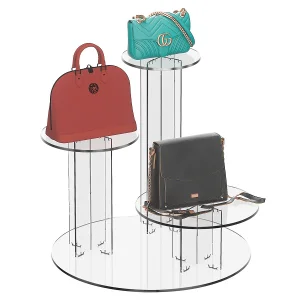
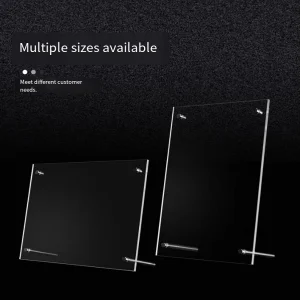
Explore our precision-built retail vitrines, countertop modular cases, and high-clarity protective acrylic assemblies tailored for international brand rollout.
Evaluating material science shifts, high-transmittance polymers, and structural safety parameters driving the modern small PMMA enclosure market.
Modern commercial display vitrines demand supreme light transmission. Premium cast polymethyl methacrylate (PMMA) offers 92% to 93% visible light transmission, surpassing standard soda-lime float glass (86%-89%). With approximately 50% less weight and 10 to 17 times the impact resistance of glass, small acrylic display boxes mitigate shipping breakage while ensuring complete, color-neutral viewing angles for high-value merchandise.
Global collectors, luxury boutiques, and museum curators require non-reactive enclosures. Advanced small acrylic cases incorporate proprietary UV-filtering additives that absorb up to 99% of harmful ultraviolet light between 200nm and 400nm wavelengths. This technical containment shields autographed collectibles, fine jewelry, cosmetics, and delicate artifacts from irreversible photochemical degradation and yellowing.
The global shift away from mechanical brackets toward seamless chemical bonding has redefined display case engineering. Utilizing capillary solvent welding and UV-curing polymer adhesives, our factory achieves hermetic corner joints devoid of trapped air bubbles or crazing. The molecular entanglement between abutting acrylic edges provides monolithic structural integrity capable of enduring substantial dynamic freight vibrations.
Examining the core supply network advantages, automated processing clusters, and vertical manufacturing integration based out of Jiangsu.
Situated within the Danyang manufacturing belt, Xinquan directly integrates monomer casting suppliers, custom extrusion lines, precision toolmakers, and chemical bonding research centers. This upstream geographic proximity eliminates inter-province transit latencies, lowering rapid prototype turnarounds to just 5 to 7 days and reducing full batch turnarounds by 40% compared to Western counterparts.
Our workshop pairs multi-axis automated CNC milling cutters with industrial single-crystal diamond polishing units. Diamond edge polishing cuts through PMMA with nanoscale precision, generating mirror-like, transparent borders without thermal stress marks or micro-fissuring. Laser-cut components undergo controlled annealing regimens to neutralize internal stress states, preventing stress cracking upon chemical solvent contact.
Raw 100% virgin methyl methacrylate (MMA) bulk polymer purchase agreements allow our factory to mitigate raw material price fluctuations. Operating proprietary casting beds, we customize thickness from 2mm to 40mm without paying broker premiums. This raw material leverage delivers a 25% to 45% landed cost reduction for international buyers, even factoring in trans-oceanic freight.
Overland and maritime transit risks are addressed at the factory level. Every small case retains its high-density electrostatic protective film, isolated by customized EPE (expanded polyethylene) foam cutouts within rigid, heavy-duty double-wall corrugated outers. Palletized loads are bound by cross-strapping, protected by corner angle boards, and crated using fumigated timber for container safety.
Small acrylic display boxes bridge the functional divide between secure enclosure, product interaction, and visual sales lift across sectors.
Micro-counter vitrines require non-distorted refraction. Our small display cases integrate concealed magnetic locks, beveled edges, integrated miniature micro-LED spotlights, and velvet-wrapped or mirror-acrylic risers to elevate brand equity in upscale retail environments.
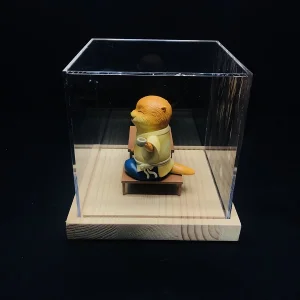
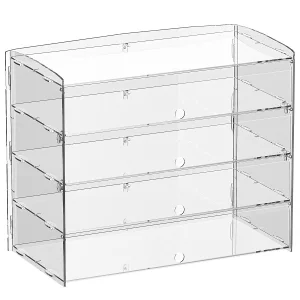
The collector explosion around blind boxes, art toys, and action figures requires stackable, modular small cases. We produce interlocking sliding doors, mirrored or printed back panels, and stepped clear interior risers customized for global entertainment franchises.
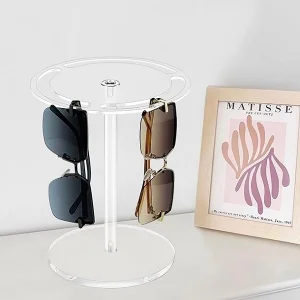
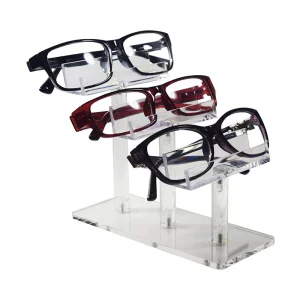
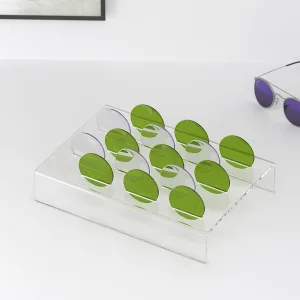
Consumer electronics, custom audio gear, and luxury sunglasses rely on dustproof enclosures. Our factory integrates antistatic PMMA surface treatments, precision key-lock cylinders, and custom cable pass-throughs for running powered live demos safely within secure retail bays.
Commemorative medallions, championship rings, and autographed baseballs demand archival-grade display cubes. Built using non-outgassing solvent welds, embedded rare-earth magnets, and crystal bases, these enclosures safeguard prized assets indefinitely.
Fragrance flacons and specialty skincare products must withstand essential oils, alcohol vapors, and persistent customer interaction. We engineer chemically resistant, high-gloss display pedestals and display cases featuring custom-milled slots, multi-tier risers, and frosted accent panels.
Comparing PMMA with competitive polymers (Polycarbonate, Polystyrene, PETG) to align specifications with functional use cases and project budgets.
| Evaluation Parameter | Cast Acrylic (PMMA) | Extruded Acrylic (PMMA) | Polycarbonate (PC) | Polystyrene (PS) |
|---|---|---|---|---|
| Optical Light Transmittance | 92.8% – 93.2% (Crystal Grade) | 91.5% – 92.0% (Clear) | 87.0% – 89.0% (Slight tint) | 88.0% – 89.0% (Moderate haze) |
| Diamond Polishing Result | Mirror-finish, high gloss | Smooth, sensitive to heat | Chalky edge, requires sanding | Poor edge, prone to chipping |
| Solvent Chemical Bonding | Monolithic, crystal joint | Good, watch for crazing | Difficult, requires PUR glue | Fast solvent melt, brittle joint |
| UV Photochemical Stability | Naturally weatherable (10+ yrs) | Requires added UV inhibitor | Yellows without protective film | Degrades rapidly, yellowing in 1 yr |
| Laser Engraving Quality | Frosted white, high contrast | Moderate contrast, soft edges | Discolors brown/black under laser | Melts irregularly, prone to soot |
| Best Commercial Match | Luxury vitrines, art displays | High-run retail point-of-sale | Impact-resistant industrial guards | Ultra-budget disposable packaging |
Global retailers are committing to strict environmental targets. The acrylic industry is shifting toward closed-loop chemical recycling via methyl methacrylate depolymerization. Our factory processes post-industrial and certified recycled PMMA (rPMMA) that delivers equivalent 92% optical clarity while lowering carbon footprints across corporate ESG audits.
Modern small vitrines are becoming interactive smart points. Our factory supports integrated cutouts for hidden RFID sensors, NFC tracking chips, compact Li-ion powered illumination channels, and micro-sensors that log display openings or item interactions to feed retail store telemetry systems.
Skyrocketing LCL and FCL maritime shipping rates have spurred the demand for Knock-Down small acrylic case structures. By utilizing precision-milled CNC dovetail joints, clear transparent screws, and invisible magnetic catches, we engineer high-stability units that ship completely flat, slashing freight cubic meters by up to 70%.
A structured engineering-to-delivery framework designed to mitigate technical miscommunication, quality deviations, and transit delays.
Every drawing received (STEP, DXF, DWG, AI, PDF) undergoes Design for Manufacturability analysis. Engineers verify bend clearances, load tolerances, and wall thicknesses (typically 3mm to 8mm for desktop enclosures) to eliminate visual distortion and structural flexing.
Before initiating mass production lines, a physical golden sample is built within 5-7 working days. The prototype undergoes dimension validation, bond transparency checks, dynamic weight testing, and fit checks with the client's internal components.
Our quality control protocol follows AQL 1.5 standards. Inspectors evaluate sheet optical homogeneity, micro-scratch occurrences under high-lumen angled lighting, solvent bonding bubble ratios, and laser cutting perpendicularity across every shift.
We provide retail-ready packaging including silk-screened logos, high-resolution CMYK UV brand prints, customized E-commerce mailer boxes, barcoding, and ISTA-1A drop-tested internal foam damping for direct-to-consumer distribution.
Direct technical answers addressing PMMA specifications, bonding chemistry, minimum orders, and overseas logistics verification.
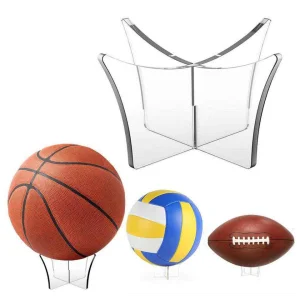
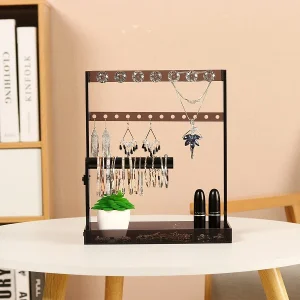
Discover our comprehensive collection of signage boards, ball display pedestals, collectible lens holders, and specialty display hardware.
Submit your CAD sketches, 3D renderings, or program dimensional requirements. Our engineering team reviews all technical inquiries and returns full DFM evaluations, unit quotation breakdowns, and material optimization advice within 24 hours.