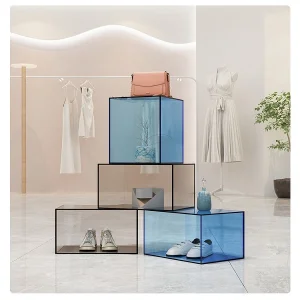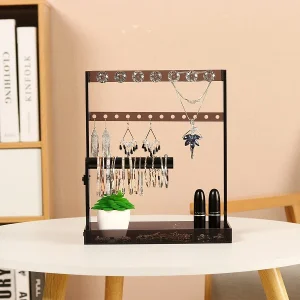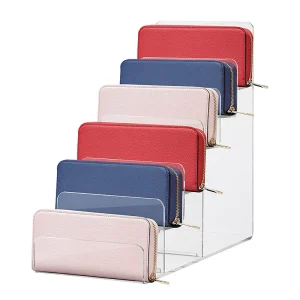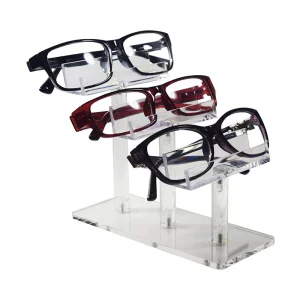
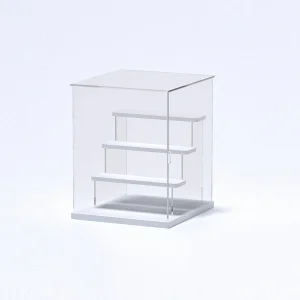
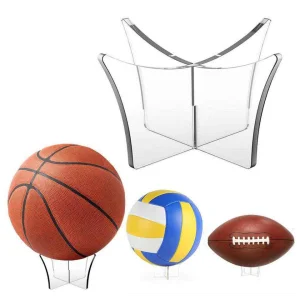
Custom Acrylic Lego Jewelry Cosmetics Exquisite Desktop Exhibition Booth
View Details
Engineered acrylic risers, modular shelves, and presentation cases built to tight structural tolerances.


Strategic analysis of Polymethyl Methacrylate (PMMA) deployment in commercial architecture, omnichannel retail, and automated warehousing systems.
The stability of the global acrylic shelving manufacturing ecosystem relies entirely on the upstream methyl methacrylate (MMA) feedstocks. Shifts in cracking facilities across Asia and North America directly impact resin melt flow indexes and batch tint variance.
Leading contract manufacturers must leverage long-term monomer allocation contracts to buffer against spot-market price volatility and ensure stable molecular weight distributions across large production runs.
Modern luxury retail and consumer electronics spaces mandate high visual transparency to maximize product visibility while minimizing fixture footprints. Acrylic provides 92% light transmission, exceeding traditional soda-lime plate glass.
Custom fabricated floating acrylic shelves optimize lighting angles, integrate low-voltage micro-LED channels, and eliminate ambient shadow zones on high-margin retail shelving.
At approximately 1.18 to 1.20 g/cm³, PMMA delivers less than half the density of structural glass while offering up to 17 times the impact resistance. This structural advantage reduces building static floor-load calculations.
Furthermore, shipping weight reduction leads to lower international freight expenditures and decreased carbon emissions per unit shipped across global distribution routes.
Understanding mechanical properties, thermal deflection limits, and bonding integrity for heavy-duty commercial installations.
| Performance Parameter | Cell Cast Acrylic (GS) | Continuously Extruded Acrylic (XT) | Polycarbonate (PC Comparison) |
|---|---|---|---|
| Molecular Weight Rating | Ultra-High (~1,000,000 - 3,000,000 g/mol) | Moderate (~100,000 - 300,000 g/mol) | Polymerized Carbonate Chains |
| Bending & Tensile Strength | 80 - 85 MPa (Exceptional Load Resilience) | 70 - 72 MPa (Prone to load-creep over spans) | 65 - 75 MPa (Flexible, yields before break) |
| Machining & Diamond Edge Polish | Superior; crisp optical edge without crazing | Fair; high thermal sensitivity to cutter speed | Poor; burns easily, requires specialized bits |
| Solvent & Chemical Resistance | High resistance to environmental craze | Susceptible to cleaners containing alcohol | Highly vulnerable to cyclic hydrocarbons |
| Primary Target Application | Structural shelving, showcase walls, aquariums | Point of purchase displays, lightweight dividers | Impact blast shields, industrial guarding |
Ensuring cross-border compliance across major regulatory jurisdictions in North America, the European Union, and the Asia-Pacific region.
Full conformance with EU Regulation (EC) No 1907/2006 (REACH) guaranteeing the nonexistence of SVHCs (Substances of Very High Concern) including restricted plasticizers, nonylphenols, and heavy metal colorants.
Compliance certification under FDA 21 CFR 177.1010 for acrylic and modified acrylic plastics, allowing our display fixtures and shelving to interface directly with retail unpackaged edibles, bakeries, and deli counters.
Standard PMMA naturally rates at UL94 HB (Horizontal Burn). Where strict building codes mandate, we engineer flame-retardant formulation blends reaching UL94 V-0 ratings for high-occupancy public concourses.
Third-party analytical testing confirming zero unreacted BPA, phthalate migration, or regulated volatile chemicals, securing clean customs clearance across United States ports of entry.
Tailored structural configurations designed to resolve complex display, load-bearing, and architectural hurdles across specific enterprise sectors.
Structural Focus: Seamless solvent bonding, flame/diamond edge beveling, and perimeter laser-etched light guides.
Designed for beauty flagships requiring completely colorless cast PMMA (true crystal edge) to reflect true pigment tones under 4000K–5000K store lighting without chromatic green shift.
Structural Focus: High-impact cast sheet formulations up to 30mm thickness integrated with chemical-weld anti-tamper locking interfaces.
Blocks 99% of damaging UV light between 200–380 nm, safeguarding sensitive historical textiles, archival books, and high-value collectibles from photochemical yellowing and decay.
Structural Focus: Dynamic CNC route profiles for glass stems, high-tensile wall-anchor anchors, and high-load deflection management.
Modular acrylic champagne walls, suspended spirit back-bars, and retail tasting risers engineered to hold dynamic bottle loads without long-term deflection or fastener creep.
Advancing the life-cycle utility of acrylic manufacturing through depolymerization chemistry, abrasion nanotechnology, and automated cellular production.
Conventional mechanical recycling degrades the clarity and structural integrity of acrylic polymers. The next-generation frontier centers on thermal cracking depolymerization.
Post-industrial shelving scraps and post-consumer displays are broken down back into high-purity virgin-grade Methyl Methacrylate monomer, yielding 100% optical-grade rPMMA panels with zero environmental penalty.
While standard acrylic possesses a 3H–4H pencil hardness rating, commercial environments with high turn-over demand superior surface protection against cleaning rags and sliding products.
Thermally cured nano-silica dip-coatings now achieve up to 6H pencil scratch resistance, reducing surface scuffing while maintaining crystal clarity and chemical resilience against alcohol cleaning agents.
Advancements in automated manufacturing utilize 5-axis CNC routers equipped with direct mist cooling and real-time thickness laser-sensing probes.
This allows automated compensation for batch sheet thickness variations, yielding mortise-and-tenon mechanical lock joints accurate to ±0.05 mm for rapid on-site assembly without adhesives.
In-depth responses covering engineering tolerances, material performance, ocean shipping protection, and factory auditing.
Acrylic (PMMA) exhibits a flexural modulus of approximately 3,000–3,300 MPa at standard ambient temperature. Unlike glass, acrylic undergoes elastic creep when subjected to continuous static loads over long intervals.
To prevent noticeable sag (typically kept below L/200 span ratio), shelf thickness must be sized according to total span, front lip reinforcement, and distribution type. For example, a 900mm span holding 15kg uniformly distributed typically demands 10mm–12mm cast PMMA, or an engineered folded return-lip profile (heat-bent front/back stiffeners) which dramatically improves moment of inertia without increasing plate thickness.
Yes. Our engineering departments work directly with CAD files (DWG, DXF, STEP, IGES) as well as vector formats (AI, EPS, PDF). Every customer brief undergoes a rigorous Design for Manufacturability (DFM) review.
Our engineers verify load distribution, edge clearances, hardware interference, and thermal expansion margins (allowing for PMMA's coefficient of linear thermal expansion of ~0.07 mm/m/°C). Physical pre-production samples are completed and tested before volume tool setup.
Scratches are the primary vulnerability of PMMA during intermodal transit. Every shelf panel retains high-adhesion polyethylene (PE) film or saturated craft paper masking throughout laser cutting, CNC milling, and diamond polishing operations.
During final assembly packing, units are isolated with custom expanded polyethylene (EPE) closed-cell foam buffers, vacuum poly-bagged to eliminate moisture entry, packed in heavy 5-ply export double-wall cartons, and banded to fumigated ISPM-15 wooden pallets with corner protection posts.
We leverage three specialized chemical bonding methodologies depending on structural demands: Capillary Solvent Cements (DCM-based) for rapid crystal-clear joints; Two-Component Reactive Polymerization Resins (MMA liquid syrups) which chemically fuse the two mating components into one unified polymer matrix for ultra-high tensile and liquid-tight requirements; and UV-Activated Adhesives where exact alignment and cure-on-demand inspection are essential for complex visual showcase designs.
Rapid CNC pre-production prototypes are typically manufactured, inspected, and shipped within 5 to 7 working days following mechanical drawing sign-off. Full mass-production runs range between 15 to 25 working days, driven by specialized sheet casting runs, custom silkscreen or UV flatbed printing cure schedules, and pallet build requirements.
Precision-milled fixtures, modular display racks, and specialized retail presentation systems for brand installations.