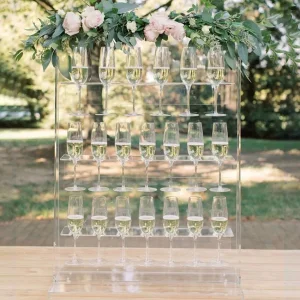
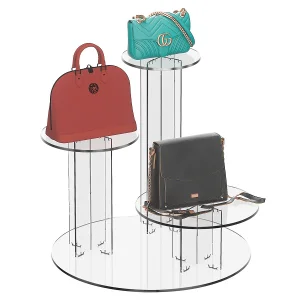
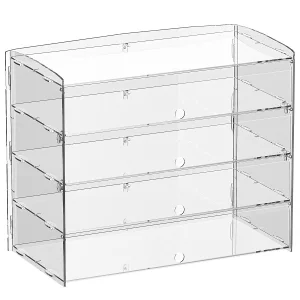
Explore our core engineered PMMA systems fabricated for commercial rollouts, luxury venues, corporate flagships, and global retail distribution networks.


A technical assessment of why commercial enterprises, civic institutions, and luxury retailers are transitioning from silicate glass to precision-fabricated polymethyl methacrylate (PMMA) photo frame walls.
Traditional mineral glass installations pose acute liability vectors in high-traffic public corridors and institutional environments. Custom PMMA acrylic assemblies mitigate shattering risks entirely, resisting mechanical vibration, thermal shock, and heavy structural shear loads without catastrophic brittle failure.
Monolithic cast PMMA sheets can be enriched during bulk liquid polymerization with targeted UV stabilizers. This proprietary additive dosing blocks photolytic deterioration between 280nm and 400nm, protecting fine art, sensitive corporate artifacts, and high-definition photographs from chromophore bleaching.
Global facilities management teams demand flexible communication corridors. Modern acrylic photo walls incorporate dual-panel magnetic indexing, concealed French cleat systems, and precision anodized aluminum standoffs, lowering image replacement cycle times from hours to under 30 seconds.
Understanding the critical thermodynamic, chemical, and machining criteria required to fabricate industrial-grade acrylic photo frame walls with optical zero-distortion profiles.
| Performance Parameter | Cell Cast PMMA (Virgin Monomer) | Continuous Extruded Acrylic | Standard Float Glass Reference |
|---|---|---|---|
| Optical Clarity / Transmission | 93.2% (Zero chromatic tint) | 91.8% (Minor distortion at acute angles) | 88.0% - 90.0% (Distinct greenish tint) |
| Refractive Index (nd) | 1.491 (Uniform optical isotropy) | 1.490 (Directional extrusion stress) | 1.520 (High surface reflection) |
| Edge Finishing Suitability | PCD Diamond CNC Milling & Chemical Polish | Flame Polishing Only (Risk of Craze) | Grinding & Seaming Required |
| Tensile Strength (ISO 527) | 78 - 82 MPa | 68 - 72 MPa | 35 - 45 MPa |
| Thermal Expansion (CLTE) | 7.0 × 10⁻⁵ / K (Predictable joint gap) | 7.5 × 10⁻⁵ / K (Higher warp propensity) | 0.9 × 10⁻⁵ / K (Rigid brittle response) |
| Laser Engraving & Beveling | Frosting contrast high; crisp facets | Melting edges; lower contrast | Not possible via standard CO₂ laser |
Polycrystalline diamond tools operating at 18,000 RPM eliminate micro-fissures along perimeter cuts, generating an optically flawless crystalline boundary that refracts ambient light without internal reflection halos.
Post-laser cutting, panels undergo computerized thermal baking at 80°C for 6 to 12 hours. This releases localized polymer chain stress, permanently preventing environmental stress cracking (crazing) over a decade of service.
High-flux sintered Neodymium (NdFeB N52) magnets are counter-bored with micrometer precision into matching panel perimeters, achieving flush closure that locks art securely without mechanical clamping distortion.
Optional magnetron sputtering coats the external viewing surface with a nanometer-thin anti-reflective ceramic stack, dropping specular surface reflectance from 4.0% to below 0.6% while neutralizing electrostatic dust attraction.
Capitalizing on integrated industrial clusters in Danyang, Jiangsu, our 30,000m² manufacturing facility drives cost efficiencies, rapid scale, and strict tolerance guarantees for international buyers.
Proximity to prime regional MMA monomer synthesis plants shields production from global supply bottlenecks. Direct pipe-fed monomer delivery guarantees identical polymer purity, density, and optical consistency across multi-thousand-unit purchase orders.
Equipped with computerized high-speed CO₂ lasers, 5-axis CNC routing beds, and automated silk-screen/UV flatbeds, our engineering center converts architectural blueprints into physical pre-production validation samples in 3 to 5 business days.
Shipping acrylic walls overseas requires specialized packaging to counter humidity and mechanical shock. Our automated wrapping and custom non-fumigation plywood crating prevent scratching, warping, and edge chipping throughout maritime transit.
From high-security financial institutions to sterile clinical corridors, our custom acrylic photo frame walls adapt to stringent environmental codes, human traffic, and spatial aesthetics.
Installed along multi-story executive suites and boardrooms to display historical timelines, executive portraits, and patent achievements. Large-format floating panels anchored by satin silver or matte black standoffs provide a clean, uncluttered visual rhythm aligned with tech modernism.
Specified by international hotel design groups seeking cohesive gallery corridors that withstand heavy luggage cart traffic without glass-break hazards. Acoustic dampening wall standoffs ensure zero vibration transfer along guest room hallways.
Subject to stringent sanitization protocols, healthcare walls utilize chemically resistant, non-porous PMMA frames treated to repel hospital-grade quaternary ammonium and isopropyl alcohol disinfectants without clouding or surface degradation.
Curatorial grade installations requiring 99% UV radiation absorption and anti-glare micro-etched panels to preserve priceless photographic archives while preventing visitor flash-photography bounce back.
Custom backlit photo walls integrated with edge-lit LED light guides (LGP) to deliver 6500K daylight-balanced illumination behind high-fashion seasonal campaign graphics across international retail networks.
Donor recognition walls, athletic halls of fame, and interactive diploma showcases engineered with shatterproof high-impact modified acrylics capable of enduring high-density communal traffic environments.
Anticipating structural, optical, and regulatory shifts across architectural interiors over the next 5-year investment cycle.
In response to European CSRD and global corporate ESG scopes, our factory is deploying depolymerized recycled methyl methacrylate (rMMA). Chemical recycling returns post-industrial offcuts back to pure monomer without degrading optical transmissivity or yellowing resistance.
Merging photographic display with laser-dotted micro-prismatic optical waveguides. These panels convert edge-injected micro-LED flux into hyper-uniform surface illumination (over 90% CRI) within an ultra-slim 8mm aggregate frame profile.
Thermally cured siloxane polysilicate coatings achieve a surface pencil hardness exceeding 5H on the standard scale (approaching quartz resilience), mitigating airborne dust scratching during recurring janitorial operations.
Every commercial production batch undergoes strict metrological verification to satisfy ASTM, ISO, and REACH regulatory baselines across destination markets.
Certified conformity for poly(methyl methacrylate) cast sheet thicknesses, flammability rating (Class CC2 / HB), and critical dimensional tolerances.
Zero banned plasticizers, heavy metal stabilizers (lead/cadmium-free), or halogenated flame retardants, ensuring clean installation inside public spaces.
Rigorous multi-stage QA tracking each production order through sheet casting, CNC laser cutting, annealing, diamond polishing, and final packaging.
Export packaging options validated by certified shock, vibration, and free-fall drop testing to guarantee pristine delivery across international freight.
Comprehensive technical and logistical answers curated for architectural specifiers, procurement heads, and OEM distributors.
Cast acrylic possesses a significantly higher molecular weight than extruded sheet, providing superior optical clarity, zero orientation birefringence, and substantially higher resistance to environmental craze. Furthermore, cast PMMA yields glass-like edge clarity when cut and polished with PCD diamond tooling, whereas extruded sheets tend to melt, drag, and build internal stress cracking when exposed to thermal flux or cleaning chemistry.
Polymethyl methacrylate has an expansion rate of approximately 0.07mm per meter per °C. In oversized photo frame walls or modular multi-panel grids, our factory machines slightly elongated mounting standoff holes (slotted clearance holes) and installs resilient EPDM or silicone isolation grommets. This allows the acrylic to glide silently during seasonal HVAC fluctuations without buckling or placing stress fractures around mounting pins.
Initial engineering review (DFM) and CAD approval take 24 hours. Pre-production functional prototypes with diamond-polished edges and standoff hardware ship in 3 to 5 business days. Full sea-container volume production (200 to 5,000 assemblies) typically executes within 15 to 22 business days, supported by our factory's automated multi-spindle CNC beds and dedicated thermo-annealing ovens.
Yes. Our high-turnover configuration utilizes a two-panel sandwich system featuring high-coercivity Neodymium magnets embedded flush into blind-drilled pocket holes on both front and rear plates. This permits on-site staff to simply lift the front faceplate and swap collateral in seconds without unscrewing architectural standoffs or requiring tools.
Both panel faces are protected by virgin co-extruded polyethylene static film or acid-free saturated kraft paper. Panels are separated by high-density polyethylene (EPE) closed-cell foam sheets and isolated in double-wall reinforced cartons. For commercial shipments, pallets are structurally reinforced with corner boards, shrink-wrapped with moisture barriers, and enclosed within custom ISPM-15 compliant OSB crates.
Comprehensive acrylic architectural fixtures engineered for multi-sector institutional, commercial, and experiential projects worldwide.