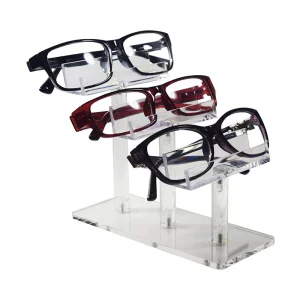
Explore initial core fabrications manufactured with diamond-milled margins, bubble-free solvent chemical welds, and pristine light transmittance rates.
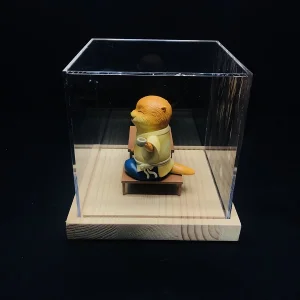


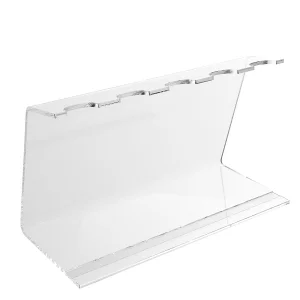


The convergence of omnichannel beauty retail, high-performance optical polymers, and cleanroom precision fabrication is defining next-generation cosmetic merchandising.
Global cosmetic powerhouses are phasing out brittle styrene-acrylonitrile (SAN) and injection-molded polystyrene (PS). Instead, enterprise buyers demand cast Polymethyl Methacrylate (PMMA) offering a refractive index of 1.49, 93% luminous transmission, and zero yellowing distortion under high-lux retail store lighting environments.
Modern luxury cosmetics contain sophisticated active carriers, lipophilic oils, essential fatty esters, and ethanol-based volatile solvents. Premium acrylic makeup cases must integrate siloxane cross-linked hard-coatings to prevent micro-crazing, haze development, and chemical degradation caused by continuous cosmetic contact.
The contemporary vanity and point-of-sale display landscape has transitioned into smart interactive hardware. Custom makeup cases now feature embedded SMD LED light guides calibrated to 95+ CRI (Color Rendering Index), capacitive touch dimming arrays, and thermoelectrically balanced compartments for biological serum preservation.
Procuring bespoke acrylic vanity storage and retail showcases demands rigid adherence to mechanical, optical, and logistic qualification benchmarks.
For modular multi-tier cosmetic organizers, sliding friction and drawer clearance tolerances are critical. Enterprise specifications dictate CNC routing tolerances held within ±0.05 mm to ±0.1 mm. Drawers utilize precision-milled chamfers and velvet-touch mechanical runners that eradicate drawer sagging, racking, and acoustic resonance during opening cycles.
Commercial longevity hinges on joint integrity. Inferior fabricators suffer from micro-bubbles, capillary voiding, and crazed seams. Danyang Xinquan employs specialized anaerobic UV curable resins and multi-stage solvent bonding chemistry that chemically cross-links PMMA interfaces, delivering museum-grade optical transparency with load-bearing joint strength.
| Performance Parameter | Cell Cast PMMA (Virgin Monomer) | Extruded Acrylic (PMMA) | Polycarbonate (PC) | Polystyrene (PS / SAN) |
|---|---|---|---|---|
| Optical Light Transmittance | 92.8% – 93.2% (Crystal Grade) | 91.5% – 92.0% | 87.0% – 89.0% | 88.0% (Prone to Haze) |
| Refractive Index (nD) | 1.491 | 1.490 | 1.586 | 1.590 |
| Surface Pencil Hardness | 3H – 4H (Scratch Resistant) | 2H – 3H | HB – 1H (Requires Hardcoat) | H – 2H (Brittle) |
| Chemical Inertness to Cosmetics | Superior against lipids, waxes & oils | Moderate; sensitive to esters | Poor to ketones and alcohols | Critical stress-crazing risk |
| Edge Polishing Quality | Diamond & flame mirror clarity | Clean, moderate melt sensitivity | Difficult, discolors on flame | Dull, yellow tinted margins |
| UV Photostability (1,000h QUV) | ΔYI < 0.8 (Zero yellowing) | ΔYI < 1.5 | ΔYI > 5.0 (Yellows rapidly) | ΔYI > 8.0 (Severe aging) |
Combining 30,000 square meters of production area in Danyang, Jiangsu with computer-numeric robotic processing arrays to deliver zero-defect OEM makeup cases.
High-speed multi-axis CNC routers equipped with vacuum suction platens handle complex bevels, rebate cuts, and custom compartments. High-power CO2 laser systems yield polished, stress-relieved contour profiles with negligible thermal kerf.
Manual flame polishing risks localized heat stress and premature crazing. Our facility deploys multi-spindle natural monocrystalline diamond fly-cutters that execute mirror-gloss, prismatic edges with optical surface roughness under 0.05 microns.
In-house 1200 DPI industrial CMYK+White+Varnish flatbed printers apply high-adhesion private-label branding, luxury hot-foil stamping patterns, and gradient hues with 5B cross-hatch tape test adhesion reliability.
Every shipment engineered by Danyang Xinquan meets stringent toxicological, environmental, and transit protocols across North American, European, and Asian retail jurisdictions.
Fully documented adherence to Regulation (EC) No 1907/2006 (REACH) concerning SVHC (Substances of Very High Concern). Raw monomer resins are audited free of restricted phthalates, cadmium, polybrominated biphenyls (PBBs), and hazardous plasticizers.
Verified heavy metal extraction and chemical leaching resistance compliant with safe drinking and consumer product thresholds. Completely Bisphenol-A (BPA) free formulation ensuring safe direct contact with high-end cosmetic powders, brushes, and applicator tips.
To eliminate transit damage in e-commerce drop-shipping and sea freight, our packaging designs undergo rigorous random vibration, rotomolding drop tests (10-point angle/edge drops), and hydraulic compression analysis with pearl-cotton cushioning molds.
Full-chain tracing from raw sheet cast monomer purity checks to 100% manual surface defect inspections under calibrated 1500-lux halogen lamps before final PE film lamination and crating.
Anticipating the technological demands of boutique luxury brands and sustainability-driven international buyers.
Adopting closed-loop depolymerization monomers (methyl methacrylate cracking) delivering 100% circular post-consumer recycled acrylic cases matching virgin resin optical clarity and UV resistance.
Integrating sol-gel fluoropolymer nano-coatings that dramatically reduce foundation staining, sebum adhesion, and fingerprint smudge visibility, cutting maintenance cleanings by over 70%.
Developing solid-state micro-thermoelectric chill zones within custom vanity stations to maintain active skin serums, retinol formulations, and vitamin C concentrates between 10°C – 14°C.
In-depth responses curated by our senior polymer engineering team for international buyers, retail display directors, and procurement executives.
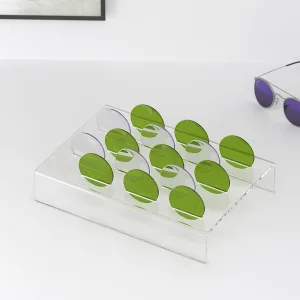
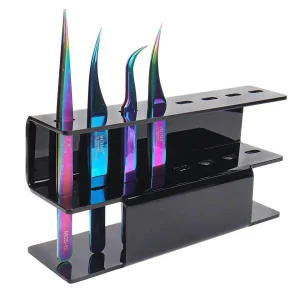
Review the full spectrum of our custom acrylic fabrication capabilities, from modular point-of-sale systems to multi-tiered specialized display accessories.





Direct collaboration with our chief fabrication engineers. Receive exhaustive manufacturability assessments, tooling cost models, and material grade recommendations within 24 operational hours.