Discover our baseline industrial displays and modular mounting fixtures engineered for retail rollouts, commercial exhibits, and specialized brand environments.



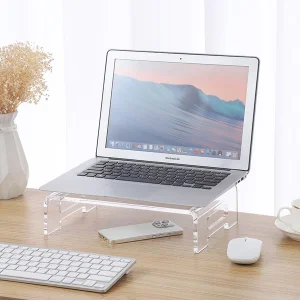
In high-stakes visual merchandising and archival fine-art conservation, the acrylic gallery frame serves not merely as a decorative boundary, but as an active optical conduit and structural shield.
The contemporary framing sector has transitioned away from conventional silica soda-lime glass due to structural brittleness, massive tare weight, and refractive color distortion (green tinting caused by iron oxide impurities). Industrial polymer engineering—specifically the advanced chemical synthesis of Poly(methyl methacrylate) (PMMA)—has elevated acrylic gallery framing into an architectural standard. Danyang Xinquan Plastic Products Co., Ltd. (Xinquan Acrylic), established in 2010 in Danyang, Jiangsu, operates at the nexus of high-precision monomer casting, automated CNC subtractive routing, and ultra-high-definition surface finishing to supply global distribution networks, commercial institutions, and hospitality conglomerates.
Our macroscopic enterprise framework addresses the endemic vulnerabilities that plague standard supply chains: edge micro-crazing from thermal stress, plasticizer migration leading to haze development, and chromatic dispersion under intense luminaire exposure. By standardizing 100% pure virgin methyl methacrylate (MMA) liquid monomer precursor casting, our gallery frames achieve a refractive index of 1.49—mirroring optical crown glass—while yielding impact resistance 17 times greater than tempered glass assemblies.
Fabricated between zero-tolerance optical glass moulds, our cell-cast PMMA sheets exhibit a high molecular weight cross-linkage that resists chemical cleaners, thermal warping, and torsional bowing across oversized spans up to 3000 x 2000 mm.
Integrated benzotriazole UV-absorbing molecular dopants attenuate 99.2% of hazardous solar radiation between 200 nm and 380 nm, safeguarding delicate giclée pigments, organic watercolours, and archival prints from irreversible photochemical degradation.
Utilizing single-crystal natural diamond tooling rotating at 24,000 RPM, our automated edge milling eliminates microscopic saw marks and micro-fissures, yielding diamond-polished facet bevels that radiate clean ambient luminance without refractive flares.
An exhaustive overview of market displacement patterns, structural economics, and procurement velocity across North American, European, and Asia-Pacific visual installations.
The global picture framing and wall décor hardware market is undergoing an aggressive structural migration. Commercial curators, blue-chip art fairs (e.g., Art Basel, Frieze), luxury fashion flagship stores, and multinational hospitality developments are phasing out metallic and wooden borders in favor of the "Floating Monolithic Aesthetic" delivered by custom acrylic sandwich frames, acrylic shadowboxes, and museum-grade acrylic vitrines.
Several macro factors drive this global transition:
| Performance Characteristic | Xinquan Cell-Cast PMMA Frame | Extruded Acrylic (Commercial Grade) | Low-Iron Soda-Lime Glass | Polycarbonate (PC) Sheet |
|---|---|---|---|---|
| Luminous Transmission (%) | 93.2% (True Clear) | 90.5% – 91.5% | 90.0% – 91.0% | 86.0% – 88.0% |
| Specific Gravity (Weight g/cm³) | 1.19 | 1.18 | 2.53 (210% heavier) | 1.20 |
| UV Cut Range (290–380 nm) | >99.2% Blocking | 70% – 85% Blocking | <45% Blocking (Uncoated) | >95% Blocking |
| Edge Polish Clarity | Diamond Crystal Finish | Melts under high speed; dull | Polished / Green bevel tinge | Greyish / Burns upon polishing |
| Impact Resistance (kJ/m²) | 16 – 20 | 10 – 12 | 1.0 – 1.5 (Brittle) | 65 – 75 |
| Surface Hardness (Rockwell M) | M-95 to M-100 | M-80 to M-88 | Diamond Mohs ~6 | M-70 (Easily scratched) |
| Solvent / Crazing Resistance | High (Annealed Matrix) | Low (Rapid stress crack) | Chemically inert | Extremely sensitive |
Eliminating geographical supply frictions with end-to-end certification, localized inventory staging models, and stringent international packaging protocols.
Zero restricted phthalates, non-heavy metal stabilized pigments, and verified zero outgassing formulas safe for enclosed museum vitrines and archival conservation.
Tested under global fire safety standard protocols for indoor institutional assemblies, guaranteeing controlled burn rates and minimal smoke toxicity in commercial buildings.
Engineered multi-layer packaging systems compliant with ISTA-3A transit testing: anti-static PE masking, high-density EPE foam corner caps, and reinforced fumigated wood crates.
Our localized technical teams across North America and Europe provide 24-hour CAD/BIM drawing reviews, stress analysis simulations, and fast-track prototyping turnaround.
Procuring overseas acrylic fixtures frequently raises concerns regarding out-of-spec tolerances, surface abrasions incurred during ocean transit, and customs delays linked to non-compliant documentation. Xinquan mitigates these risks via a vertically integrated quality gate system. Each production lot undergoes laser interferometry thickness verification, spectrometer UV cut-off profiling, and adhesion cross-hatch peel testing (ASTM D3359) for printed borders.
Furthermore, our dedicated overseas account managers supply synchronized customs clearing documentation (including Form E, Certificates of Origin, and fully verified MSDS sheets), providing an uninterrupted chain of custody from our Danyang fabrication bays to your regional distribution centers.
From high-traffic visual merchandising hubs to quiet museum sanctuaries, explore how engineered acrylic frame systems deliver targeted spatial solutions.
Equipped with archival UV99 cast acrylic fronts and museum-grade spacer depths, these assemblies isolate delicate historical textiles, drawings, and photographs from atmospheric pollutants while guaranteeing zero chemical off-gassing into the display volume.
For flagship storefronts across Paris, Tokyo, and New York, high-gloss edge-lit floating frames amplify campaigns. Embedded LED diffusers illuminate promotional imagery with vibrant uniformity, catching pedestrian attention without distracting hardware.
Magnetic sandwich gallery frames allow corporate clients to swap financial accreditation certificates, patent documents, and executive portraits in minutes. Neodymium corner magnets maintain clean clamping pressure without piercing document papers.
Bespoke extra-thick block frames (20 mm to 50 mm acrylic gauge) provide self-standing sculptural presence on mantels, reception consoles, and dining sideboards, creating optical prism reflections that shift dynamically with daylight.
Demountable modular wall-mount panels utilizing CNC-machined aerospace-grade aluminum or brass standoffs. These systems withstand heavy public traffic, permit rapid disassembly, and flat-pack tightly for multi-city touring exhibits.
A strategic engineering breakdown of sustainable circular polymers, functional nano-coatings, and smart display integration across the acrylic horizon.
Pioneering 100% molecularly recycled acrylic panels via chemical depolymerization. Recycled methyl methacrylate monomer regenerates pristine optical clarity without downgrading transmission or yellowing over extended lifespans.
Deploying vacuum magnetron plasma sputtering to deposit alternating dielectric metal oxide layers. This reduces surface reflection from 8% down to less than 0.8%, practically rendering the acrylic barrier invisible to human observers.
Addressing the inherent scratch susceptibility of standard acrylic by applying thermal-cured liquid polysiloxane hard-coats, boosting surface pencil hardness to 6H while maintaining flexible thermal expansion tolerances.
Embedding miniaturized IoT environmental sensors within wall mounting standoffs. This facilitates continuous real-time telemetry monitoring of micro-climate relative humidity (RH), internal temperature, and Lux light exposure directly to curators' mobile dashboards.
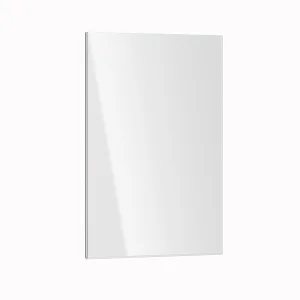
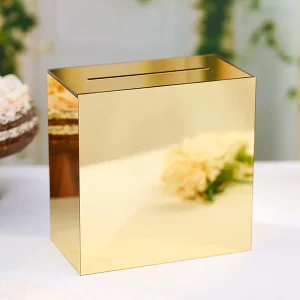
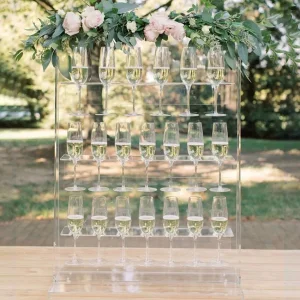
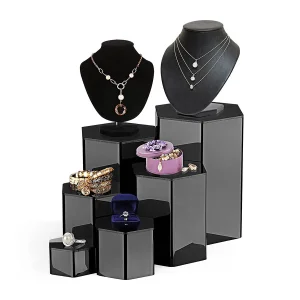
Explore additional verified manufacturing programs available for white-label OEM distribution, bespoke dimensional scaling, and contract volume purchasing.
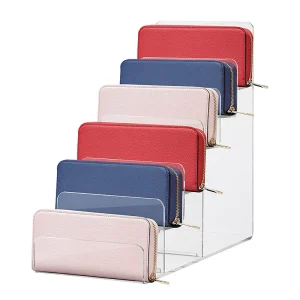
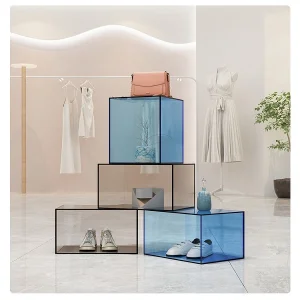

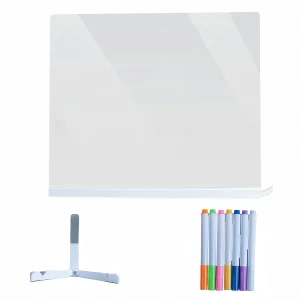
Authoritative technical guidance compiled by our Senior Polymer Engineers and Global Procurement Managers for commercial directors and institutional specifiers.
Cell-cast PMMA provides a substantially higher molecular weight matrix compared to continuous-roll extruded acrylic. This intrinsic density translates to superior tensile strength (75 MPa vs 60 MPa), zero edge stress-cracking during diamond tooling, and dramatically lower internal stress, preventing warping when supporting heavy canvas art over 1500 mm wide.
Acrylic expands and contracts at approximately 0.07 mm per meter per degree Celsius (thermal expansion coefficient: 7 x 10⁻⁵ / °C). On our precision wall mounting designs, hole bores through the acrylic sheets are deliberately engineered 2 mm to 3 mm larger than the standoff threaded studs, coupled with silicone compression gaskets to absorb thermal movement without causing edge-hole fracturing.
Yes. Our multi-axis CNC machines and custom diamond profiling spindles can cut clean 45-degree architectural bevels, bullnose radiused edges, step-routed shadow reveals, and flame-polished interior cavities according to your CAD (DWG, DXF) or STEP 3D models with repeatability within ±0.05 mm.
Never clean acrylic gallery glazing with ammonia-based solutions (e.g., standard Windex), alcohols, or abrasive paper wipes, as they trigger micro-crazing and hazing. We recommend ultra-soft micro-denier microfiber towels paired with neutral, antistatic deionized water sprays or specialized novus acrylic formulations.
Standard engineering prototypes are fabricated, finished, and dispatched via express air courier within 5 to 7 working days post CAD sign-off. Bulk commercial container orders (FCL or LCL) typically complete production within 18 to 25 business days, backed by real-time production-tracking milestone photography.
Absolutely. We manage complete OEM private-label programs, supplying multi-color branded packaging, shrink-wrapped retail displays, custom-printed EPE buffer inserts, multi-language instructional cards, and pre-printed GS1-compliant retail barcodes ready for automated warehousing intake.
Connect with our technical engineering desk in Danyang, Jiangsu. Receive DFM feedback, material recommendations, and firm FOB/CIF quotations within 24 operational hours.
