Factory-direct acrylic solutions engineered with optical virgin monomer, precision laser profile cutting, and scratch-resistant treatment for commercial retail and specialized exhibitions.
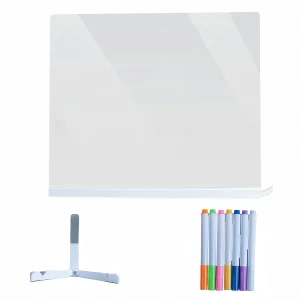
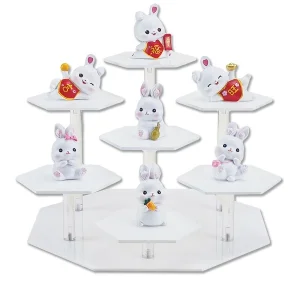


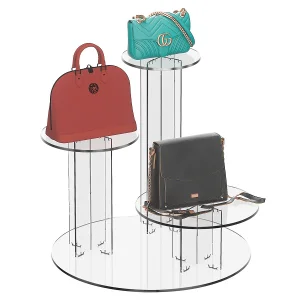
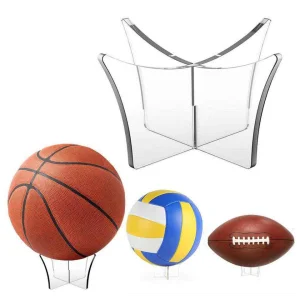
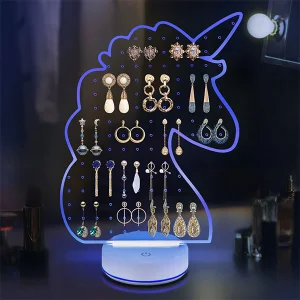
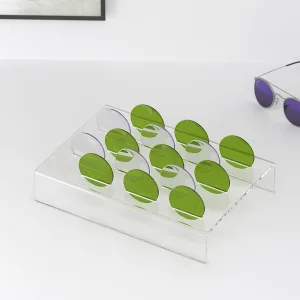
The global market for polymethyl methacrylate (PMMA) custom displays and containment cases is experiencing a structural paradigm shift. Driven by experiential retail flagships, luxury brand security mandates, and high-precision museum conservation specifications, commercial buyers now demand structural transparency without the brittle vulnerability, logistical weight penalty, and chromatic green-tint distortion inherent in conventional float glass.
Cast acrylic delivers a refractive index of 1.491 and a visible light transmission coefficient exceeding 92% to 93%, outperforming standard soda-lime silica glass (~88-90%). Weighing roughly 1.19 g/cm³—less than half the specific gravity of glass (2.5 g/cm³)—custom acrylic cases dramatically reduce structural load on architectural plinths while cutting air freight and international ocean container weight costs by 48% to 54%.
In high-traffic commercial zones and luxury retail environments, standard annealed glass poses catastrophic shatter liabilities. Cast PMMA maintains 10 to 17 times the impact strength of tempered glass of identical nominal thickness. Under localized ballistic or blunt impact, PMMA dissipates mechanical kinetic energy via ductile micro-fissuring rather than hazardous explosive fragmentation, protecting high-value display assets.
Fabricated virgin monomer PMMA features a continuous operating service temperature range from -40°C to +80°C (-40°F to 176°F) and low thermal conductivity (0.19 W/m·K). When bonded using reactive multi-component polymerizing adhesives rather than cosmetic capillary solvents, joints achieve true covalent chain entanglement, yielding an airtight seal capable of holding controlled inert gas microclimates for archival preservation.
| Performance Characteristic | Cell Cast Acrylic (PMMA) | Extruded Acrylic (XT) | Standard Float Glass | Polycarbonate (PC) |
|---|---|---|---|---|
| Light Transmission (%) | 92.5% - 93.2% | 91.8% - 92.4% | 88.0% - 90.0% | 86.0% - 89.0% |
| Density (g/cm³) | 1.19 | 1.18 | 2.50 (Over 2x heavier) | 1.20 |
| Impact Resistance (kJ/m²) | 15 - 20 (High ductile) | 10 - 12 | 1.5 - 2.0 (Extremely Brittle) | 60 - 80 (Vulnerable to UV) |
| UV Degradation Resistance | Inherently stable (10-30 yr warranty) | Moderate (Additives required) | Complete barrier (Non-degrading) | Rapid yellowing without coating |
| Edge Polish Quality | Diamond Optical Clarity | Prone to stress crazing | Green-tinted edge ground | Translucent / Difficult polish |
| Laser Engraving Character | Crisp, frosted brilliant white | Melts with uneven melt bead | Requires chemical etching | Scorches / Burns brown |
At our Danyang production headquarters, raw cast PMMA sheet conversion is treated as a high-precision mechanical science. Every customer drawing—whether originating from SolidWorks, AutoCAD, Rhino 3D, or Adobe Illustrator—undergoes a rigorous DFM analysis to anticipate thermal expansion coefficients, stress riser dissipation, and molecular bonding performance.
For custom enclosures requiring interlock mortise-and-tenon channels, countersunk fastener bosses, and micron-level bevels, our 5-axis CNC machining stations maintain cutting repeatability within ±0.05 mm, utilizing cold-mist diamond bit lubrication to prevent localized polymer heat deformation.
Equipped with closed-loop CO₂ laser cutting beds, we achieve micro-smooth, kerf-controlled cuts up to 30 mm thickness. Laser parameters are synchronized via dynamic power-to-velocity algorithms, mitigating heat-affected zones (HAZ) and virtually eliminating subsequent edge micro-cracking.
Moving far beyond erratic manual flame polishing that causes erratic internal stress concentrations, our automated diamond edge polishers strip microns of material via natural monocrystalline diamond fly-cutters, generating 100% distortion-free, mirror-gloss optical bevels.
Utilizing proprietary UV-activated curing adhesives with matched refractive indexes (n = 1.49), our structural assemblers achieve 99.8% bubble-free, monolithic joints. The resulting display case exhibits virtually continuous optical flow across 90-degree miters with no cloudy solvent residue.
Procuring custom display hardware from an overseas supplier presents substantial compliance and logistical risk if quality systems are not aligned with destination market statutory codes. Danyang Xinquan mitigates multi-jurisdictional liability through certified material compliance and rigorous ISTA-compliant export packaging.
All virgin PMMA substrates deployed within our manufacturing facilities comply strictly with EU REACH (EC 1907/2006) Annex XVII restrictions and RoHS Directive 2011/65/EU for heavy metals and hazardous phthalates. For commercial installations subject to municipal fire safety codes, we offer customized formulations rated to UL94 HB horizontal burn standard and EN 13501-1 Class E reaction-to-fire classifications.
For bakery display cases, commercial countertop food covers, and hospitality presentation stands, our materials satisfy FDA 21 CFR 177.1010 criteria for semi-rigid and rigid acrylic plastics intended for repeated food contact. Surfaces exhibit zero residual volatile organic compound (VOC) leaching, are non-porous, and withstand sanitization using hospital-grade ammonium-based cleaners without clouding.
Acrylic products exhibit surface vulnerability to electrostatic dust pickup and transit shear abrasion. We mitigate this through dual-side PE masking or co-extruded static-cling film, high-density polyethylene (EPE) custom-contoured end-caps, heavy-duty 5-ply corrugated export cartons, and fumigated solid-timber crates lined with internal shock-dampening foam cushions capable of passing 1.2 m free-drop transit certifications.
From luxury flagship retail environments in Paris and New York to climate-stabilized museum archives and industrial automation enclosures, our custom acrylic cases perform across demanding environments.
High-value retail displays demand uncompromised chromatic neutrality so diamonds, platinum, and complex watch dials render with zero color shift. Our ultra-clear cast acrylic cases integrate integrated concealed high-CRI (Ra > 98) LED edge-lighting conduits, magnetic concealed access doors, and specialized anti-tamper security fasteners trusted by global watch and jewelry brands.
Conservation curators require total elimination of harmful ultraviolet radiation. We engineer custom archival cases integrating specialized UV-filtering PMMA formulations that block 99.7% of wavelengths between 200 nm and 380 nm. Bonded with inert, outgas-free adhesives, these cases preserve delicate ancient textiles, paper manuscripts, and organic historical artifacts from photochemical fading.
For trade shows and corporate demonstration pavilions, acrylic cases must accommodate internal active electronic hardware, heat exhaust ventilation grilles, and cable routing ducts. We fabricate custom kiosks and transparent PC chassis exhibits equipped with anti-static (ESD) surface treatments that prevent dust accretion and shield delicate internal electronics from ambient discharge.
In high-profile catering, weddings, and hospitality banquet settings, structural impact durability and rapid assembly are essential. We manufacture modular acrylic champagne walls, architectural pedestal plinths, and tiered confectionery showcases engineered for tool-free, flat-pack logistics, enabling event rental agencies to maximize deployment cycles without edge damage.
Laboratory equipment, cleanroom visual enclosures, and diagnostic device covers demand strict chemical resistance to mild acids, bio-reagents, and alcohol disinfectants. Our thermal-annealed acrylic housings undergo comprehensive post-machining stress relief in convection ovens, preventing environmental stress cracking (ESC) during routine medical sterilizations.
Serving auction houses, private galleries, and pop-culture collectible suppliers, our custom dust-sealed acrylic vitrines integrate optical-grade magnetic locking lids, laser-engraved authenticity plates, and mirror-acrylic bases that bounce omnidirectional ambient light underneath sports memorabilia, graded coins, and limited-edition maquettes.
The future of acrylic engineering hinges upon three critical axes: nano-engineered surface performance, embedded smart electro-optics, and full closed-loop life cycle circularity. Danyang Xinquan is investing continuously to maintain our clients' technological and sustainability advantages.
Integrating chemical vapor deposition (CVD) silica nano-layers onto cast PMMA surfaces to upgrade pencil surface hardness from standard 3H-4H to 6H-8H, bridging the gap between acrylic impact toughness and glass scratch resistance.
Embedding transparent OLED (T-OLED) films and switchable polymer dispersed liquid crystal (PDLC) privacy layers directly within laminated multi-layer acrylic enclosures for interactive commercial retail windows.
Scaling closed-loop depolymerization protocols that break post-consumer acrylic displays down to virgin methyl methacrylate (MMA) monomer via thermal cracking, cutting product carbon footprints by 70% with zero loss in optical clarity.
Deploying 6-axis robotic articulation cells with machine-vision path tracking for micro-dispensing structural adhesives, achieving 100% void-free joints on complex three-dimensional curvilinear geometric enclosures.
Detailed answers to the technical, operational, and commercial questions most frequently asked by global procurement directors, brand fixture specifiers, and logistics managers.
Specialized event, retail, and commercial acrylic fabrication lines manufactured to strict overseas export criteria, offering impact resistance, crystal clarity, and seamless joints.
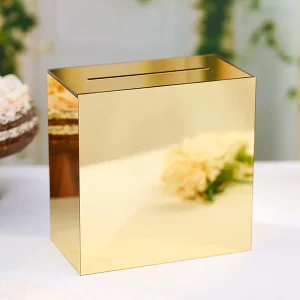
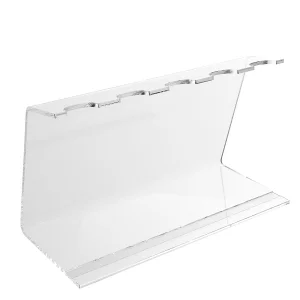


Transfer your 2D concepts or 3D CAD files to our Danyang production engineering team. Receive a comprehensive DFM manufacturability evaluation, raw material optimization breakdown, and guaranteed factory quotation within 24 hours.
Request Technical Consultation & RFQ