Explore our certified OEM acrylic display casework, desktop risers, and anti-static housings built to micron-level tolerance specifications for global retail, industrial, and institutional environments.

Analyzing global procurement shifts, polymer chain integrity, and technical supply chain resiliency in custom acrylic display manufacturing.
The global market for poly(methyl methacrylate) (PMMA) enclosures is undergoing a structural paradigm shift. Valued at over USD 6.8 billion in 2023 and projected to surpass USD 10.4 billion by 2032 with a compound annual growth rate (CAGR) of 5.4%, the sector is moving rapidly away from soda-lime silicate float glass. Global supply chains increasingly favor acrylic due to its 50% mass reduction, ten-fold impact resistance, and superior thermal insulation coefficients (U-value of 4.3 W/m²K versus 5.8 W/m²K for conventional glass).
Industrial buyers across North America and the European Union face persistent upstream feed-gas price fluctuations influencing methyl methacrylate (MMA) monomer pricing. As a premier manufacturer, Xinquan maintains direct raw material volume agreements with global leaders such as Lucite International, Mitsubishi Chemical, and Evonik, mitigating inventory shocks and ensuring unvarying molecular weight distribution across all production batches.
Optimizing display box survivability requires an engineering-first evaluation of polymerization methods. Cell-cast PMMA (polymerized between optical-grade tempered float glass plates) produces high average molecular weights (Mw > 1,000,000 g/mol), delivering unparalleled chemical resistance, thermal stability up to 105°C glass transition temperature (Tg), and zero internal stress fields when diamond-milled.
Extruded PMMA (Mw 100,000 to 150,000 g/mol), while cost-effective for high-volume thin-wall applications, demonstrates susceptibility to localized solvent craze and micro-fissuring under organic cleaning agents. Our factory helps client procurement teams engineer optimal thickness-to-yield thresholds, deploying cell-cast sheets for structural display vitrines and precision-extruded profiles for secondary shelf components, directly optimizing landed bill-of-materials (BOM) costs.
Traditional display case assembly relies on solvent wicking (methylene chloride / 1,2-dichloroethane), which leaches plasticizers and induces erratic stress crystallization along the joint seams. Xinquan implements two-component reactive acrylic syrups (polymerizable methyl methacrylate systems) cured under controlled ultraviolet radiation or ambient temperature exothermic reaction chambers.
This molecular crosslinking produces monolithic bonds where the lap shear strength of the seam exceeds 85% of the virgin parent acrylic substrate. The resulting miter joints are optically indistinguishable from the virgin sheet, eliminating micro-voids, nitrogen bubbles, and stress fractures, meeting the highest technical criteria of world-class museums and luxury watch showcases.
Quantitative empirical benchmarking of structural acrylic against Polycarbonate (PC), Polyethylene Terephthalate Glycol (PETG), and Ultra-Clear Low-Iron Float Glass.
| Physical / Mechanical Property | Cell Cast PMMA (Optical) | Extruded PMMA (Standard) | Polycarbonate (PC) | Low-Iron Float Glass |
|---|---|---|---|---|
| Light Transmission (380–780 nm) | 92.4% – 93.0% | 91.8% – 92.2% | 88.0% – 89.5% | 90.5% – 91.2% |
| Specific Density (g/cm³) | 1.19 | 1.18 | 1.20 | 2.50 (110% heavier) |
| Tensile Strength (ISO 527 / MPa) | 75 – 82 | 68 – 72 | 65 – 70 | 40 (Modulus of Rupture) |
| Rockwell Hardness (M-Scale) | M-100 to M-105 | M-90 to M-95 | M-70 (Scratch Prone) | Mohs 5.5 |
| Refractive Index (nd20) | 1.491 | 1.490 | 1.586 | 1.523 |
| Haze Value (% ASTM D1003) | < 0.5% | < 1.0% | 1.5% – 2.5% | < 0.2% |
| Coefficient of Thermal Expansion | 0.070 mm/m·°C | 0.075 mm/m·°C | 0.065 mm/m·°C | 0.009 mm/m·°C |
| Yellowing Index (ΔYI after 5,000h QUV) | < 1.2 (UV Stabilized) | 2.5 – 3.8 | > 6.5 (Severe Yellowing) | Negligible |
| Edge Machining / Polishing Yield | Diamond Optical Mirror | Flame / Buffing Only | Difficult, Tends to Smear | CNC Grinding & Beveling |
Ensuring cross-border shipments conform seamlessly with FDA food contact, REACH chemical safety, RoHS hazardous substance restrictions, and California Proposition 65 guidelines.
For custom display cabinets and food presentation vitrines exported to North America, our formulations comply with FDA 21 CFR 177.1010 (semi-rigid and rigid acrylic plastics). All materials undergo extractable monomer testing in water, ethanol, and n-heptane food-simulating solvents to verify zero leaching of residual methyl methacrylate or catalyst residues.
Furthermore, our materials maintain exhaustive certification against California Proposition 65, guaranteeing complete absence of bisphenol-A (BPA), antimony, phthalates (DEHP, DBP, BBP), and heavy metal stabilizers, shielding brand owners from legal liabilities.
Our European export programs strictly conform to Regulation (EC) No 1907/2006 (REACH). We monitor and audit all pigments, UV light stabilizers (benzotriazoles), and polymerization crosslinkers to guarantee zero Substances of Very High Concern (SVHC) exceed the strict 0.1% w/w threshold.
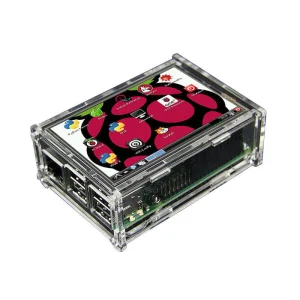
Under Directive 2011/65/EU and its amendment (EU) 2015/863 (RoHS 3), all electronic retail display enclosures, acrylic Raspberry Pi cases, and integrated LED lighting bases are certified free from lead, mercury, hexavalent chromium, and polybrominated diphenyl ethers.
Fragile optical display vitrines frequently experience transit failures during transoceanic container shipping if packaging engineering is neglected. Xinquan engineers custom protective systems tested against ISTA-3A (International Safe Transit Association) vibration and drop protocols.
Every acrylic surface retains a 60-micron co-extruded polyethylene (PE) peelable mask or moisture-resistant kraft paper. Units are encapsulated within multi-layer high-density closed-cell EPE (Expanded Polyethylene) foam buffers and secured in heat-treated, ISPM-15 compliant export plywood crates with built-in tilt and impact telemetry sensors.
From museum conservation microclimates to semiconductor cleanroom isolators, see how our precision acrylic box engineering satisfies demanding real-world parameters.
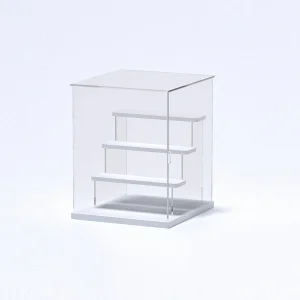
Curatorial institutions demand microclimate display cases capable of maintaining strict relative humidity (RH 40%–50% ±2%) while filtering 99.7% of ambient ultraviolet radiation in the 300–400 nm waveband. We fabricate five-sided monolithic vitrines from museum-grade OP-3 cast acrylic, deploying precision miter joints bonded with zero-VOC polymers.
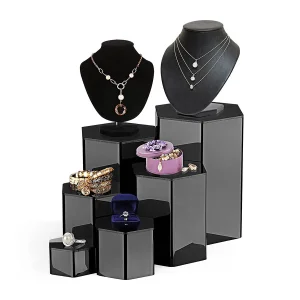
Global luxury boutiques require retail fixtures that highlight precious gemstones and timepieces without chromatic aberration or edge green-tinting common in mineral glass. Our diamond-polished 15 mm to 30 mm monolithic acrylic display blocks provide extreme visual purity with an optical Abbe number of 58.
Static discharge poses an existential threat to wafer fabrication, PCB assembly, and sensitive optoelectronics. For electronics housings like our Raspberry Pi enclosures and cleanroom dry boxes, Xinquan utilizes permanent Electrostatic Dissipative (ESD) acrylic sheet.
Anticipating next-generation display box manufacturing through chemical monomer depolymerization, precision 5-axis robotic routing, and functionalized nano-surfaces.
Traditional mechanical downcycling degrades optical clarity and induces severe yellowing. In response to corporate ESG mandates and the EU Corporate Sustainability Due Diligence Directive (CSDDD), Xinquan is piloting closed-loop chemical depolymerization.
By thermal cracking post-industrial scrap at 450°C in fluidized sand-bed reactors, PMMA polymer chains un-zip back into virgin-grade methyl methacrylate monomer (rMMA) with > 98.5% yield. Display boxes fabricated from 100% rMMA achieve identical light transmission (92.4%) and mechanical tensile modulus as virgin petroleum-derived substrates, slashing the carbon footprint from 4.8 kg CO₂e/kg to 1.1 kg CO₂e/kg.
To eliminate manual variability in bevel joints, our Danyang facility is investing in automated 5-axis continuous CNC milling centers coupled with monocrystalline diamond cutting heads. By rotating at 24,000 RPM under chilled air mist, these tools shear acrylic surfaces below the critical brittle-to-ductile transition limit.
The resulting surfaces require zero subsequent flame or buffing passes, achieving an optical surface roughness (Ra) of less than 0.02 microns. This preserves exact planar flatness along 45-degree miter edges, ensuring airtight sealing and 100% glue contact surface area across intricate three-dimensional geometry.
Untreated PMMA exhibits a pencil hardness of 2H to 3H, making it susceptible to micro-abrasions from routine retail wiping. Our next-generation product roadmap incorporates UV-cured polysiloxane inorganic-organic hybrid wet coatings applied in ISO Class 6 cleanroom environments.
This 3-to-5 micron cured crosslinked silane layer elevates the surface pencil hardness to 6H–7H (matching float glass), provides hydro-oleophobic anti-fingerprint properties (water contact angle > 105°), and maintains long-term resistance against harsh hospital-grade isopropyl alcohol (IPA) sterilization wipe protocols without micro-crazing.
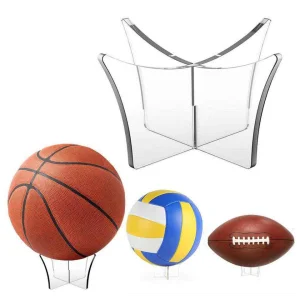
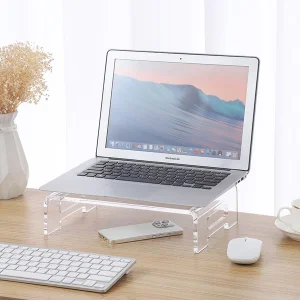
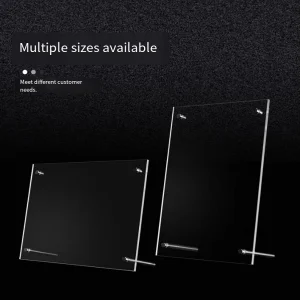
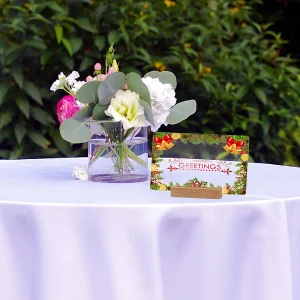
Explore specialized notice vitrines, structural event cases, protective pedestals, and point-of-sale display racks manufactured under locked OEM drawings and factory-direct quality controls.

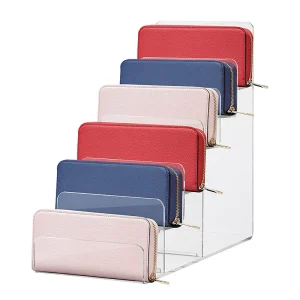
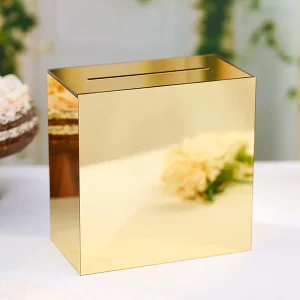
In-depth technical answers addressing material selection, joint chemistry, tolerances, cleaning chemistries, and logistics protocols for global B2B procurement teams.
