Factory-direct OEM solutions manufactured in our precision CNC facility, complying with international durability, safety, and optical standards.


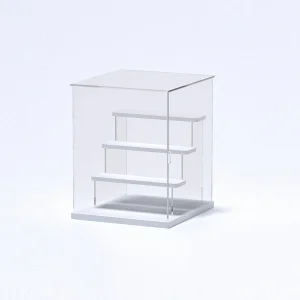
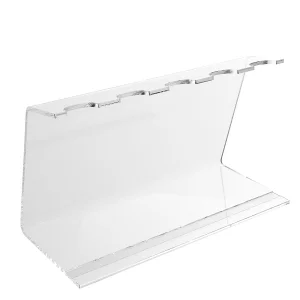
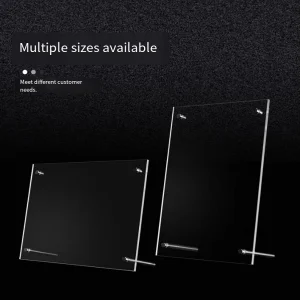

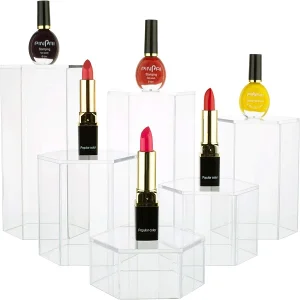

How bespoke acrylic cake display cabinets resolve structural hygiene, visual merchandise merchandising, and thermal operational hurdles across high-volume foodservice sectors.
In modern luxury patisseries, boutique cafés, and industrial food retail, commercial presentation is not merely an aesthetic choice; it directly affects product preservation, sensory consumer perception, and regulatory food safety. Commercial display systems have historically relied on silicate annealed glass, which poses operational liabilities including heavy weight, brittle shatter hazards, high thermal mass, and refractive chromatic aberration. Custom acrylic cake display cabinets engineered from optical-grade Polymethyl Methacrylate (PMMA) have systematically disrupted this paradigm, delivering superior structural tensile strength, 93.2% optical luminous transmittance, and comprehensive design flexibility.
Danyang Xinquan Plastic Products Co., Ltd. applies an integrated material engineering protocol to overcome common display challenges. By replacing heavy, fragile glass cases with precision-machined acrylic enclosures, commercial operators reduce dead load stress on counters by up to 50%, virtually eliminate in-store glass breakage hazards, and maintain controlled microclimatic zones for delicate patisserie and baked goods.
Multi-tiered acrylic cases featuring dust-impermeable magnetic latch mechanisms, rounded sanitary internal radii, and UV-filtering formulations prevent pastry discoloration and crust staling under intense retail LED downlights.
Lightweight, impact-resistant drop-over covers and multi-door pass-through display cases engineered for fast deployment, rapid chemical sanitization, and heavy operational turnover across continental breakfast stations.
Flat-pack modular display systems with high impact resistance, integrated vibration-damped interlocking joints, and scratch-resistant coatings designed for repetitive transport without structural fatigue or craze propagation.
Deep-tier engineering specifications governing optical transmission, yield strength, thermal deflection, and food safety migration parameters.
A primary failure mode in imported commercial display cabinets is the misapplication of cheap Extruded Polystyrene (PS) or low-molecular-weight extruded acrylic sheets. Extruded acrylic contains residual molecular orientation stresses, making it vulnerable to solvent crazing when cleaned with alcohol sanitizers or exposed to elevated ambient heat.
At Xinquan Acrylic, custom acrylic cake display cabinets are fabricated predominantly from high-molecular-weight virgin cell-cast PMMA. Cell-cast sheets undergo extended cross-linking polymerization between optical glass molds, yielding uniform isotropic mechanical properties, zero internal stress fields, exceptional thermal resistance, and edge-polishing clarity that rivals fused quartz.
| Physical / Chemical Property | Cell-Cast PMMA (Xinquan Standard) | Extruded PMMA (Economy Grade) | Silicate Glass (Traditional) | Polycarbonate (PC) |
|---|---|---|---|---|
| Optical Light Transmittance | 93.2% (Visual Clarity Index: Superior) | 91.8% (Minor Haze Accumulation) | 88.0% - 90.0% (Green Iron Tint) | 87.0% (Internal Scattering) |
| Impact Resistance (Izod kJ/m²) | 1.8 - 2.2 kJ/m² (10x stronger than glass) | 1.2 - 1.5 kJ/m² (Prone to edge chipping) | 0.2 kJ/m² (Catastrophic shattering) | 60 - 80 kJ/m² (Ultra-high impact) |
| Specific Density (g/cm³) | 1.19 g/cm³ (Lightweight logistics) | 1.18 g/cm³ | 2.50 g/cm³ (High structural deadload) | 1.20 g/cm³ |
| Chemical Sanitization Tolerance | Resistant to mild alkaline & quaternary NH₄ | Sensitive; prone to craze cracking | High chemical resistance | Highly sensitive to solvents & ammonia |
| Food Contact Compliance | FDA 21 CFR 177.1010 / EU 10/2011 | Varies by plasticizer content | Generally food inert | Contains Bisphenol-A (BPA concern) |
| Thermal Deflection Temp (0.45 MPa) | 100°C - 105°C | 90°C - 95°C | > 500°C | 130°C - 135°C |
Using chemical capillarity and UV-activated PMMA syrups, our joints fuse at the polymer chain level, producing clear, high-strength seam lines free of bubbles and structural voids.
Multi-axis CNC diamond polishers shave acrylic edges down to 0.05-micron surface roughness, removing microscopic micro-fractures and producing crystal-clear, safe edges.
Controlled convective ovens heat sheet stock evenly past its rubbery transition point (160°C–175°C) to form curved front profiles without optical distortion.
Optional surface treatments cross-link polysiloxane networks, boosting pencil hardness from 3H to 6H to resist routine wash scratching.
Operating from Danyang, Jiangsu: An integrated 30,000 m² smart fabrication base offering speed, batch traceability, and rapid global delivery.
In global procurement, supply chain fragility, extended lead times, and dimensional variance between batches threaten product rollouts. Operating from Danyang, Jiangsu—the epicentre of China's optical and precision polymer manufacturing cluster—Xinquan Acrylic integrates modern Industry 4.0 principles into cast acrylic fabrication.
Our infrastructure coordinates raw monomer purification, automated cast sheet extrusion, closed-loop CAM laser nesting, robotic diamond edge milling, and ISO-monitored cleanroom bonding. This integrated setup provides international buyers with transparent production schedules, traceable material quality, and rapid prototyping capabilities.
Automated nesting algorithms maximize sheet yield across multi-axis CNC beds, reducing cut waste and lowering unit costs on large wholesale contracts.
Parts are inspected at every step—from incoming monomer purity to edge chamfers, solvent weld strength, and optical haze checks under calibrated light tables.
Every cabinet is masked in protective film, cushioned in custom-cut EPE foam, and packed into reinforced corrugated cartons or fumigated wooden crates to prevent ocean transit damage.
Evaluating the lifecycle costs of custom acrylic display cases against traditional glass across retail deployment lifecycles.
Enterprise procurement managers evaluating capital display fixtures often look solely at initial ex-factory unit pricing. However, a comprehensive Total Cost of Ownership (TCO) analysis highlights indirect expenses: freight per unit, transit breakage insurance, store-level installation labor, routine maintenance, and replacement downtime caused by breakage.
Cell-cast acrylic cake display cabinets deliver notable cost advantages over standard glass counter fixtures:
With an optical density of 1.19 g/cm³ compared to 2.50 g/cm³ for glass, acrylic cuts tare shipping weights by over 50%, reducing air and ocean freight expenses.
High impact resistance protects against shipping bumps and high-traffic customer contact, eliminating glass shard liabilities in food zones.
Lighter modular structures can be unboxed and positioned by a single employee without specialized rigging or expensive shopfitting crews.
Adjustable acrylic shelves and modular dividers allow stores to quickly adapt display layouts for seasonal promotions without replacing the cabinet.
Meeting FDA, EU, and NSF sanitation criteria to ensure safe contact with exposed bakery, confectionery, and dairy products.
Food display fixtures are subject to strict sanitation and chemical migration rules. When exposed food products—such as buttercreams, meringues, and artisanal breads—contact display surfaces, the materials must not leach monomer plasticizers, residual solvents, or heavy metals into the food.
Xinquan Acrylic builds display cabinets according to international Hygienic Equipment Design Guidelines:
Our virgin PMMA sheets undergo overall migration and specific monomer migration testing (GC-MS), confirming they are inert, food-safe, and free from plasticizers or BPA.
Internal corners feature rounded fillets ($R \ge 3.2\text{ mm}$) to eliminate 90-degree internal pockets where crumbs, moisture, and bacteria can accumulate.
Integrated food-grade silicone or TPE gaskets around rear access doors keep out flying insects and ambient airborne particulates while maintaining case humidity.
Combining smart IoT sensor nodes, micro-LED light-guiding optics, and circular rPMMA depolymerization to drive future retail display design.
Commercial bakery and dessert fixtures are evolving beyond passive plastic enclosures into connected display units. The Xinquan R&D team works with commercial designers and sensor developers to integrate useful, low-profile electronics directly into high-grade acrylic assemblies.
Low-profile BLE sensors embedded in structural acrylic channels track temperature and relative humidity (RH) in real time, alerting staff when environmental limits are exceeded.
Laser-micro-dotted light guide patterns (LGP) distribute 4000K, 95+ CRI warm white light evenly across shelf panels, spotlighting baked items without hot spots or glare.
Hydrophilic nano-plasma surface treatments cause moisture inside chilled bakery display cases to sheet evenly rather than form drops, preserving clear visibility.
Supporting corporate ESG goals through closed-loop depolymerization, converting used acrylic units back into pure MMA monomer with virgin-grade clarity.
Direct engineering guidance addressing structural performance, chemical resistance, load calculations, and global supply logistics.
Explore matching modular risers, freestanding display racks, and specialized point-of-sale display hardware manufactured to export specifications.