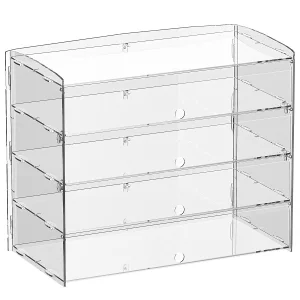
Explore production-ready base architectures optimized for automated laser contouring, continuous diamond edge polishing, and rapid custom branding.
In global industrial procurement, "cheap" must not signify compromised tensile threshold or degraded virgin polymer. True commercial value is achieved through Design for Manufacturing (DFM), algorithmic nesting, and supply chain vertical integration.
By deploying multi-axis nesting software during CO₂ laser beam planning, our tooling engineers maximize sheet yield from 1220×2440mm extruded PMMA slabs to 94.2% raw material efficiency. This directly reduces raw monomer scrap expenditure across 10,000+ unit OEM production batches.
Manual capillary solvent application is the largest driver of rejects and worker overhead. We leverage semi-automated, multi-axis liquid dispensaries delivering medical-grade methylene chloride and UV photopolymer resins, maintaining zero-bubble structural seams within a 90-second cure cycle.
Our Danyang facility eliminates outsourced transit fees by consolidating thermoforming, CNC profiling, and automated diamond beveling within one 30,000m² manufacturing envelope. This vertically integrated manufacturing strategy yields a 22–35% direct cost advantage for international importers.
The global commercial and residential acrylic storage ecosystem is navigating historic macroeconomic shifts, driven by omnichannel inventory velocity, raw material indexation, and circular-polymer regulations.
Polymer pricing fluctuates based on upstream crude oil and natural gas feedstock indices. Savvy procurement teams safeguard unit economics by locking quarterly slab purchasing programs directly with high-volume extruders like Xinquan, avoiding secondary middleman markups.
Ocean freight container tariffs heavily penalize the shipment of air. Modern cheap acrylic organisers utilize interlocking slot-and-groove engineering and precision magnetic fasteners. Disassembled flat-packing increases 40HQ container volumetric capacity by up to 340%.
European and North American importers face stringent ESG disclosure directives. Depolymerized PMMA (recycled methyl methacrylate monomer) preserves crystal optical transparency while lowering the product carbon footprint, facilitating full customs tariff alignment under modern green procurement codes.
Acrylic organisers serve as mission-critical presentation architecture across diverse vertical markets. Discover how specific mechanical configurations meet targeted commercial parameters.
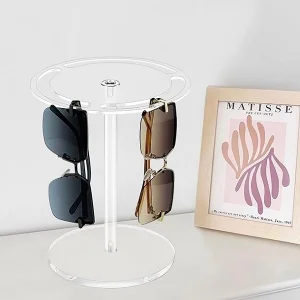
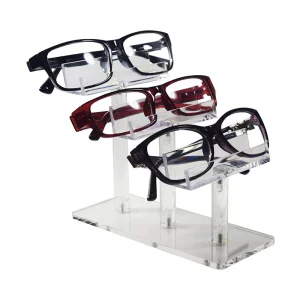
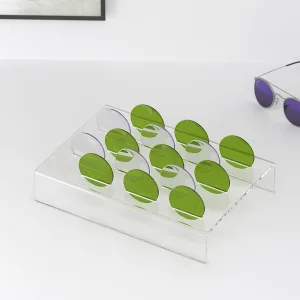
High-end cosmetic counters and boutique eyewear retail demand zero optical distortion to highlight true color pigmentations. Our precision-annealed cast acrylic displays provide 92.5% light transmission, exceeding traditional soda-lime glass without the unsightly green perimeter tint.
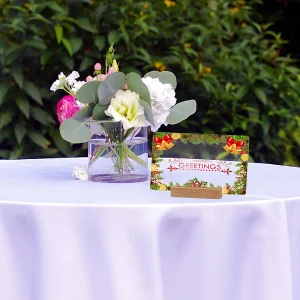
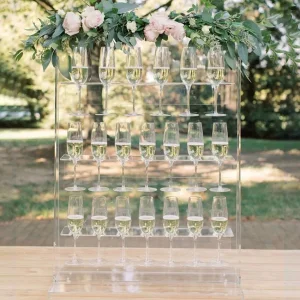
Event rentals require modular, robust equipment. Heavy-gauge acrylic champagne walls, modular pastry cases, and tiered risers engineered by Xinquan withstand repetitive breakdown and sanitized wash cycles, maintaining edge brilliance without stress-crazing or micro-fractures.
Modern medical laboratories and corporate workspaces require clear compartmentation with electrostatic discharge (ESD) mitigation. Our anti-static coated PMMA desk organizers and document trays keep dust and contaminants off sensitive measuring equipment and records.
Direct-to-consumer homeware brands rely on interlocking drawer systems and stackable drop-front sneaker vaults. We produce injection-molded and heat-bent PMMA units with smooth slide-rails, integrated ventilation slots, and custom packaging drop-tested for Amazon FBA fulfillment.
Understanding the exact chemical and structural thresholds of common transparent polymers allows procurement directors to balance cost without sacrificing structural integrity.
| Polymer Parameter | Cast Acrylic (PMMA) | Extruded Acrylic (PMMA) | Polycarbonate (PC) | Polystyrene (PS) |
|---|---|---|---|---|
| Light Transmission (ASTM D1003) | 92.5% (Crystal Clarity) | 92.0% (Clean Clear) | 88.0% (Slight Gray Cast) | 87.0% (Hazes with Age) |
| Impact Resistance | 10x – 17x Annealed Glass | 8x – 10x Annealed Glass | 250x Glass (Bullet-Resistant) | Brittle, Prone to Shish-Crack |
| Laser Engraving Quality | Frost White, High Contrast | Melted Edge, Low Contrast | Discolors / Chars Brown | Poor, Heat Distortion |
| Edge Finishing Efficiency | Superior (Diamond Polishable) | High (Flame/Diamond Compatible) | Difficult, Requires Vapor Polish | Prone to Cracking |
| UV Degradation (5-Year Delta) | < 2% Delta E (Yellowing-Proof) | < 3% Delta E (Stable) | Requires UV Coating Layer | Severe Yellowing (>15% Delta E) |
| Relative Production Cost | Moderate to High | Lowest for PMMA Sheets | 2.2x – 3.0x vs Extruded PMMA | Extremely Cheap (Commodity) |
How Xinquan continues to advance cost containment, automation robotics, and sustainable material science across global acrylic manufacturing.
Integration of computer-vision guided CNC spindle routers to machine complex stepped joinery and 3D reliefs with sub-0.05mm tolerances, eliminating manual deburring stages.
Deployment of 6-axis collaborative robotic arms equipped with micro-metered solvent nozzles, achieving 100% bubble-free adhesive joins and reducing joint failure to near-zero.
In-line immersion application of silica nanoparticle coatings, raising surface pencil hardness from 2H to 5H without compromising sheet flexibility or optical clarity.
Establishing an industrial depolymerization reclamation program to reclaim factory off-cuts into high-purity MMA monomer for next-generation circular acrylic supply contracts.
From architectural CAD drawings to consolidated multi-SKU export shipments, our engineering protocols protect your landed margin at every stage.
Send us your DXF, STP, AI, or PDF concept schematics. Our engineers evaluate wall thickness, draft angles, interlocking notches, and internal load tolerances before mold opening or cutting, saving weeks in revision cycles.
Reinforce your brand identity with CMYK UV flatbed printing, multi-color silk screening, or recessed laser engraving filled with specialized metallic pigments. Every run is cross-hatch tape-tested for scratch and adhesion resilience.
Never suffer transit breakage again. Each acrylic unit retains protective PE or Kraft masking, protected with custom-molded high-density Pearl Cotton (EPE) buffers, 5-ply export master cartons, and reinforced timber corner-pallets designed for ocean and air freight.
Detailed technical specifications, manufacturing tolerances, order terms, and material properties answered by our senior engineering team.
Review additional field-tested acrylic assemblies manufactured to exacting tolerances for commercial merchandising, home organization, and specialty display.