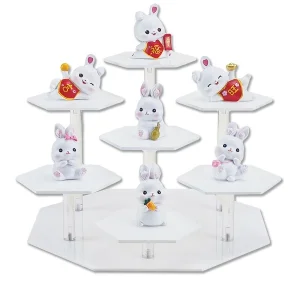
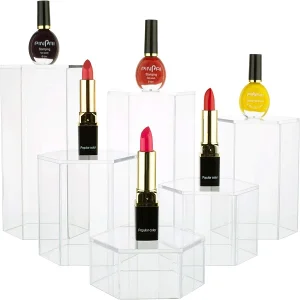
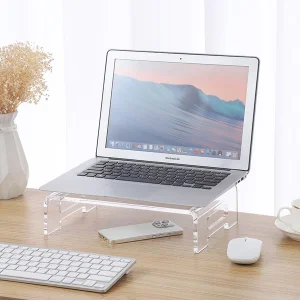
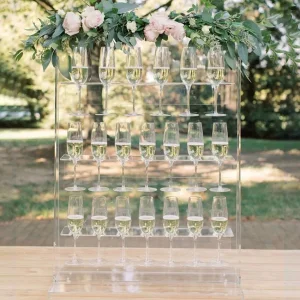
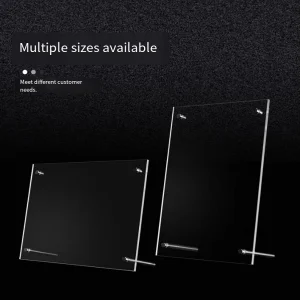
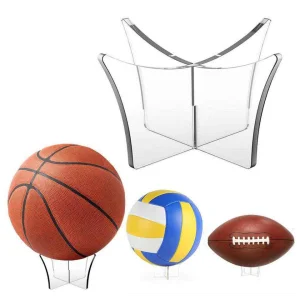
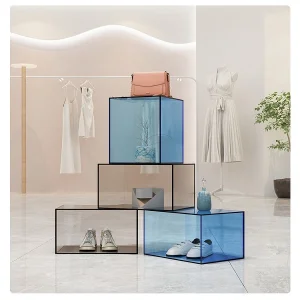
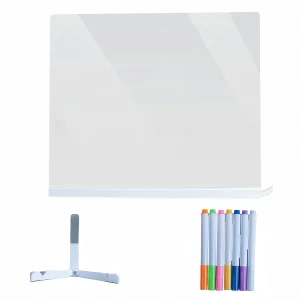
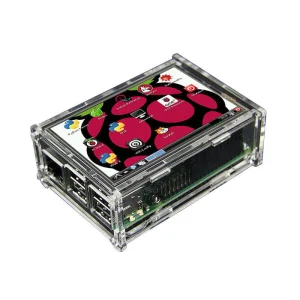
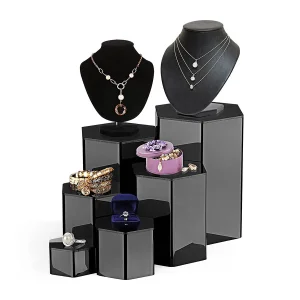
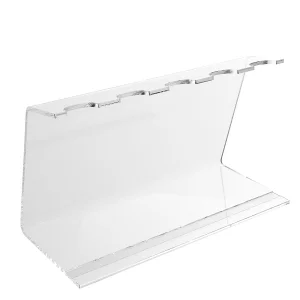
Explore our foundational range of diamond-polished, crystal-grade acrylic display cases, stands, and modular architectural organizers engineered for immediate bulk deployment.
In global retail merchandising, procurement officers must balance optical elegance against strict capital allocation. Our manufacturing infrastructure in Jiangsu leverages vertical polymer integration, automated CNC micromachining, and rapid tooling to deliver cost efficiency without compromising mechanical integrity.
By securing virgin MMA (Methyl Methacrylate) monomer direct from local petrochemical suppliers in Jiangsu, our processing prevents raw material markups while ensuring zero yellowing, isotropic tensile strength, and uniform sheet thickness tolerances.
Our facility runs multiple multi-axis CNC routers, automated cold diamond edge polishers, and high-wattage CO₂ laser cutting arrays. This replaces costly manual bench labor with programmatic repeatability, directly lowering unit costs for high-volume orders.
Our internal Design for Manufacturing (DFM) engineers translate CAD/SolidWorks models into cost-optimized panel yields within 12 hours. We optimize nesting patterns to minimize scrap rates below 3.5%, passing raw sheet savings to you.
Acrylic countertop display fixtures are transitioning from passive shelf risers to active, interactive, and environmentally compliant focal points within modern omnichannel retail environments.
With stringent European circular packaging guidelines and US EPR regulations, tier-one brands require displays fabricated from chemically recycled acrylic (rPMMA). These resins deliver identical 92%+ optical clarity while cutting cradle-to-gate carbon impact by 40%.
The convergence of retail display with consumer analytics has driven demand for acrylic housings integrated with capacitive touch points, low-voltage hidden micro-LED backlighting, RFID pick-up sensors, and digital shelf edge (ESL) brackets.
Skyrocketing ocean freight rates have rendered bulky, pre-solvent-welded showcase boxes obsolete for broad rollouts. Modern designs use precision tongue-and-groove jointing, fastener slots, or rare-earth magnet interlocking systems, reducing shipping cube size by up to 65%.
A frequent error among procurement managers is over-specifying or under-specifying display materials. Review our structural performance parameters to balance aesthetic brilliance against operational wear.
| Evaluation Parameter | Cell Cast Acrylic (PMMA) | Extruded Acrylic (PMMA) | Polycarbonate (PC) | Polystyrene (PS) |
|---|---|---|---|---|
| Light Transmission (%) | 92.8% – 93.4% (Optical Peak) | 91.5% – 92.0% | 87.0% – 89.0% | 88.0% – 89.0% |
| Machining & CNC Milling | Zero melting, clean swarf, sharp cuts | Moderate gumming, requires cooling | Ductile, burrs require deburring | Brittle, micro-fissuring risk |
| Diamond Edge Polish Yield | Ultra-gloss, mirror crystal edge | Clear, slight heat banding | Cannot diamond polish easily | Low polish gloss index |
| Chemical / Solvent Crazing | High resistance to bonding solvents | Moderate susceptibility to alcohol | Requires mechanical fixing | Extremely prone to solvent stress |
| Raw Material Cost Tier | Premium Value | Competitive Mid-Tier | High Industrial Tier | Budget High-Volume Tier |
| Optimal Application Scope | Fine cosmetics, jewelry, museum vitrines | Literature racks, cosmetic dividers | Vandal-proof locking security cases | Short-run disposable promotional trays |
We tailor each display unit to withstand its intended operational environment, matching scratch coatings, antistatic layers, and mechanical geometries to target retail verticals.
Cosmetic countertops demand chemical resistance to oils and pigments. We deploy high-grade cast PMMA with sealed solvent welding that resists foundation staining, paired with frosted risers and diamond-buffed chamfered corners.
Showcasing smartphones, earbuds, or high-value circuit components requires secure showcase design. We integrate tamper-resistant cam locks, anti-theft anchoring cables, and cable management conduits within clear shatter-resistant acrylic housings.
Food-adjacent and checkout displays require NSF/FDA-compliant food-contact PMMA. We engineer heat-bent sneeze guards, bakery tiered cases, and wine fixtures that handle frequent sanitizing without clouding.
Direct sourcing from China delivers major price savings, but must be paired with rigorous factory auditing and protective packaging protocols to prevent freight degradation and surface scratching.
Every acrylic unit is protected with 60-micron co-extruded PE film or heavy-duty kraft paper. This shields surfaces against scratches through laser fabrication, polishing, transit, and final instore deployment.
To eliminate shipping damage, our packaging systems use custom-cut 35kg/m³ high-density EPE foam cradles, 5-ply BC-flute corrugated export cartons, and fumigated solid timber export crates for palletized ocean cargo.
We monitor quality across four distinct stages: 1) Spectrophotometer raw sheet testing, 2) First-article CNC dimensional sign-off, 3) 100% polarization checks for bonding stress lines, and 4) Final UV screen-print adhesion cross-hatch testing.
Essential guidance for global enterprise supply chain managers, product designers, and retail fixture buyers.
Explore our extended catalog of modular display risers, branded card frames, illuminated cases, and retail tabletop fixtures manufactured to order.