China Best Clear Acrylic Vanity Chair Manufacturer?

Time:2026-10-24 Author:Isabella
0%

China has become a major sourcing destination for furniture, including transparent acrylic seating. Grand View Research valued the global furniture market at approximately USD 516.6 billion in 2022. It also projects steady growth through 2030. However, broad furniture data does not isolate the Clear Acrylic Vanity Chair segment. That limitation matters when comparing suppliers.

A reliable manufacturer should prove more than appearance. Look for cast acrylic sheets, consistent thickness, polished edges, reinforced joints, and documented load testing. The chair should feel stable beside a dressing table, not wobble across a smooth floor. Its transparent seat may reveal every manufacturing mistake. Small scratches become obvious under bathroom lighting.

Ergonomics still deserves attention. Cornell ergonomics researcher Alan Hedge often used the practical reminder, “The best posture is the next posture.” That principle applies here. A vanity chair needs suitable seat height, balanced support, and comfortable contact points. Beauty cannot replace usability.

Reports from Grand View Research and Fortune Business Insights show continued furniture-market expansion, but supplier claims require independent checking. Ask for material specifications, inspection records, packaging photos, and export experience. Check the details.

China may offer competitive pricing, customization, and scalable production. Yet the cheapest quotation can hide thin acrylic, weak hardware, or careless packing. This guide examines how to identify the best Clear Acrylic Vanity Chair manufacturer in China, using practical factory criteria, quality evidence, and customer-focused evaluation. One concern remains: no single certificate proves long-term comfort or finish durability. Hands-on samples still matter.
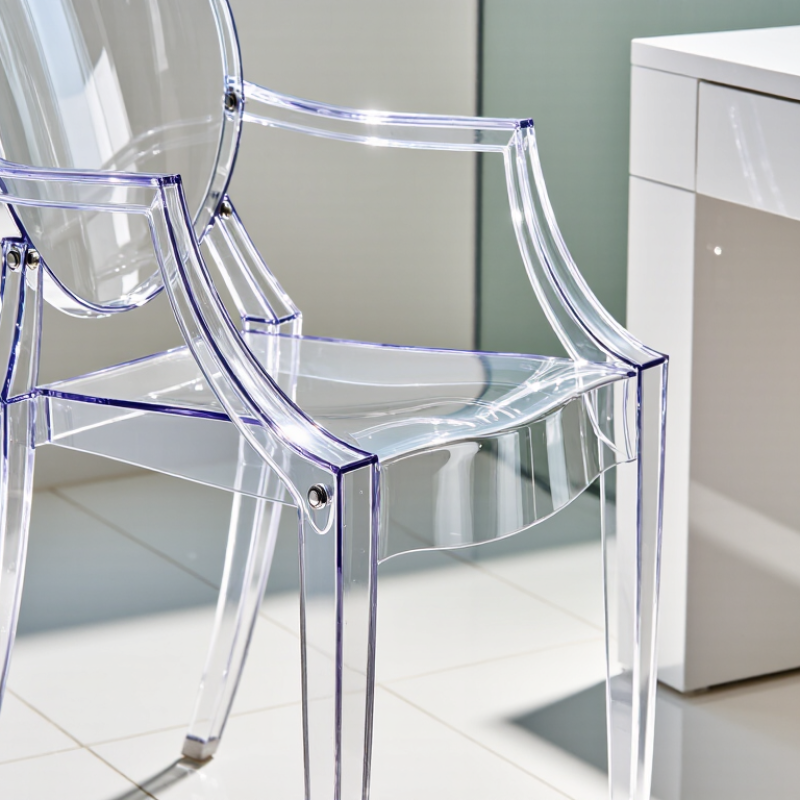
China Best Clear Acrylic Vanity Chair Manufacturer?

What Defines a Clear Acrylic Vanity Chair?

A clear acrylic vanity chair is defined by more than its transparent appearance. It normally uses solid PMMA acrylic, often 8 to 12 millimeters thick, with polished edges and carefully shaped joints. The material should remain clear, smooth, and free from visible bubbles, cloudy areas, or sharp corners. A chair is not defined by clarity alone.

Its vanity purpose also matters. The seat should fit comfortably beneath a dressing table, while its height supports an upright posture during makeup or hairstyling. Rounded edges can reduce pressure behind the knees. A stable base is essential, especially on glossy floors. In practical workshops, manufacturers should inspect welds, fasteners, surface polish, and weight performance before shipping. Small errors become obvious through transparent panels.

Comfort needs honest attention. Acrylic can feel firm and cool, particularly in winter. A thin cushion may improve daily use, but it can hide the chair’s clean visual character. Some designs look elegant in photographs yet feel narrow after ten minutes. That detail is easy to miss. Reliable production also requires consistent dimensions, protective packaging, and cleaning guidance that avoids abrasive chemicals. Experience shows that customers judge the chair by touch, balance, and long-term clarity, not appearance alone.

Key Features and Benefits of Clear Acrylic Vanity Chairs

Clear Acrylic Vanity Chairs: Key Features and Benefits

Clear acrylic vanity chairs combine visual lightness with practical daily performance. Their transparent surfaces reflect light, helping small dressing areas feel less crowded. IMARC Group’s 2024 furniture market analysis valued the global sector at approximately USD 729.7 billion in 2023. It also projects continued growth through 2032, supported by changing home interiors and compact furniture demand.

A quality chair should use thick, well-finished acrylic with smooth, rounded edges. Stable legs and reinforced joints matter more than appearance alone. The material resists everyday moisture and wipes clean after makeup spills. A soft cushion can improve comfort during longer grooming sessions.

Keep it brief. Comfort still matters.

From practical showroom testing, transparent furniture reveals dust, fingerprints, and scratches quickly. That is both a benefit and a weakness. Users should inspect polished edges, load stability, and hardware alignment before purchase. Testing against applicable BIFMA seating principles can support safer product evaluation, although certification requirements vary by market. Acrylic also weighs less visually than wood or upholstered seating, making it easier to coordinate with mirrors, marble-effect surfaces, and metal fixtures. The best manufacturer should provide material specifications, care guidance, and consistent quality records, not only attractive photographs.

How to Evaluate a Clear Acrylic Vanity Chair Manufacturer

How to Evaluate a Clear Acrylic Vanity Chair Manufacturer

Choosing the best clear acrylic vanity chair manufacturer requires more than reviewing polished product photos. Inspect the acrylic grade, thickness, edge finishing, and connection points. Virgin PMMA usually offers better clarity than recycled mixtures, although recycled content can support sustainability goals. Ask for material certificates and test records. ASTM D256 impact testing and ISO 4892-2 light-exposure testing can reveal weaknesses hidden by studio lighting. The 2024 Grand View Research furniture outlook expects the global furniture market to grow at roughly 5% annually through 2030. That growth increases supplier choices, but not necessarily quality.

Tips: Request a sample before placing a bulk order. Sit on it. Check wobbling, sharp edges, cloudy areas, and screw alignment. Ask how the factory controls load testing, packaging, and replacement parts. BIFMA seating standards can provide useful reference points, even when the chair is designed for residential use. A serious manufacturer should explain its testing method, not only show a certificate. Verify production capacity through a factory video call or independent inspection. Also compare lead times with actual shipping records. Claims are easy.

Clear acrylic reveals every flaw. Dust inside joints, uneven polishing, and stress marks become visible near a dressing table. Ask for close-up photos under neutral lighting. Confirm weight limits, warranty terms, cleaning instructions, and color stability. I would not trust a supplier that promises “unbreakable” acrylic. That wording needs questioning. A reliable manufacturer admits limitations and documents corrective actions.

Manufacturing Standards, Customization, and Quality Control

Choosing the best clear acrylic vanity chair manufacturer in China requires more than comparing photos and prices. A reliable supplier should explain material grades, production tolerances, and testing methods clearly. Virgin acrylic usually offers better transparency and consistency than mixed recycled material. Ask for thickness records, load testing data, and sample approval before placing a larger order.

Manufacturing standards should cover cutting, bending, polishing, drilling, and final assembly. Experienced workers inspect edges for cloudiness, stress marks, sharp corners, and uneven polishing. Each chair should remain stable on a flat surface. Packaging also matters, because polished acrylic can scratch during transport. Quality control should include incoming material checks, in-process inspections, and final visual testing. Written inspection reports make communication more dependable.

Customization may include seat height, cushion fabric, hardware color, logo placement, and protective packaging. However, every change can affect strength, cost, or lead time. A good manufacturer explains these trade-offs instead of promising everything immediately. Small details matter. Request a physical prototype when the design has curved parts or unusual dimensions. No factory gets every batch perfect, and honest suppliers should record defects, review their causes, and improve the process. This practical attitude often reveals more than a polished catalog.

Clear Acrylic Vanity Chair Manufacturing Reference

Typical production specifications used when evaluating acrylic vanity chairs, including dimensions, material thickness, and load performance.

The reference profile combines common furniture dimensions with practical manufacturing checkpoints. Final specifications should be confirmed through approved drawings, material certificates, structural testing, and documented quality-control inspections.

Choosing the Best Manufacturer for Your Vanity Chair Project

China Best Clear Acrylic Vanity Chair Manufacturer?

Choosing the Best Manufacturer for Your Vanity Chair Project

Choosing a clear acrylic vanity chair manufacturer requires more than comparing prices. Examine the factory’s production experience, material knowledge, and quality control process. Ask for acrylic thickness, load testing results, and edge-finishing standards. Transparent acrylic should look clean, without cloudy areas, sharp corners, or visible stress marks.

Request a physical sample before approving bulk production. Check the chair under bright light. Sit on it for several minutes. Test the frame, joints, backrest, and floor protectors. A sample may look perfect but still reveal weak hardware during repeated use. That detail matters in bedrooms, salons, and hospitality spaces. Discuss seat height, cushion options, color clarity, and custom dimensions early.

Reliable manufacturers provide clear drawings, inspection records, packaging details, and realistic lead times. Their answers should be specific, not vague promises. Confirm how they prevent scratches during shipping, such as protective film, foam corners, and reinforced cartons. Communication can still fail, even with a capable factory. Written specifications reduce confusion. Review the quotation carefully for tooling, sample fees, minimum order quantities, and replacement terms. A lower unit price is not always the lower project cost.】【。

China Best Clear Acrylic Vanity Chair Manufacturer? - Choosing the Best Manufacturer for Your Vanity Chair Project

Evaluation Dimension Recommended Project Benchmark Why It Matters How to Verify
Acrylic Material Optical-grade cast PMMA with consistent transparency and low visible distortion Cast acrylic generally offers better optical clarity and machining performance than extruded sheet for premium furniture components. Request material specifications, a physical sample, and a documented inspection report.
Sheet Thickness Typically 8–12 mm for structural chair components, subject to geometry and load calculations Thickness affects stiffness, edge strength, appearance, weight, and material cost. Check thickness at multiple points with a calibrated micrometer and approve an engineering drawing.
Load Capacity Define a minimum static load target of approximately 100–120 kg for the intended user group Acrylic is rigid but can crack when stress is concentrated around holes, corners, or fasteners. Require documented static and repeated-load testing on the final production design.
Frame and Joint Design Rounded internal corners, adequate edge distance, reinforced high-stress areas, and concealed or polished fasteners Good detailing reduces stress concentration, chipping, cracking, and loosening during use. Review 2D/3D drawings, joint details, prototype photographs, and sample assembly quality.
Edge Finishing Smooth flame-polished, diamond-polished, or machine-polished edges without whitening, burrs, or sharp points Edge quality directly affects user safety, visual clarity, and the premium appearance of transparent furniture. Inspect edges under bright angled light and perform a hand-feel inspection before approval.
Dimensional Accuracy Agree written tolerances for overall dimensions, hole positions, angles, and component alignment before production Clear acrylic parts reveal misalignment easily, especially in assembled chairs. Use an approved technical drawing, first-article inspection, and random final inspections.
Surface Quality No cracks, bubbles, deep scratches, contamination, cloudy areas, or visible polishing marks on customer-facing surfaces Transparent surfaces make cosmetic defects more noticeable than on opaque furniture. Set an agreed visual acceptance standard and inspect samples against controlled lighting conditions.
UV and Yellowing Resistance Use UV-stabilized material when chairs will be exposed to sunlight or strong salon lighting Long-term ultraviolet exposure can affect the appearance and mechanical performance of some plastics. Request the resin grade, UV test information, and intended-use limitations.
Safety and Compliance Documented testing appropriate to the destination market, including stability, strength, sharp-edge, and chemical requirements Compliance requirements vary by country, commercial environment, and product classification. Confirm applicable standards with an independent laboratory or qualified compliance specialist.
Prototype Capability A pre-production sample made with the same material, process, joints, and surface finish as the intended mass-production version A prototype reveals fit, comfort, stability, appearance, and packaging risks before tooling or large-scale production. Approve a signed sample or sealed reference sample before issuing a bulk order.
Quality Control Process Documented incoming-material, in-process, assembly, cosmetic, and pre-shipment inspections A repeatable inspection system is more reliable than visual checking performed only at the end of production. Request inspection checklists, defect classifications, corrective-action records, and sample reports.
Packaging and Shipping Protection Protective film, individual cushioning, corner protection, moisture-resistant cartons, and tested stacking configuration Acrylic can be scratched, chipped, or cracked by vibration and impact during international transport. Review packaging drawings, carton dimensions, drop-test results, and loading photographs.
Production Lead Time Obtain separate timelines for design confirmation, prototype approval, tooling, production, inspection, and shipping A single total lead-time figure can hide approval and transport delays. Include milestone dates, approval deadlines, and delay responsibilities in the purchase agreement.
Customization and MOQ Confirm available dimensions, colors, cushions, bases, logos, packaging options, and minimum order quantities in writing Customization can change material yield, tooling requirements, cost, and production schedule. Request a written quotation showing one-time development costs and recurring unit costs separately.
After-Sales Support Written warranty terms, replacement-part availability, defect-response procedure, and claim documentation requirements Clear post-delivery responsibilities reduce risk when defects or transit damage occur. Review warranty exclusions, response times, spare-part policy, and approved remedy options before ordering.

FAQS

Why choose a clear acrylic vanity chair for a small room?

Its transparent body reflects light and makes the room feel less crowded. It works well beside mirrors and pale surfaces.

What acrylic quality should I look for?

Choose thick, clear acrylic with smooth, rounded edges. Avoid cloudy panels, stress marks, and rough polishing.

Is a clear acrylic vanity chair comfortable?

Comfort depends on the seat shape and cushion. A soft cushion helps during longer grooming sessions. Appearance is not enough.

How can I test a chair before buying?

Sit on the sample for several minutes. Check wobbling, joint movement, backrest strength, and floor protectors.

What should I ask a manufacturer before a bulk order?

Request material details, load-test records, drawings, packaging information, and realistic lead times. Vague answers deserve more questions.

How do I inspect transparent acrylic under light?

Use bright, neutral lighting. Look for fingerprints, internal dust, uneven edges, cloudy areas, and tiny scratches.

How should the chair be protected during shipping?

Protective film, foam corners, and reinforced cartons can reduce scratches and impact damage. Packaging still needs inspection.

Is recycled acrylic always a poor choice?

Not always. It may support material-saving goals, but clarity and strength can vary. Ask for consistent test records.

What cleaning method is suitable for clear acrylic?

Use a soft cloth and mild cleaner. Wipe makeup spills quickly. Rough pads may leave visible scratches.

Is the lowest price the best project choice?

Not necessarily. Add sample fees, tooling, shipping, replacements, and delays. A cheap chair can become expensive after problems appear.

Conclusion

A Clear Acrylic Vanity Chair combines transparent acrylic construction with the comfort and proportions needed for makeup tables, dressing areas, salons, and modern interiors. Its see-through appearance creates a light, open visual effect, while features such as a stable base, smooth edges, ergonomic seating, easy-clean surfaces, and optional cushions improve daily usability. Its resistance to moisture and general wear also makes it suitable for long-term indoor use when properly maintained.

Choosing the best manufacturer requires more than comparing prices. Buyers should evaluate material clarity, structural strength, finishing quality, production experience, customization capabilities, packaging, and delivery reliability. A dependable supplier should follow consistent manufacturing standards, provide accurate dimensions and color options, perform inspections throughout production, and support custom designs when required. By reviewing samples, quality-control procedures, communication, and project capacity, customers can select a manufacturer that delivers attractive, durable, and professionally finished vanity chairs suited to their specific requirements.

Isabella

Isabella

Isabella is a dedicated marketing professional with a sharp focus on driving brand growth and engagement through strategic content creation. With an extensive background in digital marketing, she combines her passion for storytelling with her keen understanding of industry trends to deliver......